by Neil Rees, Head of Environmental, Social and Governance, Agilent Technologies
The UN’s International Day of Zero Waste focuses the world’s attention on the critical challenge of reducing the waste we produce, warning that – without urgent action – annual municipal solid waste generation will hit 3.8 billion tonnes by 2050. Given the scale of this threat, it is vital that companies across industries act quickly to optimise their circular opportunities and waste management strategies.
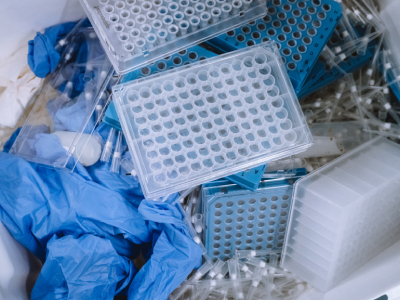
Life science research is known to consume large amounts of water and energy. Labs working to address some of society’s most pressing challenges produce a disproportionate amount of waste. According to a study from the University of Exeter, nearly 5.5 million tons of plastic waste originate from labs. That’s about 2% of all plastic waste worldwide.
It is a challenge about which the industry is acutely aware. Most labs want to reduce their footprint and improve their waste management techniques and Agilent’s Independent Global Lab Sustainability Survey shows that two-thirds (60%) are already taking action.
Turning green into gold
Increasing numbers of biotech and pharma companies have signed on to the UN-backed Race to Zero initiative. This progress is being supported and monitored by My Green Lab, a nonprofit organisation dedicated to building a global culture of sustainability in science.
My Green Lab provides labs and manufacturers of lab products with critical third-party guidance and a verification process to implement sustainable strategies into everyday testing and research. Their ACT environmental impact factor label provides verification on the environmental impact of laboratory products.
The My Green Lab Certification program is considered the gold standard for laboratory sustainability and a measure of progress toward a zero-carbon future. The certification process is rigorous, assessing lab procedures around energy use, water consumption, recycling, and waste production, providing actionable advice to improve environmental performance in all areas.
Tackling waste in the race to zero
Focusing on waste management specifically, there are five key areas to consider when analysing a lab’s techniques.
Reduce: Approach the challenge systematically, beginning with reducing the waste that can be seen. Eradicate single-use plastics and non-essential disposable items in laboratory settings. Additional solutions could include long life lamps and pump heads and stay safe caps to reduce solvent evaporation.<
Reuse and recycle: While many assume that most lab waste is hazardous, this is often not the case. My Green Lab notes that any materials which can be disposed of in a standard garbage container have the potential to have an alternative end of life. As such, it’s critical to consider how everything from packaging to the products themselves can be optimised and consider if instruments can be traded in, remanufactured, refurbished and/or reused to extend the product lifespan. Agilent’s Certified Pre-Owned Instruments program, for example, gives analytical instruments a second life.
Re-evaluate: Analyse the labs’ end-to-end supply chain to ensure suppliers are being engaged that share similar sustainability values and provide transparency on their sustainability performance. Such choices are made easier by My Green Lab’s ACT label which provides information regarding the environmental impact of manufacturing, using, and disposing of a product and its packaging.
Re-program: Also need to consider the waste that cannot be seen to increase resource efficiency and energy use. These may include improving water management, optimizing ventilation and energy-efficient cold storage, as well as introducing efficient plug load configuration.
Re-educate: Every step of the way, it is critical that lab technicians and support staff are educated as they share the responsibility for the use of new technology and bringing sustainability policies to life.
Embracing zero waste is a pivotal commitment
Navigating the future, the imperative to embrace zero waste becomes increasingly vital. Agilent recognizes that sustainability is not a buzzword—it is a fundamental responsibility. By championing sustainable practices, we contribute to a healthier planet and a more resilient scientific community.
Agilent’s commitment is woven into the fabric of its operations; zero waste is not an abstract goal, it is a tangible pathway toward efficiency, innovation, and environmental stewardship.
Since it was founded more than 20 years ago, Agilent has worked to reduce its energy consumption, minimise waste, and lower CO2 emissions. In 2021 Agilent announced its aim to achieve net-zero greenhouse gas emissions by 2050, and as a company it is working towards this challenging goal.
Globally, we can transform the landscape of scientific discovery, one sustainable choice at a time.