by Michael Nall, Chief Commercial Officer at Biological Dynamics, Inc.
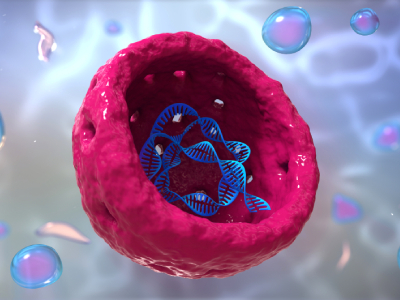
Once considered cellular debris, exosomes and extracellular vesicles (EVs) have emerged as crucial players in the landscape of modern medicine for their potential as diagnostic and therapeutic agents. These naturally occurring vesicles are not just biological byproducts, but instead, carry a wealth of molecular information that researchers can leverage for early disease detection and monitoring as well as a mechanism for targeted therapy drug delivery. As we delve deeper into the complexities and potential of exosomes and clinical applications, it is crucial to understand the importance of exosomal research, current barriers to expanding research efforts, and why investing in exosome isolation technology is critical today.
The Emerging Field of Exosome Research
Exosomes originate from active, living cells and are highly abundant in our bloodstream. They are essential biological resources for research, diagnostics, and therapeutics as they reflect the body's status in real time. They can be thought of as the body's email system, delivering messages from cell to cell with vital health information and cargo that can modulate cell responses. By intercepting their transmission, we can learn a lot about what is happening in the body or what is likely to occur in the future.
Even though scientists have known about exosomes for a while, we are really at the nascent stage of fully understanding their potential in assay development. Clinicians now commonly use liquid biopsies based on cell-free DNA (cfDNA) to inform clinical decisions, a practice that has become widespread relatively recently. We are now at that point again — crossing another technological chasm. Exosome assay development and research are where cfDNA was ten years ago when we also saw an explosion of liquid biopsy development and a departure from the gold standard of tissue biopsy. Researchers are now identifying new and interesting targets in biological fluids beyond cfDNA. Exosomes and EVs, for example, give you access not just to DNA but also to RNA and proteins — the ‘holy trilogy’ of biology. By expanding these potential avenues for diagnostic development, we expect there to be newer and more sensitive assays that can unlock the power of exosomes in conjunction with, or as replacements for, cfDNA.
Using exosomes has opened new avenues in understanding the pathophysiology of diseases, particularly cancer, neurodegenerative disorders, and cardiovascular diseases. Their ability to carry disease-specific markers makes them exceptionally promising for noninvasive diagnostic assays, akin to the revolution brought about by cfDNA in liquid biopsies.
Technical Challenges in Exosome Isolation
Exosomes provide many advantages to researchers because they are ubiquitous in the human body, can be identified in different biological fluids, and can be measured at any time. However, isolating exosomes in a way that does not destroy or distort the information they carry has presented significant hurdles in exosome research.
Current methods, such as ultracentrifugation and column purification, require extensive labor and can compromise the integrity of the vesicles. Automated platforms address these challenges by standardizing the isolation processes, thus reducing technical complexity while improving yield, purity, and reproducibility.
By circumventing the labor-intensive and technically challenging aspects of manual exosome isolation, automated platforms facilitate the scaling of exosome research from basic science to clinical applications. This transition is paramount for the realization of exosome-based diagnostics and therapeutics, enabling researchers and clinicians to harness the full potential of these vesicles in a practical, clinically relevant manner.
Exosomes in Early Disease Detection and Monitoring
The diagnostic potential of exosomes is vast, with applications ranging from early cancer detection to monitoring the onset of neurodegenerative diseases. Exosomes have a distinct advantage in early disease detection because they are shed during all phases of cell development, as opposed to circulating tumor DNA (ctDNA), which is primarily shed during cell death. Additionally, exosomes are highly abundant and present in the billions, as opposed to the tens of millions with ctDNA.
An early focus of exosome research has been on early cancer detection. Because exosomes are present in nearly all bodily fluids, they provide a minimally invasive means to access molecular signatures of disease. Early detection of conditions such as pancreatic cancer, which currently has a poor prognosis due to late diagnosis, could dramatically improve survival rates.1 Similarly, the ability to detect exosome-related biomarkers for conditions such as Alzheimer's, cardiovascular disease, or infectious diseases could lead to earlier intervention strategies, potentially altering the trajectory of the disease.
Another burgeoning arena for exosomal research is predicting therapeutic response in minimal residual disease (MRD) applications.2 Analyzing the information exosomes carry in MRD patients would allow frequent and minimally invasive monitoring. An example would be their use in monitoring Multiple Myeloma (MM) patients to determine response to treatment protocols.
Why Should Laboratories Invest in Exosome Research
Investing in exosome research is not just a forward-thinking move for laboratories; it is a pivotal step toward revolutionizing the future of diagnostics and therapeutic interventions. Compelling research into the early detection of pancreatic cancer showcases the potential of exosome-based assays to achieve high sensitivity and specificity rates.3 Such advancements underscore the broader applicability of exosome research in identifying various diseases at their nascent stages, where early intervention can dramatically improve patient outcomes. Particularly for conditions like pancreatic cancer, where early diagnosis significantly enhances survival chances, the importance of this research cannot be overstated. Similarly, early detection possibilities for Alzheimer's disease through exosomal analysis could pave the way for preemptive treatment strategies, potentially mitigating disease progression and improving quality of life.
Early disease detection through exosomal biomarkers promises to shift the paradigm from reactive to preventive healthcare and represents a more cost-effective approach to disease management, easing the financial burden on healthcare systems. Laboratories venturing into exosome research are at the forefront of a transformative shift in medical science, where the focus is on preempting disease rather than contending with its advanced stages. The advice for laboratories, assay developers, and researchers is clear: embrace the cutting-edge technology and methods in exosome research to contribute to a future where early detection and intervention become the norm, heralding a new era of healthcare that benefits patients and the broader medical community alike.
The journey of exosome research from a niche area of cellular biology to a promising frontier in diagnostics and therapeutic delivery is a testament to the rapid advancements in biomedical sciences. As we continue to unlock the information carried by these tiny vesicles, the potential for improving patient care and outcomes seems boundless. As the landscape of exosome research continues to evolve, we are only beginning to understand their full diagnostic and therapeutic potential. Through ongoing research, technological advancements, and interdisciplinary collaboration, the next decade promises to bring exosome-based applications from the realm of possibility into reality, marking a new era in precision medicine.
About the author: Michael Nall joined Biological Dynamics as Chief Commercial Officer in 2022 and has been a leader in healthcare and biotech for over 30 years. Most recently, he served as the President, CEO, and Board Member at Biocept, a publicly traded cancer diagnostics company, where he led the company’s transition from research and development to full commercialization. Nall has served on the boards of Nonigenex, a company focused on maternal fetal health; Alacrity, an LA-based digital health company; and Clearity Foundation, a non-profit dedicated to supporting women who have been diagnosed with ovarian cancer. He also serves on the industry relations committee for the Moores Cancer Center. He holds a Bachelor of Science in Business Administration from the University of Central Missouri.
References
- Cancer Stat Facts: Pancreatic Cancer. NIH SEER. Accessed March 14, 2024. https://seer.cancer.gov/statfacts/html/pancreas.html
- Bergantim R, Peixoto da SS, Polónia B, et al. Detection of measurable residual disease biomarkers in extracellular vesicles from liquid biopsies of multiple myeloma patients-a proof of concept. Int J Mol Sci. 2022;23(22):13686. doi: 10.3390/ijms232213686
- Hinestrosa JP, Sears RC, Dhani H, et al. Development of a blood-based extracellular vesicle classifier for detection of early-stage pancreatic ductal adenocarcinoma. Commun Med. 2023;3:146. https://doi.org/10.1038/s43856-023-00351-4