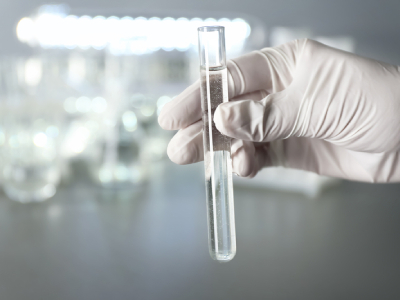
Water is arguably the most fundamental substance in the laboratory. But not all water is created equal. There are three main types of water: Type I, Type II, and Type III. Type III water, or primary grade water, is used for non-critical work, like rinsing glassware. Type II water, or purified water, is most often used for media preparation and buffer creation. Type I water, or ultrapure water, is used in highly sensitive techniques, like chromatography, spectroscopy, and cell cultures. If you are conducting critical research, your water needs to be impurity- and contamination-free. Type I ultrapure water has a resistivity of 18.2 MΩ-cm at 25°C, ensuring the accuracy of your experimental results. Still not sure if your lab needs ultrapure water? Check out this handy list of Frequently Asked Questions.
1. What impurities may be in my lab water?
Drinking water regulations can vary on local, state, and country levels. The properties that make water a ubiquitous solvent in the lab are the same which leads it its easy contamination. Dissolved gases, inorganic compounds, microorganisms and bacteria, organic compounds, and particulates are the most common impurities in water. Even trace amounts of these impurities can negatively affect experimental results.
2. What are the most common applications for ultrapure water?
Sensitive chromatographic and spectroscopic techniques demand ultrapure water. These techniques commonly include high-performance liquid chromatography (HPLC), liquid chromatography-mass spectrometry (LCMS), gas chromatography-mass spectrometry (GCMS), and graphite furnace atomic adsorption spectroscopy (GFAAS). During chromatography analysis, water contaminants can produce artificially high background values. Likewise, in spectroscopic techniques, water impurities can lead to high sample concentrations or errors in blanks and calibration samples.
But chromatography and spectroscopy are not the sole recipients of ultrapure water. You should also use ultrapure water when working with the polymerase chain reaction (PCR) technique, histology and immunohistochemistry, mammalian cell culture, and trace analysis.
3. What technology is used to create ultrapure water?
Typically, the ultrapure water process begins with pretreatment, usually through a reverse osmosis water filter, activated carbon water filter or UV purification before employing a deionizing water system of ion exchange or electrodionization. Some technologies target specific contaminants while others focus on a broader spectrum of impurities. Combining two or more of these technologies ensures impurities are removed, reaching the extremely low levels necessary for ultrapure water regulations.
Some ultrapure water manufacturers have even patented their purification techniques. ELGA LabWater, for example, pioneered PureSure, a unique technology where a double purification pack and monitoring system ensure accurate results with uninterrupted workflow through a deionization process.
4. How do you store ultrapure water?
Ultrapure water can be stored in either a recirculating or static system. In a static system, the water in the reservoir is made available after a single pass through a combination of IX resins, UV radiation, and filtration. Meanwhile, a recirculation storage system purifies the water on an ongoing basis, ensuring it is continuously flowing to help prevent biofilm formation. Ultrapure water is unstable, meaning if it comes into contact with impurities, it will try to absorb them into its structure. Thus, regardless of the system you use to store ultrapure water, take precautions to ensure there is as minimized a risk of contamination as possible.
5. What are supply options for ultrapure water?
Choosing the correct ultrapure water supply option hinges on a few design components, such as allocated space in the lab, the physical layout of the lab, and whether it’s a single lab, a suite of labs, or an entire building. How much water is used per day and the applications it is used for should also be taken into account. Centralized systems, where purified water is distributed via pipework, are recommended for labs that require high volumes of water consistently. If you need to provide purified water to multiple floors in a building, a floor-by-floor system that distributes specific levels of purified water to different floors is appropriate. Point-of-use systems deliver mains water via pipework, purifying it to the required quality with a small purification system installed where the water is dispensed.
6. Is there a way to easily verify my ultrapure water quality?
If you’re using ultrapure water in your analyses, your results are likely very sensitive to fluctuations in the quality of your reagents. For this reason, it’s critical to be able to easily ensure the consistent quality of your ultrapure water supply. Look for a system that lets you easily and accurately monitor key quality parameters, such as resistivity and TOC, as you dispense the water you’re about to use. It’s also important to be able to look back and review your water quality records, so choose a system that makes it easy to trace the quality data of your past dispenses. Some recent products embed digital innovations that enable services such as online quality monitoring, so you can just log in from anywhere to review your system’s records.
7. Are there sustainable options when generating ultrapure water?
Absolutely. There are multiple ways to promote a green lab while using ultrapure water. If you are in the market to purchase a new purification system, look for manufacturers that build sustainable options into their equipment, such as power-saving features that turn the system off when not in use, or low-energy consumption components. Leaving lab equipment turned on when not in use wastes water. For example, a continuous 1.5 gallons per minute trickle flow through a small cooling unit uses up to 788,400 gallons a year. To waste as little water as possible, you can store excess water using intermittent recirculation tanks that keep the water pure without using a large amount of energy.