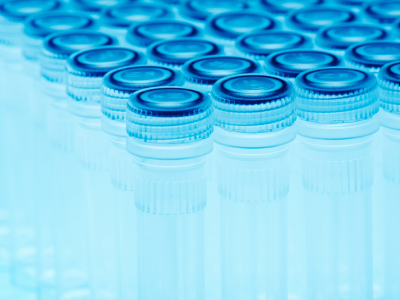
As with all experimental work, a little bit of prior planning goes a long way to ensuring a smooth procedure. Although it might seem non-obvious, this planning should involve taking the time to select the best type of tube for storing your samples in, as this can dramatically affect your experimental results due to contamination, sample loss, or even interference with analytical techniques.
Placing samples into tubes that cannot withstand the processing or storage conditions may cause the container to fail, leading to sample loss and the need to repeat an experiment, which increases consumables costs. This guide provides several tips to consider when selecting the most appropriate container for your sample—hopefully saving you from making a mistake and having to repeat experiments.
Chemical Compatibility
Ensure that the sample tube you choose is compatible with the biological sample itself, as well as any solvents, acids, or buffers you may use during the protocol. Plastic tubes often contain residual compounds added to polymers to improve their processability, but these compounds (called leachables and extractables) may contaminate samples, especially during long-term storage. In addition to sample contamination, solvents may also degrade the integrity of a container, causing it to swell, crack, or leak.
Compatibility with Analytical Techniques
Another key aspect of high-quality tubes is their compatibility with a wide range of laboratory processes and analytical techniques. If a sample is going to be analyzed without being withdrawn from its tube, the tube should not interfere with analytical methods. Fourier-transform infrared (FTIR) spectroscopy is finding increasing use for monitoring biochemical processes to determine a microorganism’s composition and how it responds to its environment.1 For FTIR spectroscopy and any other spectroscopic techniques, the tube should be optically clear and should not absorb in the infrared region of the electromagnetic spectrum. Similarly, during flow cytometry, choosing a sample tube with a high optical clarity is necessary to achieve a high signal-to-noise ratio.
Whereas in PCR experiments, using tubes that are free from contaminants such as DNase, RNase, and endotoxins (pyrogens) is essential for accurate results. Tubes designed for efficient sample collection, transport, and direct analysis play a critical role in this process. Dual-Cap Sample Collection PCR Tubes from Azenta Life Sciences is an example of a design allowing seamless processing with both manual and automated techniques.8
Storage Conditions
After being added to a tube, the sample will be stored until it is needed for the next step of the protocol, so the storage conditions should be considered when selecting the container. If a sample is light-sensitive, consider purchasing amber tubes to block specific wavelengths of light from damaging the samples within. If the sample will require cryopreservation, the sample tube must be able to withstand rapid thermal contraction and expansion during freezing and thawing so that it does not crack.
Surface Adsorption
Some microorganisms and analytes can adsorb onto the surface of containers, so it’s critical to ensure that the tube’s material does not enable this. Recent research has shown that some bacteriophages can adsorb onto polypropylene sample containers, which can be prevented by plasma treating the container.2
If you worked for months to synthesize a few milligrams of a drug candidate and place it into a container onto which it adsorbs, you will lose precious sample in the process. The loss of analyte due to surface adsorption onto its container is possible during the analysis of many samples, including urine samples and drug candidates.3,4 The surface of glass containers has silanol groups that can adsorb analytes via hydrogen bonds, while plastic containers tend to adsorb non-polar analytes via hydrophobic interactions.
Although steps can be taken to prepare your samples or treat the container to minimize these interactions, it is typically much easier, quicker, and cheaper to just select a suitable container at the outset.
Sample Volume
When working with liquids, a dynamic equilibrium exists between the liquid and gas phases, wherein some of the liquid phase evaporates and fills the headspace of the container. If a sample is placed in a container that is too large, a significant amount of the liquid will evaporate and fill the container headspace. This effectively increases the concentration of analyte in the remaining liquid phase.5,6 Tubes designed for specific techniques will also have fill percentages that are most suitable, such as centrifugation tubes, which should be at least 75% full.7
Heat Transfer
Cryopreserved samples must be reheated to ambient temperature, and a uniform wall thickness in sample tubes ensures that the sample will be evenly reheated. During biochemical reactions, this will also provide more homogeneous reaction conditions, increasing the reproducibility of your results. The wall thickness is also important, with thinner tube walls providing faster heat transfer. However, a balance between rapid heat transfer and tube integrity must be achieved.
Closure/Sealing Mechanism
Many biological samples are susceptible to oxidation by oxygen in the air, or the samples may be anaerobic. If airtightness is required, a container’s material of construction and its sealing mechanism must be airtight. Many plastic containers are permeable to air, which may lead to sample oxidation over time. Similarly, not all tube caps are airtight
When airtightness is required, tubes with aluminum seals can be used, as the seal can be pierced with a syringe needle to withdraw the sample. However, once the aluminum seal is broken, the sample is exposed to air. Tubes with a butyl rubber septum may be more appropriate if multiple withdrawals are needed, such as in studies tracking changes over time, as septa re-seal themselves after the needle is removed.
However, you may work with aerobic microorganisms, and storing these microorganisms in a sample tube isolated from oxygen will kill the microorganisms within if stored for a sufficiently long time. In this case, tubes specifically designed for aerobic samples would be preferred.
Container Shape
If you’re going to centrifuge your samples, conical tubes are preferred, as this promotes pellet formation. If samples are going to be subjected to flow cytometry, a round-bottom tube is ideal, as this allows the sample to be more easily recovered.8
Mechanical Integrity
Some experimental processes generate massive forces on sample tubes, and if the tube is not designed to withstand these forces, it may break. For example, if a tube will be used for centrifugation, it must be able to withstand the centrifugal forces exerted upon it.8 Centrifuge tubes are specially designed for this purpose and are often made of polypropylene or polycarbonate. If the sample will be subjected to temperature and pressure changes like those used during lyophilization, the container should be robust enough to withstand the stresses generated during this process.
About the Author
Brandon Sharp, Ph.D. is a freelance content writer with hands-on experience designing organic materials for lithography applications.
References
- Kassem A, Abbas L, Coutinho O, et al. Applications of Fourier Transform-Infrared spectroscopy in microbial cell biology and environmental microbiology: advances, challenges, and future perspectives. Front Microbiol. 2023;14:1304081. doi:10.3389/fmicb.2023.1304081
- Adsorption of bacteriophages on polypropylene labware affects the reproducibility of phage research | Scientific Reports. Accessed August 12, 2024. https://www.nature.com/articles/s41598-021-86571-x
- Li W, Luo S, Smith HT, Tse FLS. Quantitative determination of BAF312, a S1P-R modulator, in human urine by LC-MS/MS: prevention and recovery of lost analyte due to container surface adsorption. J Chromatogr B Analyt Technol Biomed Life Sci. 2010;878(5-6):583-589. doi:10.1016/j.jchromb.2009.12.031
- Shia J, Xu J, Murphy BP, Chambers EE. Overcoming Glass Vial Adsorption Effects for Trace Analysis of Basic Compounds by LC/MS/MS.
- Schouwers S, Cuypers E, Vervaet S, Uyttenbroeck W, Neels H. Sample evaporation from pierceable cups: Still an important source of analytical error. Clinical Biochemistry. 2010;43(18):1464-1467. doi:10.1016/j.clinbiochem.2010.09.004
- Spandrio L. [Pre-analysis variability: the effect of evaporation on the error of measurement, with special reference to sodium and potassium]. Quad Sclavo Diagn. 1984;20(1):110-121.
- Carter S, Lu W, Moore M, Granchelli J, Neeley C. Considerations When Selecting Conical Tubes for Centrifugation Applications.
- eBook: How Storage Tubes Affect Sample Integrity | Azenta Life Sciences. Accessed August 7, 2024. https://www.azenta.com/resources/how-does-your-choice-tube-affect-sample-integrity