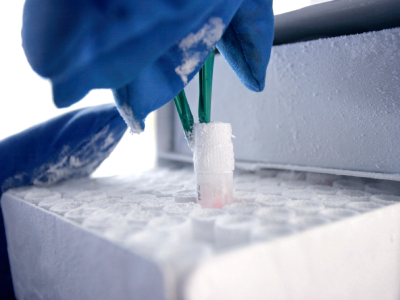
Without expert handling and meticulously controlled storage, product integrity can easily be compromised, leading to potentially disastrous product and research loss for CGT companies and their investors.
By Kenan Moss, Application Specialist Cell & Gene Therapy, PHC Corporation of North America
For patients living with currently untreatable and life-limiting conditions, cell and gene therapies (CGTs) represent an exciting possibility — the possibility of effective treatments or even cures; offering the chance to live healthier, longer lives. It is no surprise, then, that the global CGT market is booming. In 2023 alone, the market was valued at USD 9.95 billion, and it is anticipated to expand to USD 106.03 billion by 2033 [1].
However, bringing CGTs to market is fraught with difficulty. To succeed, CGT companies must navigate and overcome several unique challenges, including the inherent instability of their products, high production costs, and the need for precise storage conditions.
In this article, we discuss these challenges, highlight the critical but often overlooked role of preservation equipment in mitigating risks, and explore the limitations of current preservation approaches that are driving researchers toward a new alternative.
The CGT difference: inherent fragility, with zero margin for error
While developing any new therapeutic comes with significant difficulties and risks, the nature of CGTs makes for an especially challenging development environment.
For example, CGT products are very expensive to produce. In fact, CGTs account for some of the world’s most expensive drugs, including the recently FDA-approved hematopoietic stem cell gene therapy LENMELDY, with its wholesale cost of $4.25 million [2]. The high cost of CGTs, combined with the fact that the complex and slow manufacturing processes that typically yield very small volumes of product, means that CGT developers operate with virtually no margin for error.
But that’s not all. Compounding this challenge is the inherent instability of CGT products. Without expert handling and meticulously controlled storage, product integrity can easily be compromised, leading to product and research loss that can be financially disastrous for CGT companies and their investors. For venture capital-backed startups, such losses can severely impact the return on investment (ROI), potentially jeopardizing future funding and the company's survival.
This unique combination of high costs, low yields, and product fragility elevates the importance of preserving product integrity beyond merely protecting valuable research. It becomes a critical factor in ensuring the financial viability of CGT companies and maintaining investor confidence in this promising but high-risk field.
Protecting precious research: the crucial role of preservation equipment
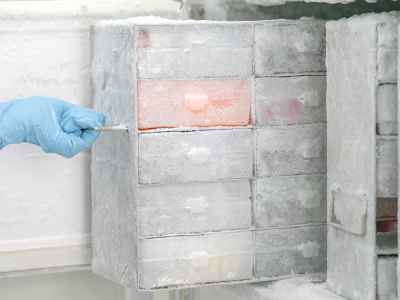
Effective preservation equipment directly impacts the integrity of valuable research materials and, by extension, the success of CGT development programs.
The instability of CGT products necessitates careful handling throughout their lifecycle — especially when it comes to storage. Depending on the specific CGT product, storage temperatures typically range from ultra-low (-40°C to -80°C) to cryogenic (-150°C and below) [3]. These strict requirements mean that reliable, robust and efficient freezers are critical for successful CGT research and development.
Effective preservation equipment directly impacts the integrity of valuable research materials and, by extension, the success of CGT development programs. As the CGT field grows, so does the need for these specialized freezers. In the last five years alone, researchers started 3,285 clinical trials to evaluate CGTs [4], highlighting the increasing demand for ultra-low and cryogenic freezers in labs and production facilities.
As CGT research advances, so does the technology used to preserve these valuable materials. Researchers and companies now face important choices about which preservation methods and equipment will best meet their needs, weighing factors like reliability, efficiency, and cost against their specific research requirements.
Conventional preservation challenges: the drawbacks of liquid nitrogen freezers
When it comes to ultra-low and cryogenic preservation of CGTs, liquid nitrogen freezers have typically been the freezer of choice. These freezers work by releasing liquid nitrogen into an insulated chamber, where it evaporates and absorbs heat from the chamber and its contents. This process causes a dramatic temperature drop, quickly freezing the items inside and maintaining them at cryogenic temperatures.
However, this type of freezer comes with myriad drawbacks and introduces unnecessary risk:
- Complex and costly logistics - Managing the logistics of liquid nitrogen — whether supplied via gas cylinders, dewars, liquid microbulk tanks, or large liquid bulk tanks — can be very demanding and comes with an array of additional costs, many of which aren’t always obvious. For example, bulk nitrogen supply via cylinders doesn’t just involve the cost of the cylinders and gas, but also delivery fees and cylinder rental, as well as the hidden costs of wasted gas [5].
- Supply chain vulnerability - Supply chain issues can introduce risk for CGT researchers. Disruption in the supply chain — such as delivery delays or liquid nitrogen shortages [6] — could lead to insufficient liquid nitrogen for the freezers. Without enough liquid nitrogen, liquid nitrogen freezers can’t adequately cool their contents, which could lead to a temperature rise within the freezer, potentially compromising valuable samples.
- Long, multi-year contracts - Bulk nitrogen suppliers often demand multi-year contracts, which can lock customers into fixed prices. This arrangement can prevent companies from benefiting from market fluctuations or more competitive offers, potentially keeping operational costs unnecessarily high [5].
- Health and safety risks - Liquid nitrogen can also be hazardous to lab personnel if not handled appropriately, causing cold burns and frostbite, and creating oxygen-deficient atmospheres if leaks occur in confined areas [8]. Additionally, cryopreservation in liquid nitrogen can cause vials and tubes to explode during freezing or thawing, which can harm lab personnel, damage lab equipment, and lead to direct loss or contamination of products [9].
- Temperature gradients - Liquid nitrogen freezers can suffer from a lack of temperature homogeneity throughout the freezer chamber. Temperature gradients within the freezer can potentially impact sample and product integrity [10].
- Sustainability concerns - The production of liquid nitrogen is energy-intensive, requiring approximately 1 kWh of energy per kilogram produced [11]. Naturally, this raises questions about the environmental impact of liquid nitrogen-based preservation, especially when considering the carbon footprint of the wider liquid nitrogen supply chain.
All of these factors culminate in significant difficulties for research organizations — difficulties that are exacerbated for start-ups that typically lack the in-house resources to effectively manage and navigate them, and for whom outsourcing cold storage to a biorepository represents an unworkable alternative.
An emerging alternative
It is clear, then, that liquid nitrogen freezers present several challenges for CGT companies looking to minimize risk and maximize chances of program success. But taking on these additional challenges and risks need not be inevitable — mechanical freezers are emerging as a promising alternative. Unlike liquid nitrogen freezers, mechanical freezers use standard refrigeration cycles and refrigerants to achieve and maintain ultra-low temperatures, without relying on liquid nitrogen as a consumable.
This fundamental difference in operation offers several key advantages for CGT companies looking to optimize their research operations and reduce risks:
- Simplified logistics: Mechanical freezers eliminate the need for a continuous supply of liquid nitrogen, simplifying operations and reducing hidden costs associated with gas delivery, storage, and waste.
- Sidestepping safety concerns: As discussed above, working with liquid nitrogen can pose substantial safety risks to lab personnel, either through accidental direct contact with the substance or through liquid nitrogen leaks in confined areas. Opting for mechanical freezers simply eliminates these risks.
- Consistent in-chamber temperatures: While temperature inhomogeneity is inherent to liquid nitrogen freezers, mechanical freezers are designed to deliver and maintain consistent temperatures throughout the entire unit chamber. Ensuring consistent in-chamber temperatures is, of course, critical to reduce the risk of compromised samples and products.
- Space efficiency: The rectangular design of many mechanical freezers can help optimize lab space usage compared to some liquid nitrogen storage systems.
- Lower total cost of ownership: Due to not requiring expensive and unsustainable liquid nitrogen, modern mechanical freezers can offer a lower total cost of ownership and reduced environmental impact [11].
Some manufacturers have also developed additional features to enhance the performance of mechanical freezers for CGT applications. For example, dual cooling systems with independent refrigeration circuits — such as in the TwinGuard® ULT Freezer — can provide added redundancy and sample protection [12].
Protecting CGTs, advancing healthcare
Without a doubt, CGTs offer immense potential to transform the lives of patients in urgent need of effective new treatments. However, the path from research to market is fraught with unique challenges. The inherent instability of CGT products, combined with their high value and low yield, creates a development environment with virtually no margin for error — particularly when it comes to storage and preservation.
These high stakes have brought the limitations of traditional liquid nitrogen freezers into sharper focus. As the CGT field evolves, so too, must the technology used to preserve these valuable materials. Mechanical freezers are emerging as a promising alternative, offering potential solutions to many of the challenges posed by liquid nitrogen systems.
By prioritizing effective, reliable, robust and energy efficient mechanical preservation equipment, CGT research organizations can better manage risk, reduce longer-term operating costs, protect precious products and drive new CGT breakthroughs.
About the author: Kenan Moss is an Application Specialist for Cell and Gene Therapy with PHC Corporation of North America. With several years of experience in cell culture and bioprocessing, combined with an MS in Biotechnology from Utah State University, Kenan supports scientists and labs across the US to protect precious research via sample and product preservation and cultivation best practices.
References
[1] Biospace, "Cell and Gene Therapy Market Size to Reach USD 97.33 Bn by 2033," 5 April 2024. [Online]. Available: https://www.biospace.com/u-s-cell-and-gene-therapy-clinical-trial-services-industry-is-rising-rapidly#:~:text=Cell%20And%20Gene%20Therapy%20Manufacturing%20Market%3A%20The%20global%20cell%20and,period%20from%202024%20to%202033. [Accessed 4 August 2024].
[2] G. Smith, 20 March 2024. [Online]. Available: https://www.bloomberg.com/news/articles/2024-03-20/world-s-most-expensive-drug-is-now-4-25-million-gene-therapy. [Accessed 23 August 2024].
[3] L. Moreira, 21 June 2022. [Online]. Available: https://www.bioprocessonline.com/doc/cell-and-gene-therapies-evolving-temperature-controlled-requirements-call-for-specialized-logistics-solutions-0001. [Accessed 23 August 2024].
[4] IQVIA, "Strengthening Pathways for Cell and Gene Therapies: Current State and Future Scenarios," 13 March 2024. [Online]. Available: https://www.iqvia.com/insights/the-iqvia-institute/reports-and-publications/reports/strengthening-pathways-for-cell-and-gene-therapies#:~:text=Over%20the%20last%20five%20years,types%2C%20including%20631%20in%202023.. [Accessed 23 August 2024].
[5] Peak Gas Generation, "Revealing the true costs of bulk nitrogen supply," 9 August 2019. [Online]. Available: https://www.peakgas.com/Articles-and-News/article/cost-of-bulk-nitrogen. [Accessed 4 August 2024].
[6] J. Foust, "Liquid nitrogen shortage delays Landsat 9 launch," SpaceNews, 31 August 2021. [Online]. Available: https://spacenews.com/liquid-nitrogen-shortage-delays-landsat-9-launch/. [Accessed 23 August 2024].
[7] K. G. San, "The Malasian Insight," 4 July 2022. [Online]. Available: https://www.themalaysianinsight.com/index.php/s/389550. [Accessed 4 August 2024].
[8] OSHA, "OSHA - Laboratory Safety. Cryogens and Dry Ice," October 2011. [Online]. Available: https://www.osha.gov/sites/default/files/publications/OSHAquickfacts-lab-safety-cryogens-dryice.pdf. [Accessed 4 August 2024].
[9] U. Hermi, "Ensuring Sample Safety: Understanding and Avoiding Cryogenic Vial Explosion," 19 November 2023. [Online]. Available: https://medium.com/@unifor.hermi.2489265/ensuring-sample-safety-understanding-and-avoiding-cryogenic-vial-explosion-47eae1e8b44b. [Accessed 4 August 2024].
[10] OPS Diagnostics, "Issues in Contamination and Temperature Variation in the Cryopreservation of Animal Cells and Tissues," [Online]. Available: https://opsdiagnostics.com/notes/cryogenicstorage.htm#:~:text=A%20second%20problem%20observed%20in%20liquid%20nitrogen. [Accessed 4 August 2024].
[11] Rutherford & Titan, "The Price Of Liquid Nitrogen In The United States," [Online]. Available: https://www.rutherfordtitan.com/liquid-nitrogen-generators/liquid-nitrogen-price-usa/?v=7516fd43adaa. [Accessed 23 August 2024].
[12] PHC Corporation of North America, "TwinGuard Series -86°C/-80°C Ultra-Low Temperature Freezers," [Online]. Available: https://www.phchd.com/us/biomedical/twinguard-freezers. [Accessed 23 August 2024].