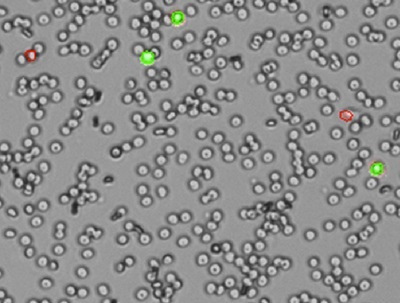
As complex ecosystems, laboratories can sometimes be slow to adopt automated technology. That was not the case for cell counters, however. In general, the lab environment embraced the change from manual cell counters to automated, with the technology becoming both routine and essential for many life science researchers. Compared with manual cell counters, automated cell counters have the advantage of removing human subjectivity from the cell counting workflow. They are also faster than counting manually and can count a larger number of cells, increasing statistical accuracy.
If you are in the market for a new cell counter, be on the lookout for the following purchasing considerations, instrument features and other benefits.
Consider your research applications
When purchasing a new automated cell counter, first consider your research applications—both current and future. It’s always difficult to future-proof your purchases, but evaluating your work, researching trends and keeping a finger on the pulse of the industry will help you make an informed decision.
For example, where single-cell sequencing was once limited by high costs, the development of new methods has reduced the cost so drastically that the technology is now considered the “norm.” Prior to single-cell sequencing, it is crucial to perform quality control analyses for single nuclei sample preparation. Using an automated cell counter, along with fluorescence viability dyes, improves the accuracy and consistency of nuclei counting, standardizing protocols and removing user-to-user variability.
Another example is hepatocyte counting. Hepatocytes are notoriously difficult to count due to irregular shapes, variable nuclei number, autofluoresence and a high amount of debris in samples. Recently, however, DeNovix scientists used machine learning to develop a unique algorithm for the company’s CellDrop Automated Cell Counter to deliver rapid and reliable hepatocyte counts.
You want an automated cell counter that does more than just count cells. Look for an instrument that includes a wide range of application-specific metrics for each cell sample, including:
- Total, live, and dead cell count
- % viability
- Cell diameter
- Cluster sizes
- Total, live, and dead cell per mL
Select the right assay
When purchasing a new automated cell counter, first decide if your new instrument needs to have applications for only brightfield or dual fluorescence and brightfield counting. With brightfield, Trypan Blue has long been the standard for selectively staining dead cells and tissues. It works well to determine the viability of cell samples that have minimal debris. The dye is excluded from entering cells unless the membrane is damaged, staining only dead cells blue. Live cells viewed in brightfield exhibit a bright center with a black membrane while Trypan Blue gives dead cells a dark appearance.
However, Trypan Blue struggles to differentiate nucleated cells from debris. This can lead to counts and viability being overestimated, particularly in the case of more complex samples. A further disadvantage of Trypan Blue is that it can be toxic if used incorrectly, causing cell death during counting. It may also be incorporated into live cells during extended incubations, thereby skewing results.
On the other hand, fluorescence-based assays like Acridine Orange (AO) and Propidium Iodide (PI) can provide more accurate measurements for challenging sample types. AO is a cell membrane-permeable nucleic acid-binding fluorophore that stains the nuclei of all cells in a sample. PI is a nucleic acid-binding dye that cannot permeate live cells but is suitable for staining dead, nucleated cells. The dye only affects nucleated cells, so things like debris and red blood cells are not stained and therefore not counted by the algorithm. Because of this, AO/PI is an excellent choice for measuring clean tissue culture samples as well as complicated or debris-laden samples. Examples of sample types recommended for fluorescence-based counting with AO/PI include primary cells, whole blood samples, irregular cell types, yeast and small cells, nuclei counting, samples with significant debris, and hepatocytes.
Powerful software drives results
An instrument is only as powerful as its software. Be sure to consider an automated cell counter that can handle samples containing significant debris and irregular or small cell types. Clumped cells are challenging to count manually and even with an automated counter, as it’s difficult to discern borders between the cells. Samples that contain debris add further complexity. Invest in a counter that can automatically exclude debris from cell counts, clearly identify cell boundaries within cell clumps, and provide analysis of cluster size and frequency.
If you work with cells that are not round when trypsinized, such as fibroblasts or epithelial cells with a high degree of structure, consider a counter that has a specifically designed “irregular cell mode” or “irregular cell settings/protocol.” These settings can also be leveraged to identify irregularly shaped isolated nuclei, such as smooth muscle nuclei from heart tissue.
Additionally, the software should be intuitive, easy-to-navigate and ideally presented on a touchscreen display. The software should make it easy to visualize cell population counted and, for example, create “gates” that exclude unwanted cells or debris from counts based on cell size, brightness, circularity, and/or fluorescence intensity. All of this should be easily adjusted with a slider control (or similar), and results should be instantly re-calculated and displayed on screen to account for change in real-time. The option of saving optimized parameters as a cell-specific protocol improves lab efficiency and improves consistency.
Short-term and long-term costs, including sustainability
Compared with their manual counterparts, automated cell counters are priced higher at initial purchase—and then there’s the ongoing cost of consumables, such as plastic slides, to consider. To this end, some manufacturers offer washable, reusable slides to offset consumables cost.
DeNovix, meanwhile, developed a proprietary technique to replace hemocytometers and plastic slides. With DirectPipette™ technology, the sample is held in place by surface tension on a “wipe clean” variable height chamber. Therefore, not only does the technology minimize costs, but it also removes a common source of plastic waste from the laboratory. Because of this, the DeNovix CellDrop achieved ACT® Label certification from My Green Lab last year, making it the first automated cell counter accredited by the program. The ACT Environmental Impact Factor Label provides a third-party verification for the environmental impact of laboratory products. The scoring is based on company manufacturing, energy and water use, packaging, product content, end-of-life, etc.
While sustainability is important, so is flexibility and safety. That’s why researchers can use reusable slides or single-use plastic slides with the CellDrop if need be—such as when working with pathogenic samples that require containment.
More features to optimize results
While not absolutely vital, there are a few features of traditional automated cell counters that make cell culture work more convenient.
The instrument’s automation should apply to lighting and focus, as well as counting. Additionally, many life science researchers appreciate a counter with built-in pre-dilution and cell splitting calculators. A large onboard memory enables storage of all results and images—and even makes them searchable.
Software with built-in protocols makes it simple for researchers to select a workflow for common samples. But it’s also important to be able to easily create and save protocols with custom settings for those pesky complex samples.
Look for a device that can export results and images to USB, email, network folders, or printers to ensure maximum flexibility. Export formats should include PDF reports, .csv files, and .png files at the very least. It’s also helpful to have access to these files any time—inside the lab or out.
Lastly, GxP facilities must ensure the instrument is 21 CFR Part 11 compliance ready. The integrated software must support a range of features essential to ensuring compliance, including:
- Password protected system access
- Integrated electronic signature controls
- Comprehensive user account management
- Secure audit trail recording
- Advanced data handling and export tools
Ultimately, your research applications and the types of cells your lab is counting are the most important considerations when purchasing a new automated cell counter. This will drive the type of instrument you purchase and the assays you use. From there, specific features and benefits should be chosen to leverage your specific workflow and laboratory needs.