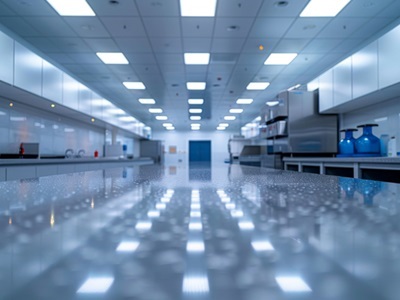
The medical device industry has undergone a remarkable transformation in recent years, driven by technological advancements and heightened demands for innovative healthcare solutions. In 2024, segments such as cardiovascular health, digital healthcare, and robotics continued to drive growth and an increase demand for robust medical device manufacturing environments.
Central to the manufacturing landscape is the cleanroom—ensuring product integrity, compliance, and safety in medical device production. With ANNEX 1 requirement enforcement coming to fruition, we explore five key considerations medical device manufacturers should consider for good manufacturing practice (GMP) cleanrooms.
1. The Importance of Cleanroom Design
As medical device manufacturers adapt to evolving market demands, the scalability of cleanroom facilities becomes critical. Modular cleanroom designs, like Nortek Air Solutions’ SERVICOR, offer a flexible solution that allows for easy expansion or reconfiguration as production needs change. This flexibility is especially valuable for startups or manufacturers looking to enter new markets without having to invest in a full-scale cleanroom based on potential future growth.
A modular frame and ceiling grid system enables manufacturers to add or rearrange components without significant downtime, preserving operational efficiency. For instance, the SERVICOR™ modular cleanroom system allows for rapid adjustments to accommodate shifts in production processes or operational requirements. A modular cleanroom system will enable medical device manufacturers in four ways:
Building a cleanroom using modular components can significantly reduce overall construction costs, while also ensuring that capital is not overcommitted in the early stages of bringing a product to market. Modular cleanrooms are constructed inside of an existing facility by adding prefabricated modules. This approach minimizes disruption to existing operations and allows for budget-friendly scaling.
The cost benefits extend beyond construction; modular cleanroom systems can often be installed in a fraction of the time required for traditional builds increasing the go-to-market speed. Rapid deployment is essential for manufacturers aiming to launch new products quickly or respond to immediate market needs, while also being able to achieve the right cleanroom classification standards.
- Advanced air quality management
The integration of advanced air filtration and distribution technologies ensures optimal air quality, while minimizing operational costs. For example, the SERVICOR system's advanced filtration solutions not only maintain the required cleanliness levels, but also enhance environmental control.
The number of filters in a cleanroom allow manufacturers to achieve varying Class/ISO levels, as well as the filter rating.
- Technological integration
As AI and robotics become more infused in manufacturing, manufacturers may incorporate advanced technologies such as automation, robotics, and real-time monitoring systems. These innovations enhance efficiency and improve product traceability and quality control. Incorporating these elements during the design phase ensures that the cleanroom can support advanced manufacturing processes critical to staying ahead in the market.
- Personnel flow and training
While enclosed cleanrooms easily achieve the cleanliness requirements, the addition of personnel adds a layer of complexity that needs to be accounted for to minimize contamination risks. Working with a partner to design a cleanroom should be prioritized to ensure a thoughtful layout that includes gowning areas, pass-throughs, and streamlined workflow patterns.
Moreover, investing in personnel training on cleanroom protocols is vital to maintaining compliance and cleanliness standards to meet Annex 1. Employees must understand the protocols necessary for operating within a cleanroom environment, reinforcing the importance of their role in ensuring product integrity. Real-time monitoring ensures that doors are not open too often or too long, decreasing the effectiveness of the cleanroom and compromising the products inside.
2. Regulatory Compliance: A Complex Landscape
The landscape of regulatory compliance in medical device manufacturing is complex and ever evolving as we’re seeing with Annex 1. On average, regulations change twice a year and it’s paramount that cleanroom environments adhere to stringent standards, including ISO 14644, FDA regulations, and Good Manufacturing Practices (GMP). As manufacturers strive to meet these requirements, partnering with experts in cleanroom construction becomes essential.
Manufacturers must ensure that their cleanrooms are designed to support sterility assurance processes, quality management systems, and environmental controls to prevent contamination. This includes appropriate HVAC systems, monitoring, and maintenance practices, all of which are crucial for compliance.
Experienced partners in cleanroom construction possess a deep understanding of the regulatory landscape and where it is going to ensure. They can ensure that cleanroom designs meet or exceed compliance requirements. For instance, Annex 1 of the EU’s GMP guidelines has significant implications for medical device manufacturers, particularly regarding sterility assurance and environmental controls, as mentioned above.
- Documentation and validation
Manufacturers also need to ensure that they are following cleanroom compliance every phase of the project – beginning before the modular cleanroom is even constructed. This means that every partner that feeds products into the cleanroom needs to have the correct documentation of all material sourcing. Once the cleanroom is established, medical device manufacturers must establish and maintain protocols for cleaning, monitoring, and validating cleanroom performance to ensure compliance with regulatory standards. It’s critical that medical device manufacturers partner with knowledgeable cleanroom manufacturers who can assist with this process, providing support before and during audits and inspections to avoid delays, fines, and other unforeseen expenses.
The work is not done once a cleanroom is constructed. Manufacturers will be required to perform maintenance, updates, and compliance audits to meet current regulations and update for annual changes. Often, these regulatory updates are simple to address with an experienced cleanroom partner who can help ensure that the cleanroom continues to meet industry standards throughout its lifecycle.
3. Choosing the Right Materials and Functionality
The selection of materials used in cleanroom construction is critical – and it varies based on the classification you need to meet. All materials must be easy to clean, non-porous, and resistant to chemical degradation to maintain the cleanroom's integrity over time.
Investing in high-quality materials not only ensures compliance but also enhances the cleanroom's longevity. Nortek Air Solutions partners with customers to ensure that SERVICOR production meet Annex 1 requirements and recommendations. This includes leveraging a flush wall system, providing upgrades to interlock systems, gasket materials, coving system, as well as ceiling modifications.
It’s always easiest to build these features into the original cleanroom design but for GMP cleanrooms that may not meet some of these Annex 1 requirements, updating these features is relatively achievable. The biggest challenge that Food and Drug manufacturers are going to face with their existing cleanrooms and Annex 1 is the enforcement around documentation.
As we touched on earlier, the cleanroom manufacturer needs to provide a certificate of compliance for materials and ensure that they are quarantining the materials in the shop – meaning the materials used must be limited to just that cleanroom. Having the right cleanroom manufacturing partner to lead you through this process is critical to ensure that cleanrooms are meeting the Annex 1 requirements and the classification you need to achieve.
4. Monitoring and Maintenance: A Proactive Approach
Ongoing monitoring and maintenance are essential for ensuring the longevity and compliance of cleanroom environments. Implementing continuous monitoring systems can provide real-time data on air quality, particulate levels, and environmental conditions.
This proactive approach allows for timely interventions to address any issues before they escalate, ensuring compliance with regulatory standards and maintaining product integrity.
5. Selecting Valuable Partners
The easiest way to ensure speed to market, minimizing costs, and creating a cleanroom solution that meets your needs for today, while providing flexibility for the future is choosing the right partners. Choosing a partner with extensive experience in cleanroom design and construction can significantly impact the success of a medical device manufacturing facility. A partner with a proven track record will possess a portfolio of successful cleanroom projects that demonstrate their ability to deliver functional, compliant spaces tailored to specific manufacturing needs.
The medical device industry presents unique challenges that require innovative solutions. An experienced partner is better equipped to propose tailored solutions, whether through specialized airflow designs, custom filtration systems, advanced monitoring technologies, or even a single station cleanroom. To avoid overbuying, look for partners that have scalable solutions that can quickly be implemented to meet today’s need.
With experience comes the foresight to identify potential challenges and risks in the cleanroom design process. An experienced partner can anticipate issues that may arise during construction or operation and implement strategies to mitigate them, ensuring smoother project completion and a more effective cleanroom environment.
With speed to market playing a critical role in medical device manufacturing, the size of the cleanroom needed to launch a product may be very different than the scale needed down the road, which could require a costly investment to achieve. By partnering with modular cleanroom manufacturers that offer a design that can easily expand and be reconfigured, manufacturers can avoid over investing capital in the early phases, while easily expanding the cleanroom as demand increases.
Building a cleanroom tailored to the needs of medical device manufacturing requires careful consideration of various factors. By understanding current demands, embracing modular design, partnering with compliance experts, and leveraging the experience of industry professionals, manufacturers can create effective cleanroom environments that not only meet today’s challenges, but also easily adapt to future needs.
About the author
With 18 years of experience in the cleanroom industry, Mark Zabala’s comprehensive skill-set spans field installations, site coordination, cleanroom design, and engineering. Mark has been involved with IEST as a voting/contributing member in several working groups as well as an active member of ISPE and SEMI. His extensive background enables him to gather critical insights that lead to the successful implementation of cleanroom systems for customers and partners alike.