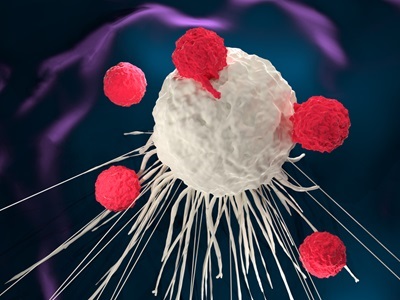
CAR-T cell therapy has shown promising results in treating blood cancers, such as multiple myeloma and certain forms of leukemia and lymphoma1. The formulation of these immunotherapies involves firstly extracting T cells from a patient’s blood, and genetically modifying them in a laboratory to express a chimeric antigen receptor (CAR). These modified T cells are then infused back into the patient, where they target the cancer cells expressing the specific protein recognized by the CAR. This approach to treatment aims to help reduce cytotoxicity to non-target cells, leading to more effective treatment and fewer side effects.
Addressing roadblocks in CAR-T cell therapy manufacture
The current production of CAR-T cell therapies is predominantly centralized, requiring healthcare facilities to send patient samples to specialized manufacturers. This brings with it several significant challenges, for instance, the transportation of cells and final products between healthcare providers and manufacturing sites requires cold chain storage, resulting in substantial logistical expenses. In addition, the time between the initial cell collection and the return of the finished drug product to the hospital can extend to several months, delaying the start of urgent treatment.
Decentralizing the production of autologous CAR-T cells and taking it closer to the patient—such as within hospital laboratories—could mitigate these issues by eliminating long-distance transportation and its associated costs. This approach would also significantly reduce the turnaround time from cell harvesting to therapy administration, potentially to as little as three days, enabling earlier and more effective treatment. There is consequently a growing trend in North America and Europe for larger medical institutions to produce their own cell therapy products on site rather than outsourcing development. Regulatory bodies are increasingly acknowledging the unique nature of cell therapies compared to traditional pharmaceuticals, and are supporting the transition to decentralized manufacturing by offering exemptions to healthcare institutions that meet stringent GMP and quality control standards.2
Accelerating autologous cell therapy production
Traditional CAR-T cell manufacturing does not easily lend itself to this model of care, not least because it can take up to 14 days, involving the key steps of T cell isolation and activation, gene transduction and ex vivo expansion. This expansion process is very resource intensive and costly, and can cause cells to lose their key "stem" features, and consequently, some of their potency and therapeutic efficacy. Recent studies have shown that CAR-T cells are capable of proliferating by themselves in the body,3,4 indicating that ex vivo expansion may not be strictly necessary in many cases. Directly infusing CAR-T cells into the blood stream without ex vivo expansion could therefore preserve the potency of the cells and streamline the development pathway for earlier treatment. Circumventing the lengthy expansion phase could also result in substantial cost savings for manufacturers, encouraging the wider production of cell therapies. For this reason, many biopharma and medical institutions have begun implementing novel, rapid manufacturing processes that can take as little as three days and are far more affordable that typical methods.5,6
Breaking down the barriers to decentralized manufacture
There are clearly still some hurdles—logistical and technical—to overcome to fully decentralize CAR-T cell therapy production and enable the administration of drugs sooner. For example, T cell separation plays a pivotal role in determining the quality of the final therapy, yet separating T cells from blood samples with adequate levels of purity, viability and recovery can be difficult. This is primarily due to the technical limitations of conventional separation techniques, such as density gradient centrifugation, column-based magnetic cell separation and fluorescent activated cell sorting (FACS). As a result, many current cell separation and enrichment protocols often lead to suboptimal cell purity, yield and viability, potentially restricting patient access to cutting-edge therapies. On top of this challenge, these separation methods typically require multiple platforms for each stage of sample preparation, extraction, engineering and culture, each involving single-use components and costly reagents. As a result, these processes are not only expensive but also have a large footprint and are labor intensive, making them inaccessible and financially non-viable to most healthcare providers. These limitations are driving researchers and manufacturers in the biopharma and healthcare sectors to seek more efficient cell separation processes and platforms to improve purity and yield and spur the uptake of rapid, on-site therapy manufacture.
Advanced automated systems for immunomagnetic cell separation
Recent breakthroughs have enabled the development of advanced automated systems for rapid, column-free immunomagnetic cell separation, such as the MARS Bar platform from Applied Cells. These platforms employ matrix-free magnetic technology to minimize dead volume and cell trapping, achieving high purity and recovery rates in cell isolation. This method treats cells gently by eliminating the need for centrifugation and high pressure flush, preserving their viability and physiological integrity for subsequent functional studies. These revolutionary systems are compatible with various input samples, including peripheral blood, bone marrow, and apheresis products, and remove the need for pre- or post-labeling cell washing, greatly streamlining the cell separation process. Features such as automated three-pass cell enrichment ensure consistent separation across multiple runs, enabling the processing of billions of cells within a single closed system. This capability enhances throughput and allows users to move away from slow, labor-intensive manual methods, freeing them to focus on other tasks. In addition, the MARS Bar seamlessly fits into CAR-T manufacturing processes and integrates with other platforms, such as cell transduction and expansion devices. Crucially, the platform has been built according to ISO 13485, and the accompanying software is compliant with the Food and Drug Administration’s (FDA) 21 CFR 11 standard, as well as featuring an audit trail. Together, these marks of quality and compliance support Investigational New Drug (IND) filing and drug manufacturing.
The bright future of autologous cell therapy
Autologous CAR-T cell therapies have already proven effective in treating hematological cancers, spurring extensive research into their potential for a wider range of diseases. Currently, numerous clinical trials are exploring the expanded use of these immunotherapies for autoimmune conditions like systemic lupus erythematosus and hereditary disorders such as cystic fibrosis, with early results showing significant promise. Cutting-edge cell separation technologies and platforms will, no doubt, continue to be pivotal in driving these advances and supporting the decentralized, efficient and scalable production of cell-based therapies that are more widely accessible to patients.
About the author
Dr. Liping Yu obtained her PhD from Carnegie Mellon University in 2006 and then undertook a postdoc and career development at Beckton Dickinson. She is an experienced team leader with a track record of strategic planning and customer engagement, and has overcome significant business and technical challenges to deliver a successful product from concept to production. Dr. Yu has established a large number of close and collaborative relationships with academic and industrial partners, and currently oversees application development at Applied Cells, providing customers with complete solutions by integrating reagent, hardware and software on the MARS platform. The author can be reached at [email protected].
References
1. National Cancer Institute. CAR T Cells: Engineering Patients’ Immune Cells to Treat Their Cancers. National Institute of Health
2. Giorgioni L, Ambrosone A, Cometa MF, Salvati AL, Magrelli A. CAR-T State of the Art and Future Challenges, A Regulatory Perspective. Int J Mol Sci. 2023;24(14):11803. doi:10.3390/ijms241411803
3. Ghassemi S, Durgin JS, Nunez-Cruz S, et al. Rapid manufacturing of non-activated potent CAR T cells. Nat Biomed Eng. 2022;6(2):118-128. doi:10.1038/s41551-021-00842-6
4. Ghassemi S, Nunez-Cruz S, O’Connor RS, et al. Reducing Ex Vivo Culture Improves the Antileukemic Activity of Chimeric Antigen Receptor (CAR) T Cells. Cancer Immunol Res. 2018;6(9):1100-1109. doi:10.1158/2326-6066.CIR-17-0405
5. Yang J, He J, Zhang X, et al. Next-day manufacture of a novel anti-CD19 CAR-T therapy for B-cell acute lymphoblastic leukemia: first-in-human clinical study. Blood Cancer J. 2022;12(7):104. doi:10.1038/s41408-022-00694-6
6. Dickinson MJ, Barba P, Jäger U, et al. A Novel Autologous CAR-T Therapy, YTB323, with Preserved T-cell Stemness Shows Enhanced CAR T-cell Efficacy in Preclinical and Early Clinical Development. Cancer Discov. 2023;13(9):1982-1997. doi:10.1158/2159-8290.CD-22-1276