by Mark Zabala, Senior Manager, Nortek Air Solutions
As pharmaceutical laboratories and manufacturers face evolving regulatory demands globally, supply chain challenges, and dive deeper into personalized therapies, speed to market is critical. To avoid delays and maintain a competitive advantage, ensuring that your cleanroom meets the latest Good Manufacturing Practices (GMP) is essential for maintaining compliance and supporting the highest standards of product quality, safety, and efficacy.
With stringent requirements set by Annex 1 and other global standards, cleanroom design is not just about meeting regulatory benchmarks—it’s about enhancing performance, reducing contamination risks, and improving operational efficiency. As regulations are further enforced, pharmaceutical professionals must adopt a proactive approach to GMP compliance to avoid costly delays and ensure smooth operations. To strengthen their competitive foothold, while adhering to regulations, life science leaders should focus on four key cleanroom considerations.
1. Foundational Compliance: Cleanroom Materials and Construction
Achieving GMP compliance starts long before construction begins. The selection of materials is critical in avoiding contamination risks throughout the manufacturing process. Work with cleanroom manufacturers who provide certificates of compliance and ensure materials are quarantined to prevent cross-contamination. Opt for non-porous, chemical-resistant surfaces that are durable, easy to sterilize, and meet both Annex 1 and FDA requirements to avoid unnecessary delays.
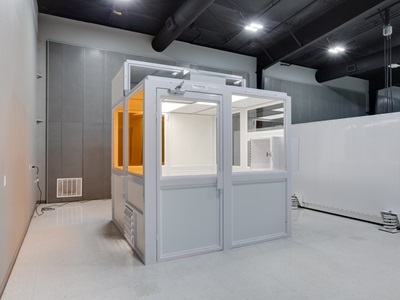
Beyond materials, the construction process itself is pivotal. "The assembly and sealing of cleanroom components are crucial," says Mark Zabala, Senior Sales Manager at SERVICOR by Nortek Air Solutions CleanSpace. "Any gaps or joints during construction can lead to contamination risks. Modular cleanrooms, particularly those made of steel like SERVICOR, offer greater structural integrity and customization to suit your facility’s specific needs." Proper construction reduces the likelihood of contamination and ensures long-term compliance with GMP standards.
In traditional cleanroom designs, walls and ceilings often contain joints, seams, and fixtures that can make comprehensive cleaning more difficult. With the shift toward more stringent GMP standards, cleanrooms must be designed to eliminate such risks. Flush walls and ceilings provide smooth, uninterrupted surfaces, allowing for more efficient cleaning and reducing areas where dust, bacteria, and other contaminants could accumulate.
These design improvements also have a significant impact on the overall integrity of the cleanroom environment. “By eliminating gaps and joints, we remove the potential for build-up of contaminants,” says Zabala. “This not only enhances cleanliness but also supports a higher level of sterility for processes that require ultra-low contamination levels, such as aseptic filling or high-risk pharmaceutical production.”
2. Airflow and HVAC Systems: Managing Contamination at the Source
Once construction is complete, the next step is ensuring that airflow and HVAC systems are optimized to meet GMP requirements. Cleanrooms rely on air changes and filters to maintain strict particulate control. High-efficiency particulate air (HEPA) or ultra-low penetration air (ULPA) filters are essential for trapping airborne contaminants, ensuring that the cleanroom environment remains as sterile as possible.
“The cleanroom’s air handling system must be capable of maintaining specific airflow rates and pressures, while ensuring uniform air distribution throughout the space,” explains Zabala. “Our solutions allow for the flexibility of ceiling components, while maintaining a smooth ceiling finish for that easy-to-clean requirement. Not every piece of equipment will live where originally designed, so the cleanroom should have the ability to adjust to these circumstances.”
The design of airflow systems plays a key role in preventing cross-contamination and ensuring that contaminants are efficiently removed from the cleanroom environment. High-velocity airflow across the cleanroom’s work areas helps push contaminants away from the critical zones and toward the air escape/return. It is also important to have the forethought on where workstations and technology will be placed inside the cleanroom, ensuring that it is not blocking the critical airflow that helps maintain the cleanroom standards.
Pressure differentials between adjacent cleanroom areas are important for controlling the flow of air. Positive pressure in sterile zones helps prevent the entry of contaminants, while negative pressure in potentially hazardous areas ensures that any contamination remains contained and operators are protected.
3. Continuous Data Logging and Monitoring for Compliance
With 39% of life sciences leaders anticipating investing in improving research and development (R&D) in 2025, technology presence in cleanrooms will continue to rapidly increase. As cleanroom technologies and equipment evolve, enhanced methods of monitoring and controlling the environment are needed to ensure the cleanroom is operating as it is designed classification level.
One of the key components of a modern GMP cleanroom is an advanced monitoring and data logging system that continuously tracks environmental parameters such as temperature, humidity, particle counts, pressure differential, and access control. These systems not only ensure compliance with GMP guidelines but also provide real-time insights that can help identify and address potential issues before they escalate.
“The environments in a cleanroom are constantly changing,” said Zabala. “Real-time monitoring is critical in maintaining compliance with GMP standards. By using automated monitoring systems that log data continuously, operators can track trends and take proactive steps to ensure that the cleanroom environment is consistently within acceptable limits.”
For instance, if particle counts exceed a certain threshold or if temperature and humidity levels deviate from the specified ranges, the system can trigger alarms, allowing for immediate corrective actions to be taken. “GMP regulations place a significant emphasis on documentation and traceability,” adds Zabala. “Data logging systems not only improve cleanroom performance but also support accountability. If an issue arises, operators have the historical data to understand the root cause, which is invaluable during regulatory inspections.”
4. Compliance Validation and Continuous Improvement
Once a cleanroom is built and operational, validation is necessary to ensure that it meets the rigorous GMP standards. Validation involves a series of tests and measurements to verify that the cleanroom’s environmental conditions are within the required parameters and that all systems are functioning properly.
“Validation is a critical step in ensuring that the cleanroom meets GMP standards,” says Zabala. “It’s not just about checking off boxes to get up and running; it’s about ensuring that all environmental conditions are controlled and monitored, and that the cleanroom is fully capable of supporting the production of high-quality, safe products.”
Ongoing monitoring, regular maintenance, and requalification ensure that the facility remains in compliance and continues to meet evolving industry standards. With 39% of global life sciences executives looking to improve research and development (R&D) productivity in 2025, leaders can’t afford delays and set backs due to compliance gaps.
The Approach to Achieving GMP Cleanroom Compliance
Achieving GMP-compliant cleanrooms requires a holistic approach that combines intelligent design, real-time monitoring, careful material selection, and regular validation. By considering factors like flush walls, air filtration systems, and continuous data logging, pharmaceutical manufacturers can maintain a sterile, contamination-free environment that meets GMP guidelines.
However, it’s important to remember that compliance also relies on well-defined Standard Operating Procedures (SOPs). While a well-designed cleanroom is essential, without the proper SOPs in place—covering gowning, cleaning, maintenance, and behavior—your cleanroom’s performance can be hindered.
In today’s complex regulatory environment, cleanroom design and construction must evolve to keep pace with changing standards. It is an ongoing commitment that requires constant attention and adaptation. By embracing the latest technologies and adhering to GMP standards, pharmaceutical manufacturers can ensure that their cleanrooms not only comply with current regulations but also remain flexible and innovative to support future growth.
About the author
With 18 years of experience in the cleanroom industry, Mark Zabala’s comprehensive skill-set spans field installations, site coordination, cleanroom design, and engineering. Mark has been involved with IEST as a voting/contributing member in several working groups, as well as an active member of ISPE and SEMI. His extensive background enables him to gather critical insights in his role as senior sales manager at Nortek Air Solutions CleanSpace that lead to the successful implementation of cleanroom systems for customers and partners alike.