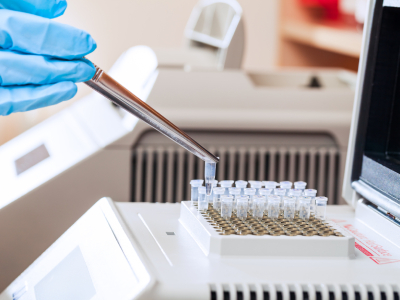
The polymerase chain reaction, or PCR, is a rapid and cost-effective technique to amplify specific segments of sample DNA. Widely used for diagnostics and screening thanks to its high sensitivity, PCR has become the gold standard for most biomolecular and genetic analyses.
During PCR, a small sample of DNA is placed into a tube which then goes through 30 to 40 repetitive cycles containing three main stages — denaturation, annealing, and amplification. These cycles, commonly referred to as thermal cycles, are achieved using a thermal cycler which can precisely control the time and temperature of each repetitive cycle. By using a thermal cycler, researchers can produce millions of copies of DNA from a single small sample in as little time as just a few hours.
When comparing different PCR instruments, some specs to be mindful of are the instruments capacity, whether it has gradient capabilities, and the temperature range of the instrument. For high precision PCR protocols many laboratories opt for an instrument that has gradient capabilities along with a heated lid. For maximized throughput consider an instrument with higher capacity or an automated PCR instrument.
Below you will find a few of our top-rated thermal cyclers, you can compare specifications or request a quote from leading suppliers.
Click here to read thermal cycler reviews submitted by our scientific community. These reviews provide a firsthand account of how various PCR related laboratory products performed in labs around the world.
Want to take your PCR work to the next level? Click here to explore qPCR instruments which combine a traditional thermal cycler with a fluorimeter to amplify DNA while monitoring the reaction to provide real time amplification data.