by Dave Taylor, CEO, Valley Diagnostics
With the UK’s growing and ageing population, cancer diagnoses are expected to exceed half a million annually by 2038-20401. Half of all prostate cancer cases were diagnosed at a late stage (stages three and four) in England in 2021, when treatment options are limited and survival rates decline2. Early detection is crucial to improving patient outcomes and increasing survival rate.
According to Cancer Research UK, one in six males will be diagnosed with prostate cancer in their lifetime3. Prostate cancer often progresses slowly and may not show symptoms in its early stages, leading to many cases being diagnosed only after the cancer has spread beyond the prostate gland.
Following his journey on terminal prostate cancer diagnosis, GB Olympic cyclist Sir Chris Hoy is urging men, especially those with a family history of the disease, to get tested—even if they are under 50.
Current testing methods for prostate cancer presents challenges for patients and healthcare providers. Patients often have a lack of awareness of the risk factors of prostate cancer, which can include age, family history, and ethnicity—particularly for black men. One in four black men will get prostate cancer, which is double the rate for white men4. Social stigma can also negatively impact prostate cancer testing rates, with many men facing embarrassment related to urinary symptoms or the digital rectal exam (DRE).
Due to the lack of a UK prostate cancer national screening program and varying guidelines, healthcare providers are unable to achieve a consistent approach to prostate cancer diagnosis.
PSA test
The current prostate-specific antigen (PSA) screening method provided by the UK NHS measures the amount of PSA in blood. PSA is a protein produced by both cancerous and noncancerous tissue in the prostate. However, the PSA test process is time-consuming, expensive and does not effectively detect cancer at an early stage.
Current PSA tests have around a 50% accuracy due to high false positives and false negatives, leading to delayed diagnoses and invasive procedures. Additionally, around 15% of people with normal PSA levels may still have prostate cancer, meaning the disease can go undetected and may only be diagnosed later, when treatment has lower success rates.
For men aged 50 or over in the UK, the current standard pathway for prostate cancer testing begins with a PSA blood test. If the test detects elevated levels of PSA in the blood, a DRE is performed. Risk assessment tools are used to assess the risk level of the individual developing prostate cancer. These tools factor age, race, and family history to determine whether to proceed with further advanced diagnostics.
The next step is often multiparametric magnetic resonance imaging (mpMRI), which can identify suspicious areas. The UK National Institute for Health and Care Excellence (NICE) guidelines now recommend mpMRI before a biopsy if PSA is elevated. This stage is implemented with the aim of reducing unnecessary biopsies.
The final stage involves a targeted prostate biopsy (MRI-ultrasound fusion), which is becoming the new standard, replacing the older 12-core transrectal ultrasound (TRUS)-guided approach. Tissue is collected and examined histologically to determine Gleason score, which grades cancer aggressiveness.
This multi-step follow-on process adds significant additional costs on top of the cost of an initial PSA test.
In the U.S., the PSA test is not recommended for routine prostate cancer screening in the general population5 due to some cancers being detected through the PSA screening growing so slowly that they would never cause symptoms or become life threatening. However, treating them can cause harm6.
Lateral flow tests
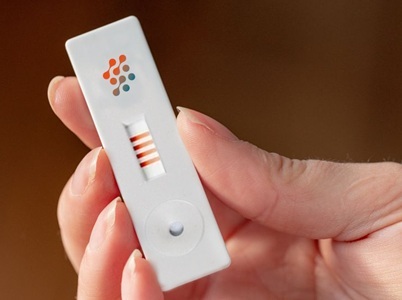
Multi-biomarker variants of the Lateral Flow Test (LFT) could provide an alternative testing method for cancer. Following widespread use during the COVID-19 pandemic, the public is now more familiar and comfortable with self-testing technology.
Several key biomarkers have been identified in the urine of men with prostate cancer which offers superior diagnostic accuracy compared to the blood-based PSA laboratory test. LFTs can be performed easily and deliver results at the point of use within minutes, offering rapid and accessible detection of key biomarkers without the need for specialized, costly equipment. An additional benefit is that LFTs only require a naturally expressed urine sample rather than an invasive extraction of blood. As this type of test is more accessible, it encourages testing amongst younger men, allowing cancer to be detected at an earlier stage when effective interventions can be made.
Such a test will have the ability to diagnose early-stage prostate cancer as well as distinguishing prostate cancer from Benign Prostatic Hyperplasia (BPH).
LFTs will benefit healthcare providers by helping to identify high-risk patients quickly, allowing specialists to prioritize urgent cases for biopsy. Their use in an improved screening process would significantly lower the burden on healthcare services by reducing unnecessary referrals. This can help manage backlogs in urology services and cut waiting times.
A significant advantage is the cost-efficiency of LFTs, as they are significantly lower cost than lab-based blood tests or MRIs. Furthermore, early detection reduces long-term treatment costs by catching cancer before it becomes aggressive and more difficult to treat.
Using biomarker testing for cancer diagnostics
Non-invasive, low-cost biomarker testing has the potential to transform cancer diagnostics. For example, the University of California Davis Health research team found that the levels of three polyamine molecules in saliva and urine samples of head and neck cancer patients were significantly higher than those in healthy individuals7. Saliva and urine samples are easily obtained in a non-invasive and inexpensive manner. This type of testing allows patients to gather their samples at home, which saves health care costs.
Similarly, biomarker-based LFTs using urine have the ability to diagnose early-stage prostate cancer as well as distinguishing prostate cancer from BPH. This type of testing could pave the way for decentralized testing and personalized care for men, ultimately improving patient outcomes and saving lives.
About the author
Dave Taylor is an entrepreneur with international experience working in IoT, and complex web and app development. He entered lateral flow and med tech as founder and COO of Bond Digital Health, developer of a lateral flow data capture and data management platform. Valley Diagnostics was the logical extension to this and gathers a number of key colleagues with expertise in the field of biomarker research and lateral flow development.