by Dave DeFusco, Vice President of Engineering, Sensaphone
In research, biopharmaceutical and clinical applications, cryopreservation and cold storage play a vital role in preserving biological materials. However, maintaining the integrity of these assets requires stringent control over storage conditions, particularly ultralow temperatures.
The integration of remote monitoring systems enhances the safety, reliability and efficiency of cryopreservation and cold storage operations by providing real-time temperature tracking, predictive maintenance capabilities and compliance support.
Typical Cryopreservation Conditions
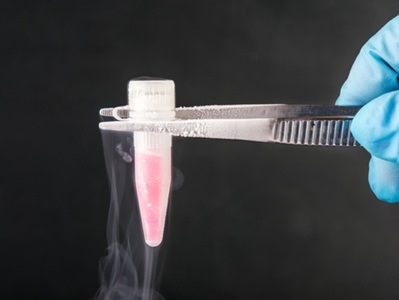
Cryopreservation involves preserving cells, tissues and other biological materials at extremely low temperatures to maintain their viability for future use. It is essential in medical research, drug development and regenerative medicine.
Cryopreservation storage conditions include ultralow-temperature freezers, which maintain temperatures between -80 and -196 °C and are essential for the long-term preservation of sensitive biological samples. Another common method is liquid nitrogen storage at -196 °C, which is widely used in biobanks and research facilities to ensure the stability of biological materials over extended periods.
Challenges in Cryopreservation and Cold Storage
Maintaining consistent ultralow temperatures in cryopreservation and cold storage presents several challenges including temperature fluctuations due to equipment failures, power outages or human error. These fluctuations pose a significant risk of asset loss, with potential financial and scientific consequences. In addition, regulatory compliance requirements demand precise documentation of storage conditions to ensure adherence to industry standards.
The Role of Remote Monitoring Systems
Remote monitoring systems provide real-time oversight of critical storage conditions using advanced sensors and cloud technology integration. These systems collect, transmit and analyze temperature data while providing instant alerts if storage conditions deviate from safe parameters.
Core Components
- Sensors and probes: Detect temperature, humidity, CO2 levels and other key conditions.
- Cloud-based data logging: Ensures secure storage and accessibility of historical data.
- Real-time alerts: Notify users via phone, SMS or email for immediate response to potential issues.
Benefits of Remote Monitoring in Cold Storage
Monitoring systems continuously record temperature data and alert personnel when conditions exceed preset limits, allowing for proactive intervention and reducing the risk of asset degradation. These systems also support both predictive and preventive maintenance strategies.
- Preventive maintenance involves routine upkeep at scheduled intervals based on best practices and historical data, such as the average time between equipment malfunctions.
- Predictive maintenance leverages real-time data analytics to detect potential issues before they arise. As a more dynamic and efficient approach, predictive maintenance is increasingly preferred for maximizing uptime and optimizing equipment performance.
Compliance and Data Logging
Advanced monitoring systems also function as automated data loggers, ensuring compliance with Good Laboratory Practices (GLP) and regulatory requirements from agencies such as the FDA and CDC. By maintaining digital logs, these systems create an auditable trail for inspections and accreditation.
Data loggers communicate with sensors at set intervals, automatically recording data points with corresponding dates and times. Relying on manual monitoring increases the risk of inaccuracies, consumes valuable personnel time, and diverts attention from critical workplace tasks.
Cloud-based digital data loggers streamline monitoring by automatically transmitting collected data to an online dashboard, where users can access real-time information, monitor multiple locations, access trend reports, check equipment status and review alarm history. Unlike traditional local storage, cloud technology relies on remote servers capable of managing vast amounts of data, ensuring unlimited record storage without additional software installation.
Providers of advanced monitoring solutions utilize private cloud services, ensuring 24/7 platform security and multiple backup server locations for continuous system availability and reliability.
Cold Storage Unit Interior Temperature Monitoring
There are various methods for measuring temperature inside a laboratory freezer. It’s crucial to select reliable sensors and probes that accommodate a wide range of temperatures. The most basic option is a thermometer, while more advanced solutions use sensor probes to detect and measure temperature or other physical properties. These probes can be wired or wireless, connecting to a remote monitoring base unit. Rod-shaped probes are inserted into the storage environment and linked to the monitoring device. They can be used with or without a temperature buffer.
Temperature Buffers
Buffers help stabilize temperature readings inside a freezer by reducing the impact of fluctuations. A typical buffer consists of a bottle filled with glycol solution or glass beads, into which a probe or sensor is placed. Without a buffer, the probe measures the air temperature inside the storage unit, which can fluctuate rapidly due to defrost cycles, door openings or circulating fans. Since air temperature changes faster than the temperature of stored materials, a buffered probe provides a more accurate representation of the actual conditions affecting these assets.
NIST Certification
To ensure accuracy and compliance, temperature probes and sensors should have traceable calibration certificates that meet the standards set by the National Institute of Standards and Technology (NIST), a U.S. Department of Commerce agency.
NIST-traceable calibration certificates verify that the sensor manufacturer is equipped to calibrate equipment according to NIST standards and that their products adhere to NIST’s measurement criteria. These certificates contain essential accreditation details such as the sensor’s serial number, test points and test date. For laboratories requiring a verifiable audit trail to prove inventory has been continuously stored at precise temperatures, NIST-certified sensors are essential.
Wireless Sensors
Wireless temperature sensors offer a convenient and flexible solution for monitoring multiple freezers located in different locations. Unlike wired sensors, they do not require a physical connection to the remote monitoring system, allowing for easy relocation as inventory and storage needs evolve. It is recommended that these sensors be powered through a plugged-in power supply, with batteries serving as a backup. In the event of a power outage, the batteries ensure continuous communication with the remote monitoring system, preventing any data loss during the disruption.
Key Features to Look For in a Remote Monitoring System
When selecting a remote monitoring system, several key features should be considered to ensure reliable performance and asset protection.
- Comprehensive alarm systems: Provide timely alerts via SMS, email and app, allowing for quick responses to temperature deviations or power failures.
- Customizable alarm settings: Support multiuser notifications for enhanced reliability and faster response coordination.
- Built-in battery backup: Maintains functionality during power failures to prevent monitoring gaps.
- Cloud-based connectivity: Ensures continuous validation of online status and alerts personnel to communication interruptions.
- AI-driven predictive analytics: Detects anomalies in temperature trends, proactively warning teams of potential equipment failures.
- IoT-enabled sensors: Enhance connectivity, enabling seamless integration with laboratory management systems and cloud storage solutions for centralized monitoring.
- Scalability and adaptability: Support multiple storage units and laboratory locations under a unified dashboard, ensuring future growth compatibility.
The integration of remote monitoring technology in cryopreservation and cold storage ensures asset safety by providing real-time tracking, predictive maintenance and compliance support. By investing in these systems, laboratories, biopharmaceutical firms and clinical facilities can enhance operational reliability, reduce asset loss and gain peace of mind. As the industry continues to evolve, advanced remote monitoring solutions will remain pivotal in safeguarding critical biological materials.
About the author
Dave DeFusco is vice president of engineering at Sensaphone, a developer and manufacturer of remote monitoring and alerting systems. You can reach him at [email protected].