by Cary Davies, Global Product Line Manager, Fluorescence Division, HORIBA
In the world of biopharmaceuticals, the tiniest fluctuations can spell the difference between success and failure.
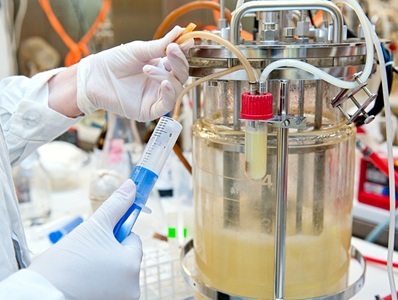
Cell culture media, the lifeblood for growing cell lines in bioreactors, is a perfect example. These media are complex aqueous solutions, providing the essential nutrients, growth factors, and environment necessary for optimal cell growth and product yield.
Even subtle variations in their composition can significantly impact the growth rate and quality of the final product. Therefore, identifying and analyzing cell culture media is crucial. The pharmaceutical industry is increasingly turning to advanced spectroscopic methods, such as fluorescence, for this task. Among these, the Fluorescence Excitation-Emission Matrix (EEM) molecular fingerprinting, combined with 3-way simultaneous spectra acquisition, stands out for its precision and efficiency.
The quest for precision
Recently, researchers demonstrated that 3-way simultaneous spectra acquisition, alongside chemometric methods like PARAFAC and PCA, offers a rapid, effective, and cost-efficient solution for identifying and assessing the quality of cell culture media. Aqualog’s 3-way simultaneous spectra acquisition technology, which can acquire Absorbance, Transmittance, and Excitation-Emission Matrices simultaneously while correcting for inner filter effects (IFE), provides a precise molecular fingerprint of cell culture media samples. This capability allows for the detection of changes or degradation in media due to storage conditions over time.
The experiment
In the experiment, several types of cell culture media were analyzed. Samples were stored at 4°C and allowed to equilibrate to ambient laboratory temperature before analysis. Five sample aliquots were taken for each type of media and measured in triplicate using 1 cm pathlength quartz cuvettes to establish 3-way simultaneous spectra acquisition fingerprints. Additional samples were stored at room temperature and analyzed at various time points to observe degradation effects due to ambient temperature and light exposure over time.
The 3-way simultaneous spectra acquisition data was obtained using excitation scans from 200 to 700 nm in 3 nm increments and emission scans from 250 to 800 nm with approximately 4.66 nm increments (8 pixel binning). The band path was set at 5 nm. NIST Traceable Excitation and Emission spectral correction factors, inner-filter correction, Rayleigh scatter masking, and Raman scatter unit normalization were applied. A blank reference was recorded using Starna 3Q-10 water. For chemometric analysis, PCA modeling was performed using Eigenvector Inc.’s Solo software.
The results
PCA chemometric analysis on the initial samples (time=0) provided clear classification. Similar media types, such as the three DMEM mixtures, clustered together and were visibly discernible from other media types, with no overlap. This indicates that the combination of 3-way simultaneous spectra acquisition spectroscopy and chemometrics can successfully classify different media types.
The time-dependent course of PCA score changes at ambient temperature versus 4°C storage is evident in the EXCELL media samples. Measurements conducted over five days at 0, 2, and 5 days showed that cold-stored samples clustered together regardless of elapsed time, whereas ambient conditions clearly affected the samples, leading to changes in their molecular fingerprint attributes.
The challenges of bioprocessing and cell culture
Bioprocessing and cell culture are at the heart of biopharmaceutical production. The intricate process involves a delicate balance of media formulation, environmental control, and advanced analytical techniques to ensure high-quality and high-yield production of biopharmaceutical products. Continuous advancements in technology and methodology are driving improvements in efficiency, scalability and product quality, paving the way for the next generation of biopharmaceutical innovations.
In general, a quality bioprocessing workflow is as follows:
Upstream Processing:
- Cell Line Development: The journey begins with the selection of a robust cell line capable of producing the desired bioproduct. Commonly used cell lines include Chinese Hamster Ovary (CHO) cells, Human Embryonic Kidney (HEK) cells, and various microbial cells like E. coli and yeast.
- Cell Culture Media: Media formulation is critical as it provides the nutrients, growth factors, and optimal environment for cell growth and productivity. Media composition must be carefully optimized and controlled to ensure high yield and product quality.
- Bioreactor Cultivation: Cells are cultured in bioreactors, which provide a controlled environment for large-scale cell growth. Parameters such as pH, temperature, dissolved oxygen, and agitation are meticulously monitored and adjusted to maintain optimal conditions.
Downstream Processing:
- Harvesting: Once the desired cell density and product concentration are reached, the culture is harvested. This involves separating the cells from the culture medium, typically through centrifugation or filtration.
- Purification: The harvested product undergoes multiple purification steps to remove impurities and contaminants. Techniques such as chromatography, ultrafiltration, and diafiltration are commonly used.
- Formulation and Fill-Finish: The purified product is formulated with stabilizers and excipients to ensure stability and efficacy. It is then filled into appropriate containers (vials, syringes, etc.) under aseptic conditions and packaged for distribution.
Of course, the complex process is not without its challenges. Four specific challenges are addressed here. The first being media optimization. The exact composition of the cell culture media can significantly impact cell growth and product yield. Optimizing the balance of amino acids, vitamins, minerals, and growth factors is crucial. Currently, there is a trend toward using serum-free or chemically defined media to reduce variability and risk of contamination from animal-derived components.
The second challenge is scalability, as transitioning from small-scale laboratory cultures to large-scale production bioreactors is difficult. Maintaining consistent conditions and product quality at different scales is critical. The design and operation of bioreactors must ensure efficient mixing, oxygen transfer, and waste removal to support high-density cell cultures.
The third challenge is monitoring. Advanced sensors and analytical techniques are employed to monitor critical parameters in real-time. This allows for immediate adjustments to maintain optimal conditions. Ensuring consistent product quality requires rigorous quality control measures, including regular sampling and testing throughout the process.
The last challenge is product stability and yield. The genetic stability of the cell line over multiple generations is vital to ensure consistent product quality and yield. Continuous process optimization, including media formulation and bioreactor conditions, is necessary to maximize yield and minimize production costs.
Multiple recent advances in bioprocessing and cell culture have helped alleviate some of these challenges, though.
For example, the integration of automated systems reduces human error, increases efficiency, and allows for high-throughput screening of media formulations and process conditions. Advanced technologies enable rapid screening of multiple conditions to identify optimal parameters for cell growth and product yield.
Single-use bioreactors offer flexibility, reduce the risk of cross-contamination, and lower cleaning and validation costs. They are increasingly used for both clinical and commercial production.
Advanced analytical techniques, like 3-way simultaneous spectra acquisition, provide precise analysis of cell culture media, allowing for real-time monitoring and adjustment to ensure optimal conditions. Comprehensive profiling of cellular metabolites and proteins helps in understanding cell metabolism and identifying bottlenecks in the production process.
Additionally, advances in genetic engineering and CRISPR technology allow for the creation of optimized cell lines with enhanced productivity and stability. Synthetic biology approaches enable the design of custom cell lines and metabolic pathways for the efficient production of complex biopharmaceuticals.
Last thoughts
The data collected and the PCA models utilized demonstrate that 3-way simultaneous spectra acquisition spectroscopy, combined with chemometrics, offers a viable and rapid method for identifying and evaluating cell culture media. Three-way simultaneous spectra acquisition fingerprints serve as a visual tool for discriminating between sample types, while chemometrics allows for the classification of media types. This combined approach is confirmed for evaluating cell culture media prior to use in bioreactors and can also be employed at-line or in-line in the manufacturing process. This is crucial, as media composition changes with cell growth and needs to be supplemented or replenished accordingly.
By leveraging the precision of 3-way simultaneous spectra acquisition molecular fingerprinting and the analytical power of chemometrics, the pharmaceutical industry can ensure the quality and consistency of cell culture media, paving the way for more efficient and successful biopharmaceutical production at a higher speed, lower cost, and greener operation.
About the author
Cary Davies is the HORIBA Global Product Line Manager for a comprehensive line of fluorescence spectroscopy and microscopy research instruments as well as a unique A-TEEM (Absorbance Transmittance Excitation Emission Matrix) molecular fingerprinting instrument for rapid and simple industrial QC/QA. He manages a team of Ph.D.'s, all with individual expertise in various fields of materials and life science. Together, their job is to develop the next generation of technology and to support their customers' most demanding applications.