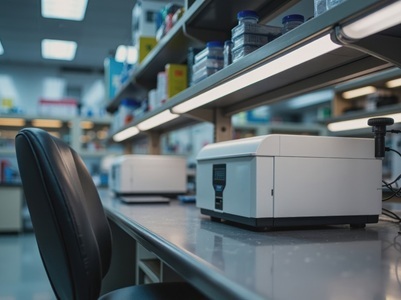
Today’s demanding research often involves microplate readers as fast and reliable as the experiments they are pushing forward. Whether it’s cell-based assays, high-throughput screening or a host of molecular biology applications, accurate data are critical to experimental success. This “How To” guide provides some tips and tricks to ensure you get the best out of your microplate reader, furthering your research goals and accelerating discovery.
1. Optimize the gain setting
The gain setting regulates the measurement range on a microplate reader. In fact, it is the main parameter influencing a microplate reader’s measurement range, the ratio between the brightest and dimmest intensity the reader can quantify. A high gain setting provides large amplification of light signals and is suitable for samples generating dim signals. Conversely, a low gain setting amplifies sample signals less and is suitable for samples that produce a very bright light signal. Inappropriate gain settings will negatively affect data quality, the assay window and sensitivity. If bright samples are measured with a high gain, this can result in the saturation of the detector and unusable. In contrast, if dim signals are detected with a low gain, they may become indistinguishable from the background noise.
2. Correctly set the number of flashes
Your microplate reader will excite a sample with at least 1 flash per measurement, detect the emission and move on. If you select more than 1 flash in the settings, the corresponding number of detected emission signals will be averaged and displayed as one value. Although modern plate readers come with high flash frequencies, the time an instrument needs to measure a sample increases with the number of flashes used. This also has an influence on the total time needed to perform a measurement, which is especially critical when performing fast kinetics with minimal time intervals between data point acquisitions.
3. Find the optimal focal height for cell-based assays
The optimal focal height indicates the plane at which the microplate reader can detect the highest signal intensity of a sample. Different models of microplate readers and readers from different manufacturers vary in their capabilities: the focal height may be not adjustable, it may have to be typed in manually, or can be determined automatically. For those that are automatic, the microplate reader will determine the optimal focal height by identifying the plane with the highest signal intensity. Increasing the focal height will shift the optic focus above the liquid surface. Conversely, a lower focal height will shift the optic focus in the direction of the bottom of the microplate. In both cases the signal intensity of samples will be reduced and the signal-to-blank ratios and assay window will be decreased.
4. Reduce autofluorescence in cell-based assays
Instead of measuring from above the well, bottom optics allow excitation and measurement from below the plate. This way the excitation and emission light does not have to travel through the supernatant above the cells. This results in a limited excitation of the autofluorescent components present in the medium and generally in a decreased light loss through scattering or absorption by non-specific substances. The benefits of bottom reading are particularly evident when measuring with autofluorescent media.
5. Reduce data variability in heterogenous cell samples
For the fluorescence measurement of heterogeneous cell-based samples, be sure to always perform a focal height adjustment when working with adherent cells. Adherent cell-based assays often benefit from the application of a well-scanning mode to correct for a heterogeneous signal distribution in the well. Additionally, the application of a matrix scan provides you with a local resolution of the signal throughout the well and thereby gives the opportunity to monitor seeding homogeneity and local variations of the target signal. The matrix scan further enables you to exclude individual points or whole areas from the evaluation.
6. Choose the best microplate color
White, black or clear? Beside the number of wells and well volumes, the choice of color is one of the most important decisions you make when selecting a microplate. The wrong color can make it (next to) impossible to measure a particular assay. For absorbance assays, you will need wells with clear bottoms. For absorbance-based measurements below 320 nm, you must use UV-transparent plates (e.g., cycloolefin microplates). Meanwhile, black plates are recommended for fluorescence measurements. They significantly reduce commonly encountered autofluorescence and high background signals. For luminescence assays, white plates are recommended to amplify the signal since luminescence assays typically generate weak signals and have low background. Grey plates additionally reduce cross-talk.