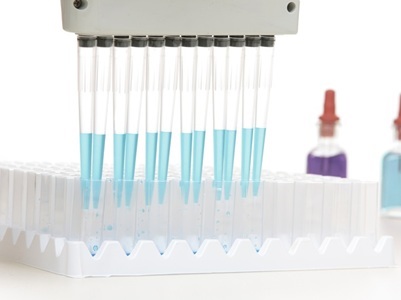
Electronic pipettes have become a core component of modern laboratory workflows, particularly as demands for accuracy, reproducibility and throughput continue to rise. Unlike manual pipettes, electronic models use motorized piston control to standardize aspiration and dispensing, helping reduce variability caused by hand technique. This consistency is especially important in applications such as molecular biology, cell culture and pharmaceutical development, where small volume deviations can affect downstream results.
When choosing a handheld electronic pipette, Gabriele Witton, Product Manager at INTEGRA Biosciences, says ergonomics and user comfort are among the most important criteria. Tip fit and seal integrity are also critical as a secure connection between pipette and tips is essential to prevent leaks or tip ejection during use.
“Additionally, ensure that the pipette operates in the optimal volume range (typically 30–100% of the nominal capacity). Working too close to the lower end of the range can negatively affect accuracy and precision,” said Witton.
Here are a few other tips from Witton for working with electronic pipettes:
Viscous liquids vs volatile liquids:
Viscous liquids should be aspirated and dispensed slowly using reverse pipetting. Using this technique, a larger volume than needed is aspirated, which compensates for the retained liquid adhering to the inside of the tip. Low retention tips are the ideal option for viscous liquids, and for very high viscosity liquids, or those that tend to foam, wide bore tips are recommended.
When pipetting volatile liquids, be sure to pre-wet the tip and use fast pipetting speeds for both aspiration and dispensing to minimize the effects of evaporation. Do not pause unnecessarily between aspiration and dispensing and use reverse pipetting to further reduce the effect of evaporation on the actual volume to be delivered.
Avoid a bad blowout with this tip:
With electronic pipettes, “blowout” occurs automatically after the last dispense, and the “plunger then moves automatically to its rest position. To prevent liquid from being aspirated back into the tip, keep the RUN button pressed until you have removed the tip from the liquid. This procedure is similar to that of a manual pipette plunger, which is also held down until the tip is out of the liquid.
Avoid this rookie mistake:
The most commonly used program for electronic pipettes is “Repeat Dispense,” in which a larger quantity of liquid is aspirated and small aliquots are dispensed. In order to achieve the most accurate results possible, a pre- and post-dispense volume should be defined, which is discarded. Users often set these values to 0 µl; however, the first dispense "Pre-Dispense" should be 3-5% of the nominal volume in order to compensate for the motor's play when it switches from upward to downward movement. The last dispense—Post-dispense—should also be 3-5% of the nominal volume. It contains the cumulative errors of all previous dispenses and should be discarded.