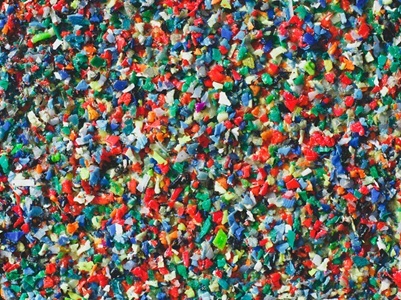
From microplastics and PFAS to pesticides, trace-level compounds are pervasive across environmental and agricultural systems, entering the food supply through increasingly complex pathways. As research increasingly quantifies their presence and potential impacts, laboratories are under pressure to deliver more sensitive, standardized and contamination-free analyses.
Research, like Imari Walker-Franklin’s, suggests that microplastics alone influence plant health, crop yields and food composition, raising new questions about long-term food security and exposure risks. As an analytical chemist at RTI International, Walker-Franklin, uses a multitude of spectrometry and chromatography techniques to identify novel contaminants and metabolites in complex environmental and biological samples. In this Q&A, Walker-Franklin outlines how these contaminants move, why their ubiquity makes prevention difficult and how limitations in sensitivity and reproducibility lead to a lack of standardized approaches for measuring microplastics.
Q: What are the biggest contamination threats to our food supply today?
A: Some of the most significant emerging challenges to the global food supply stem from trace contaminants such as microplastics, phthalates, phenols, pesticides, organophosphates, and PFAS. Microplastics (plastic particles smaller than 5 mm) and nanoplastics (smaller than 1,000 µm) are of particular concern. Although research is still developing, early findings show that increased exposure to these particles can heighten plant stress, stunt growth, alter the chemical composition of leaves and roots, disrupt hormone regulation, and reduce photosynthetic activity. Taken together, these early results suggest that microplastic pollution in agricultural soils could reduce yields of staple crops like wheat, corn, and rice by an estimated 4–13% over the next 25 years.
Q: How easy is it for food contact chemicals, microplastics and other contaminants to enter our food?
A: These contaminants are now widespread in air, water, and soils, making their entry into food systems increasingly difficult to prevent. Microplastics, in particular, are prevalent in wastewater streams; although treatment plants remove a large portion of them, these particles often accumulate in biosolids that are later applied to agricultural fields as fertilizer. Food processing introduces another pathway: more highly processed foods tend to contain higher concentrations of microplastics due to mechanical handling, packaging, and extended contact with plastic equipment. Food-contact plastics like packaging create an additional opportunity for microplastic release—especially when the packaging is heated, stressed, or used repeatedly.
Q: What types of instrumentation and technologies are critical to addressing and testing for these contaminants?
A: Testing for microplastics requires a broad suite of analytical tools, including pyrolysis–gas chromatography–mass spectrometry (Py‑GC‑MS), micro–Fourier transform infrared spectroscopy (µ‑FTIR), and scanning electron microscopy (SEM). Together, these methods allow researchers to characterize polymer type, particle size, shape, and abundance with the precision needed for reliable reporting.
Analysis of other trace organic contaminants—such as phthalates, phenols, pesticides, and organophosphates—typically relies on liquid chromatography or gas chromatography coupled with mass spectrometry for accurate identification and quantification. Both microplastics and PFAS present additional challenges: their ubiquity in laboratory environments means that specialized equipment, contamination‑free workflows, and rigorous quality controls are essential to prevent background interference during sample preparation and analysis.
Q: Are there technology challenges/capabilities the lab industry needs to overcome to more effectively test for these contaminants?
A: Yes. Microplastics research still requires substantial advances in both method development and analytical technology to enable reliable identification and quantification in complex matrices. Current techniques often struggle with sensitivity, selectivity, and standardization, making it difficult to compare results across studies or accurately assess environmental and food‑system risks.
Q: What gaps exist in our current understanding of how toxins like microplastics and food contact chemicals affect human health?
A: Interlaboratory comparison studies have shown that microplastic analysis remains extremely difficult to perform reliably—even in water, one of the simplest matrices to test—particularly for microscopic particles smaller than 50 micrometers (similar to the diameter of a white blood cell). Yet researchers estimate that the vast majority of microplastic particles present in environmental systems, biological tissues, and food products fall within these smaller size ranges. This mismatch between what laboratories can confidently measure and what is most environmentally relevant creates major gaps in exposure assessment. As a result, generating reliable dose–response data and conducting toxicology studies that reflect real‑world human exposure becomes significantly more challenging, complicating efforts to understand potential health implications.
Q: How can regulation help address health risks from food contamination?
A: The draft EPA Drinking Water Contaminant Candidate List 6 (CCL 6) represents an important opportunity to expand research and monitoring of emerging contaminants such as PFAS and microplastics. This proposed list flags contaminants that could pose future drinking-water risks—one of the primary exposure pathways for many food sources. Strengthening surveillance at this early point in the supply chain can help improve risk assessments, guide regulatory development, and support more effective protection of both environmental and human health.
About the interviewee
Dr. Imari Walker-Franklin analyzes complex environmental and biological samples—including surface waters, wastewaters, sediment, and biological serums and tissues—to identify novel contaminants and metabolites. She utilizes gas and liquid chromatography systems coupled with high-resolution accurate mass spectrometry (GC-HRMS and LC-HRMS) to generate data, which she processes using non-target analysis workflows. One example of her work includes characterizing substances of emerging concern in the French Broad River in Western North Carolina following Hurricane Helene. Dr. Walker-Franklin earned her Ph.D. in environmental engineering from Duke University, where she investigated the fate, occurrence, and transformation of polymer-associated chemicals in aquatic environments. She has presented her research on plastic pollution at national press conferences, panels, and lectures.