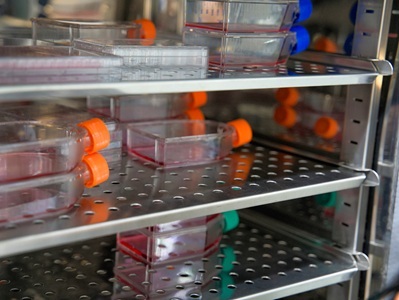
In today’s laboratory, incubators are not just support equipment: they are foundational systems that directly affect data quality, research integrity and operational continuity. Today’s research expectations are high. From the instrumentation on the bench to the software on the computers, accuracy, precision and reproducibility are paramount. Incubators minimize variables by maintaining constant conditions across experiments, ensuring reproducibility.
When purchasing a new incubator, it can be helpful to write out (or type) the ideal environment for your cell culture research—including temperature, CO2 level, humidity level, and even O2 level. Listing these requirements can help ensure your lab chooses the incubator that performs the best at creating and maintaining those conditions. After all, a CO2 incubator’s core function is to create an environment where cell cultures can grow.
When evaluating possible incubator candidates, industry veteran Seth DePenning, marketing manager with NuAire, suggests asking the following questions:
- How tightly can the incubator control those conditions?
- What technology does it use to measure chamber conditions to determine what action to take to maintain set points?
- How uniform are those conditions from one place to another inside the chamber?
- How long does it take for those conditions to recover after a door opening alters them?
Ultimately, he says, your chosen incubator must create the ideal environment accurately, consistently and quickly.
Here are a couple other tips from DePenning to get the most out of your lab’s incubator:
Best ways to avoid contamination
Choose a model whose design makes the regular surface cleaning and decontamination required by most Standard Operating Procedures easy to perform. Secondly, consider the effectiveness and ease of use of any active decontamination cycles such as heated decontamination cycles. Finally, consider whether the design includes anything that protects the chamber from contamination on a constant basis, such as ongoing air filtration. Contamination prevention should weave together multiple design aspects and not overly rely on just one novel feature.
Something every researcher should know
Preventive maintenance shouldn’t be burdensome, but even a well-designed incubator should be given some technical TLC now and then. Read the manual, service it on time, and get the longest life out of the investment you made.