For respiratory testing, there’s a bit of a Goldilocks element: assays must have just the right mix of speed, accuracy, and accessibility to best serve the patient population. Prior efforts have tended to excel at some of these measures and fail at others, such as rapid antigen tests with low sensitivity or highly accurate central lab tests that take too long to deliver results. The ideal approach may be a hub-and-spoke model, where clinical laboratories can strategically place both highly accurate point-of-care devices across a healthcare system while also having a reliable and customizable central testing option available to deliver more comprehensive information.
This model could help to address the endless options of respiratory testing. In peak season, unpredictable swings in pathogen prevalence and vaccine effectiveness can lead to near-crushing demand for testing, often while staff members are out sick. Because respiratory infections have overlapping symptoms and multiple pathogens can circulate in the same community at the same time, testing is not a straightforward process. In average patients, testing for a handful of targets may be most appropriate; in patients with underlying health issues, that testing may have to ramp up to a dozen or more targets.
Surges in demand can easily overwhelm centralized laboratories. The burden could be eased with point-of-care testing, but conventional point-of-care tests often have such low sensitivity that a significant proportion of results must be confirmed with follow-up testing. But with the advent of more reliable molecular point-of-care tests for respiratory infections, a hub-and-spoke model is now within reach. In an ideal situation, highly accurate point-of-care testing for the most common pathogens can be paired with customizable lab-based testing for an effective and efficient approach to diagnosing respiratory infections.
Conventional testing challenges
Even with so many testing options for respiratory infections, there remain several limitations in how and when these tests can be used.
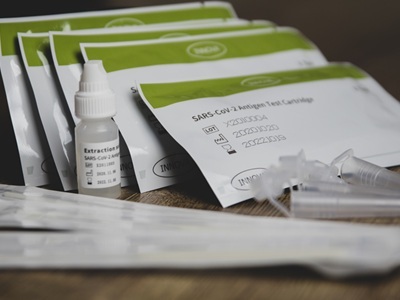
For respiratory infections, point-of-care testing makes sense. The ability to receive results quickly at the primary care office, urgent care center, or even pharmacy is ideal for diagnosing infections and informing treatment decisions or isolation protocols. Unfortunately, the rapid antigen tests that are generally used for near-patient respiratory testing often have poor sensitivity metrics. Clinical guidelines advise follow-up testing for some or all negative results, depending on the type of infection and patient demographics. Without the ability to generate highly reliable results, rapid antigen tests are not nearly as useful as point-of-care testing should be.
Given these challenges, most respiratory testing is performed in clinical laboratories. Though culture-based testing was long considered the gold standard, its results take too long to meaningfully influence treatment decisions. The turnaround time also limits timely personal choices, such as keeping children home from school, which could help reduce community transmission. Consequently, most labs no longer perform viral culture.
More recently, molecular testing has become a preferred option for respiratory cases. It has excellent sensitivity and specificity, often surpassing the quality of results seen with antigen testing. Molecular lab tests are also much faster, returning results in a matter of hours. For these reasons, the clinical laboratory community has quickly adopted molecular platforms. While these systems are a significant step forward compared to conventional tests, on their own they do not solve the challenge of needing to deliver results in real time at the point of care. In addition, a push for syndromic testing on molecular platforms can force clinical laboratories to test more targets than is appropriate or reasonable for every patient. This can leave patients with high laboratory bills for something that might have been handled more affordably.
An integrated approach
The recent introduction of molecular point-of-care testing platforms, which can produce highly accurate results in about 20 minutes and do not require technical expertise to operate, is allowing clinical laboratories to completely rethink how respiratory testing is handled across their healthcare systems and networks. It is now possible to plan for both point-of-care and laboratory-based testing, with a clearly delineated strategy for how these systems work together to best meet patient needs.
A key point with molecular point-of-care platforms is their ability to connect seamlessly to both the laboratory information system and to the electronic medical record system. Having this feature allows clinical lab teams to monitor devices from afar, placing them at the sites where they will be most useful. Rather than having each urgent care or outpatient site be responsible for selecting its own setup, it’s the clinical lab that can establish a system-wide strategy implementing both point-of-care and lab-based testing for optimal utility.
For example, in a healthcare system with outpatient clinics and hospital facilities, it could make the most sense to place point-of-care systems at walk-in clinics and in the emergency department, settings where patients may not stay long and where fast, reliable answers are critical. Laboratory testing could be reserved for hospitalized patients and for patients whose point-of-care tests produced only negative results. While molecular point-of-care testing eliminates the need for routine confirmatory testing, significantly easing the burden on these labs during peak respiratory season, there will still be cases where patients must be reflexed to the lab for testing with broader panels.
Customizable testing
This complementary approach of deploying point-of-care testing with a reflex to lab-based testing is worth a closer look, as it requires an additional capability that many platforms do not offer: flexibility. Specifically, clinical laboratories must be able to create custom panels of respiratory targets to ensure that the reflex test does not cover the same targets already tested at the point of care.
Let’s say the molecular point-of-care test includes a core set of respiratory targets: flu, respiratory syncytial virus, and COVID-19. Should those results come back negative and follow-up testing is needed, there is no justification for testing (and paying for) those same targets again; molecular results are sufficiently reliable that confirmatory testing is generally not recommended. But labs typically use broad respiratory panels to cover the less common targets, and those panels also include the more common targets as well. In most cases, these panels are fixed. Using them would lead to unnecessary testing and double billing for those core targets.
A mechanism known as Flex Testing can solve this problem. Certain molecular testing platforms allow users to create custom panels using a subset of targets from a broader panel, and to pay only for the results they report back. By pairing a molecular point-of-care test with a laboratory platform that enables Flex Testing, it is possible to test patients initially for the core targets and then reflex to a broader panel that excludes those core targets. This approach avoids redundancy and ensures that labs and patients do not have to pay for any targets more than once.
Implementing a complementary approach
A respiratory strategy that incorporates molecular systems for both point-of-care and centralized testing offers significant advantages for managing demand and easing testing volumes at the lab. To implement it, there are several key factors to consider beyond the crucial need for Flex Testing.
Connectivity. To avoid siloed testing, all devices — in the lab and at the point of care — must connect seamlessly to the laboratory information system and to electronic medical records. For optimal utility, point-of-care tests should use a wifi connection to avoid the need for an ethernet port.
Sample collection. While samples for lab use will almost always be collected by trained healthcare professionals, it’s handy to have the option of self-collected samples for the point-of-care device. This might affect the sample collection type (such as a simple nasal swab instead of the standard nasopharyngeal swab).
Reagent storage. Some point-of-care devices require refrigerated reagents, which limits the flexibility lab managers have in choosing where to place them. For greater latitude, devices should work instead with room-temperature reagents, so there is no need to have refrigerated storage nearby.
Ease of use. This is important for both point-of-care and laboratory testing platforms. The near-patient test must be easily operated by someone who does not have extensive technical training, ideally with a guided workflow prompted by the instrument itself to minimize the risk of errors. In the lab, having a simple and streamlined Flex Testing workflow ensures that the platform can run at capacity to meet peak-season demand without requiring much attention from human operators.
Portability. Point-of-care systems should be compact, lightweight, and easy to move so they can be used wherever they are needed most. Setup shouldn’t require more than plugging in a power cable. If these devices can’t be moved easily and often, they are less likely to be used as much as needed for respiratory testing.
Looking ahead
The availability of molecular point-of-care tests has introduced a powerful opportunity for clinical laboratories to improve the respiratory testing strategy across their entire health system or lab network. Implementing high-quality options at the point of care and in the lab should help lab managers deal more effectively and efficiently with the unpredictable surges in demand associated with respiratory infections.
About the authors
Chris Gardner is Director, Product Marketing at Diasorin, where he is responsible for syndromic in vitro diagnostic molecular technologies. He has extensive experience in molecular diagnostics for a wide range of infectious disease applications, including respiratory testing.
Annanya Shetty is a translational medicine specialist with more than a decade of experience in infectious diseases and diagnostics. She holds a PhD in medicine from the National University of Singapore and has held global product leadership roles at Abbott and now Diasorin, where she integrates clinical research with the development of decentralized molecular diagnostics.