by Kellie Matzinger, Director of Lifesciences Operations, First Onsite Property Restoration
Moisture is one of the most dangerous and underestimated threats within research environments. Unlike visible contamination events, moisture often develops quietly behind walls, above ceilings, beneath flooring systems, or inside HVAC infrastructure long before any microbial excursion, facility damage, or environmental monitoring failure is detected. In controlled environments, moisture is not simply a facilities issue — it is a contamination control threat capable of compromising product quality, research integrity, equipment reliability, and regulatory compliance.
Construction and renovation activities represent some of the highest-risk periods for moisture intrusion within laboratory environments. Even routine upgrades involving plumbing, HVAC modifications, wall penetrations, concrete work, or utility installation can introduce hidden moisture into spaces designed to operate under tightly controlled environmental conditions. Water used during construction processes, combined with temporary exposure of building materials, can create ideal conditions for microbial amplification if not actively monitored and mitigated.
Temporary containment barriers play a critical role in preventing moisture migration and contamination spread during these activities. In regulated environments, construction zones should never simply be separated with basic plastic sheeting or simple partitions. Temporary barriers must be designed as engineered containment systems capable of controlling dust, airflow, humidity, and water intrusion simultaneously. These barriers often incorporate sealed hard-wall systems or reinforced critical barriers with negative air pressure, HEPA filtration, controlled personnel access points, and dedicated material transfer pathways. Without properly maintained barriers, moisture generated during construction can migrate into adjacent controlled spaces through airflow disturbances, pressure imbalances, or hidden structural pathways.
The risk extends beyond visible water intrusion alone. Construction activities frequently expose porous materials, interstitial wall spaces, insulation, and structural components to elevated humidity and condensation. Once trapped behind barriers, this hidden moisture may remain undetected for extended periods while supporting mold growth, biofilm development, and microbial persistence. Organisms such as Aspergillus spp., Penicillium spp., and water-associated Gram-negative bacteria can establish reservoirs within damp construction materials and later spread into cleanrooms, laboratories, vivariums, or manufacturing suites through maintenance activities or HVAC disturbances.
For this reason, moisture monitoring during construction has become an increasingly important component of contamination control strategies within regulated facilities. Modern laboratory projects often incorporate continuous humidity and moisture surveillance throughout all phases of construction and commissioning. Environmental monitoring no longer focuses solely on viable and non-viable particulates; but increasingly includes active tracking of temperature, relative humidity, differential pressure, and moisture accumulation within critical construction zones.
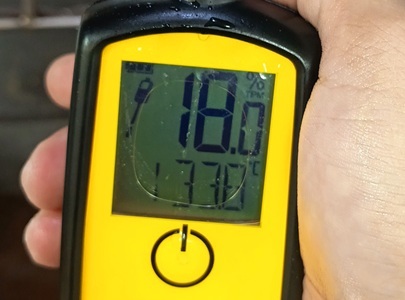
Moisture monitoring technologies can include wireless humidity sensors, leak detection systems, infrared thermography, moisture mapping, and continuous building management system integration. Sensors positioned behind temporary barriers, within wall assemblies, beneath raised flooring, or around HVAC condensate systems help identify developing issues before microbial growth or material degradation occurs. In many cases, moisture monitoring during construction serves as an early warning system capable of identifying failures in containment integrity, HVAC balancing, or drying processes long before traditional environmental monitoring detects contamination.
HVAC management during construction is equally essential. Laboratories and cleanrooms rely heavily on pressure cascades and tightly controlled airflow patterns to maintain contamination control. Construction activities can disrupt these systems, creating localized condensation, stagnant air zones, or uncontrolled humidity fluctuations. Temporary negative air systems, dehumidification equipment, and dedicated HEPA-filtered exhaust units are often required to stabilize environmental conditions during renovation activities. Facilities operating under GMP, BSL, ABSL, USP or ISO compliant buildings increasingly recognize that temporary environmental controls during construction are just as important as permanent operational systems.
Material selection and moisture management practices also heavily influence long-term contamination risk. Building materials introduced during construction should be protected from water exposure, properly stored, and verified dry before installation. Wet drywall, improperly cured concrete, saturated insulation, or moisture-compromised ceiling materials may later become hidden microbial reservoirs even after construction appears complete. Accelerated project timelines that rush drying, commissioning, or HVAC stabilization frequently increase the likelihood of future contamination events.
In pharmaceutical and biotechnology environments, the regulatory implications of uncontrolled construction moisture can be significant. Guidance documents including EU GMP Annex 1, FDA aseptic processing expectations, ISO cleanroom standards, and USP environmental control guidance all emphasize contamination prevention, environmental control, and risk management throughout facility operations. While these documents may not explicitly focus on “construction moisture,” the expectation remains clear that facilities must proactively prevent conditions capable of supporting contamination or microbial proliferation.
Routine inspections during construction are critical. Temporary barriers, ceiling spaces, floor penetrations, HVAC interfaces, utility corridors, and adjacent controlled areas should all be routinely assessed for condensation, humidity excursions, discoloration, leaks, or material degradation. Environmental monitoring teams, facilities personnel, industrial hygienists, and contamination control specialists must work collaboratively throughout construction activities rather than treating moisture management as a standalone maintenance responsibility.
The consequences of inadequate moisture control during construction extend far beyond visible facility damage. Hidden moisture can compromise cleanroom certification, trigger environmental monitoring excursions, damage sensitive instruments, accelerate corrosion, disrupt validation activities, and create long-term contamination reservoirs that persist for years after project completion. In severe cases, unresolved moisture intrusion may lead to production shutdowns, remediation projects, regulatory observations, or loss of operational trust.
Effective laboratory construction ultimately requires recognizing moisture as one of the most critical contamination vectors within controlled environments. Temporary barriers are not merely dust partitions; they are engineered contamination control systems designed to protect adjacent operations from moisture, particulates, and microbial migration. Combined with proactive moisture monitoring, environmental surveillance, and strict construction containment practices, these systems help preserve the integrity of critical spaces during periods of elevated risk.
In laboratory and cleanroom environments, contamination threats are rarely limited to what can immediately be seen. The most damaging risks often develop silently behind temporary walls, above ceilings, and within hidden building infrastructure. During construction, moisture truly becomes the enemy within and controlling it requires vigilance, engineered containment, continuous monitoring, and a contamination control mindset from the very beginning of every project.
Choosing the right partner for proactive or reactive work in controlled environments is critical. Service providers should understand the operational risks associated with sensitive environments to help protect both facility integrity and ongoing operations.
About the author
Kellie Matzinger is Life Sciences Operations Director, North America at First Onsite, bringing more than 26 years of experience as a microbiologist specializing in sterility assurance, sterilization, decontamination, and contamination control within regulated life sciences environments. She is recognized for her expertise in designing and implementing risk-based contamination control strategies that protect critical environments, support regulatory compliance, and ensure operational integrity across pharmaceutical and biotechnology sectors.