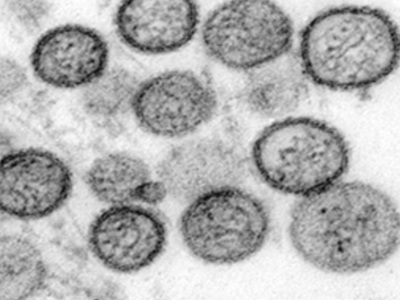
Sin Nombre virus was first recognized in 1993 in the southwestern U.S. Credit: California Department of Public Health YouTube
by Julia Maria Klemens, PhD, Global Scientific Affairs, Euroimmun, Revvity
Emerging viral epidemics, such as recent outbreaks of Oropouche virus and hantavirus, highlight the growing importance of serological testing in both diagnostics and surveillance. Serological techniques such as enzyme-linked immunosorbent assays (ELISA) and indirect immunofluorescence assays (IFA) support identification of acute infections beyond the viremic phase and provide valuable insights into population-level exposure and transmission dynamics.
Why serology matters in emerging infections
Emerging infectious diseases often present with nonspecific clinical symptoms and frequently occur in regions where multiple pathogens co-circulate. As a result, laboratory testing is critical for identifying the causative agent as well as for monitoring disease trends.
Direct molecular methods are typically preferred during early infection1,2. However, their detection window can be limited. In many arbovirus infections, viral RNA is detectable for only 1 to 7 days after symptom onset1,2,3. Similarly, in hantavirus infections, circulating viral RNA declines rapidly after onset of initial symptoms4.
Serological testing complements molecular methods by detecting the host immune response. It becomes especially useful once viremia has subsided, supporting diagnosis at later stages of infection. Additionally, serology is an important tool when the facilities and equipment required for molecular assays are not available. Serological methods are significantly cheaper and simpler to perform than virological methods and may be easier to implement in a subnational network of laboratories.
Beyond acute diagnostics, serology is also useful for identification of asymptomatic or previously unrecognized infections5. This insight can refine estimates of infection fatality rates and improve understanding of transmission patterns and outbreak spread.
IgM and IgG antibody detection
Acute infection can be identified through detection of virus-specific IgM antibodies or by demonstrating a significant rise in IgG titers between acute and convalescent samples. IgG antibodies generally persist long-term and therefore also serve as markers of prior exposure.
While virus neutralization tests are considered the gold standard for serology, they are time-consuming, costly and generally restricted to specialized high-containment laboratories. Immunoassays such as ELISA and IFA offer a faster and simpler alternative for routine use.
ELISA: Scalable and quantitative antibody detection
ELISA is a widely used serological technique that offers a straightforward and easily accessible procedure and enables highly sensitive and specific quantification of antibodies. ELISAs typically employ microtiter plates coated with recombinant viral antigens, which are incubated with patient serum or plasma. Bound antibodies are then detected using an enzyme-labeled detection antibody that catalyzes a color reaction. The intensity of the generated signal is proportional to the antibody concentration and is measured photometrically on an ELISA reader.
Use of ELISAs for diagnostics and monitoring requires standardized procedures to ensure accurate and high-quality results. Commercially manufactured ELISAs include precoated, stabilized 96-well microplates along with calibrators, controls, buffers and reagents in a single kit, providing both consistency and convenience6. They can be performed either manually or on fully automated systems. Automated approaches are especially beneficial during disease outbreaks, supporting reliable diagnostics and serosurveys at high throughput7.
Multiplex IFA: Broad antibody detection
IFA provides a complementary approach and is particularly useful for multiparameter analyses. These assays use virus-infected cells as detection substrates, providing high sensitivity and specificity. Batch production of the infected cells ensures a high level of standardization4.
Multiplex IFA platforms allow simultaneous testing against multiple substrates within a single assay. For example, in Biochip Mosaics, miniaturized fragments of up to six substrates are fitted into the reaction fields of a microscope slide8. Each slide contains ten fields, allowing efficient parallel analysis of different patient samples or dilutions on the same range of substrates. Incubation of the slides on reagent trays ensures simultaneous start of reactions and thus identical incubation conditions for all samples.
Results are evaluated by fluorescence microscopy. The endpoint titer—defined as the highest sample dilution that still produces detectable fluorescence—can assist in distinguishing between closely related viruses where cross-reactivity may occur.
For laboratories working in regions with co-circulating pathogens, multiplex IFA supports the parallel analysis of different antibodies and yields a comprehensive patient antibody profile
Oropouche virus outbreak (2023-2024)
A recent study on OROV, published in Nature Medicine, highlights the value of serology for understanding transmission dynamics during disease emergence9.
OROV is an arbovirus endemic to the Amazon region that re-emerged in late 2023, causing a major epidemic across Central and South America. It is transmitted to humans primarily via Culicoides paraensis midges, which are widely distributed in the Americas. Although Oropouche virus disease is generally mild, it can in some cases lead to meningitis, encephalitis, adverse pregnancy outcomes, and death.
Increase in OROV seroprevalence during outbreak
The seroepidemiological study was conducted in Manaus, Brazil. This metropolitan area has a higher recorded cumulative incidence of Oropouche fever than at national level and is a potential hub for OROV dissemination in and beyond the Amazon region.
Blood donor samples collected at three time points were analyzed using an Anti-Oropouche Virus ELISA (IgM)/IgG) based on a recombinant viral antigen. The results show a marked increase in IgG prevalence during the 2023-2024 outbreak, rising from 11.4% in November 2023 to 17.8% in June 2024 and 25.7% in November 20249. In contrast, the IgM prevalence was low at all time points.
Comparison with a neutralization test demonstrated strong agreement, supporting the use of ELISA as a robust and reliable method for standardized antibody measurements.
Additional insights into OROV circulation
Further analysis suggested that OROV transmission has likely persisted at low levels for decades, punctuated by two major outbreaks of similar seasonality and magnitude9. Based on historical seroprevalence and outbreak data, the cumulative number of infections in Latin America and the Caribbean from 1960 to 2025 was estimated at more than 9 million, far surpassing reported case numbers. These findings highlight the important role of serology in identifying underrecognized transmission and improving understanding of disease burden.
Hantavirus outbreak (2026)
The 2026 hantavirus outbreak linked to an international expedition cruise ship underscores the importance of rapid diagnostics and coordinated outbreak responses.
Hantaviruses are rodent-borne viruses capable of causing severe disease, including hantavirus cardiopulmonary syndrome and hemorrhagic fever with renal syndrome, depending on the hantavirus type. Human infection usually occurs through exposure to excreta or saliva from infected rodents. To date, Andes virus, found in South America, is the only hantavirus known to spread from person to person.
Because viremia is short-lived and antibody responses develop early, serology plays a central role in identifying acute hantavirus infection. Patients infected with Andes virus, the serotype implicated in this outbreak, are typically IgM-positive at the time of clinical presentation.
Multiparameter detection of Hantavirus serotypes
Multiplex IFA using biochip mosaics enables simultaneous detection of antibodies against different clinically relevant hantaviruses, for example Andes, Sin Nombre, Hantaan, Puumala, Seoul, Dobrava, and Saaremaa viruses. As multiple types frequently co-exist within the same region, this approach provides a clear advantage over single-target assays, which may fail to detect the causative agent despite the close relationship between the viruses.
Evaluation studies demonstrated a combined IgM/IgG assay sensitivity of 100% for most serotypes and a specificity of 98% in healthy blood donors4. Endpoint titration allowed serotype determination in more than 90% of patients infected with Andes or Puumala virus. The multiplex IFA is thus a reliable and globally applicable diagnostic tool and can be useful for serotyping in areas where different hantavirus serotypes are endemic.
Outlook: The expanding role of serology
Outbreaks caused by emerging viruses are increasingly common in many regions, facilitated by factors such as climate change, population growth, urbanization, changing land use, and human mobility. At the same time, many infections remain underdiagnosed or misdiagnosed due to incomplete epidemiological data and limited access to testing.
Serological methods such as ELISA and IFA are a key part of the toolbox for emerging infections, providing an extended diagnostic window and delivering insight into both current and past infections. Their standardization and easy implementation make them well suited to a range of laboratory settings. As viral threats continue to evolve, serology will remain a cornerstone to inform clinical management, outbreak containment and epidemiological surveillance.