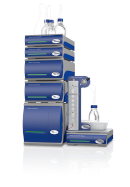
An applications report from Postnova Analytics has been published that presents data from a collaboration with the Analytical Development group at Biogen Inc. regarding the separation of a virus mixture using Asymmetrical Flow Field-Flow Fractionation (AF4) and measurement of their radius of gyration (Rg).
Viruses are increasingly becoming a primary gene therapy delivery vehicle due to their versatility and safety. Viruses can be loaded with DNA or RNA and delivered to a specific location in the body. However, viral aggregates continue to be one of the biggest challenges for manufacturing a homogeneous virus sample. These viral aggregates negatively affect transduction efficiency, biodistribution, and immunogenicity. Due to their relatively large size, often over 50 nm in diameter, virus aggregates are difficult to separate and characterize by traditional column-based chromatography techniques.
The application report outlines how, in order to separate multi-modal virus samples by size, a Postnova AF2000 AF4 system was utilized, coupled to a Postnova 21-angle Multiple Angle Light Scattering (MALS) detector for measuring the Rg. The report demonstrated that AF4-MALS is a powerful tool for the separation of virus particles. This efficient technique is capable of separating viruses and aggregates from a few nm up to >100 nm. The AF2000 FFF system is available with a wide range of add-on modules, extra options and special FFF detectors, such as Refractive Index (RI), Multi-Angle Light Scattering (MALS) and Dynamic Light Scattering (DLS).