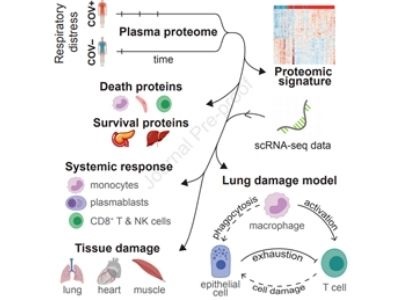
Researchers have identified the protein signature of severe COVID-19 cases in a study focused on understanding how the human immune system responds to novel pathogen SARS-CoV-2. The first patients with symptoms of COVID-19 began arriving at Massachusetts General Hospital’s (MGH) emergency department (ED) in March 2020, where ED Director of Clinical Research Michael Filbin and infectious disease expert Marcia Goldberg agreed to tackle this new problem.
In the study, researchers used proteomics to analyze blood specimens collected from patients who presented with respiratory symptoms consistent with COVID-19. A number of departments collaborated over a period of five weeks to accumulate blood samples from 306 patients who tested positive for COVID-19, as well as 78 patients with COVID-like symptoms who tested negative.
A comparison between protein signatures of patients with severe disease to patients with less-severe cases of COVID-19 helped the team identify more than 250 “severity-associated” proteins. Among other revelations, the comparison shows the most prevalent severity-associated protein—interleukin-6 (IL-6), a pro-inflammatory protein—rose steadily in patients who died, while it rose and then dropped in patients who survived.
"[The early COVID-19 samples] are highly likely to be useful in figuring out some of the underlying mechanisms that lead to severe disease and death in COVID-19,"’ says Goldberg, senior author of the study.
They are already being used to study other aspects of COVID-19, such as identifying the qualities of antibodies that patients form against the virus. The study was published in the journal Cell Reports Medicine.
Credit: Cell Reports Medicine