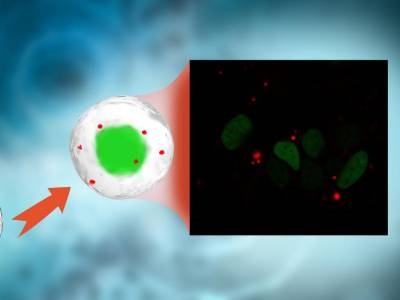
RNA-based vaccines and therapeutics provide new opportunities for preventing and treating diseases, as seen recently with the development of mRNA-based COVID-19 vaccines. One of the challenges of developing new mRNA-based medicines is the difficulty of tracking the delivery of mRNA in living cells with fluorescence labeling without changing the molecules’ properties and behavior through the labeling process. However, researchers at Chalmers University of Technology, in collaboration with AstraZeneca, have made a breakthrough in mRNA fluorescence labeling that allows for effective tracing through live cell confocal microscopy without impacting gene expression.
The team synthesized and incorporated the fluorescent tricyclic cytosine analogue 1,3-diaza-2-oxophenoxazine (tCO) at natural cytosine positions in mRNA, and found that the resulting molecule was sufficiently fluorescent to be viewed in living cells through confocal fluorescence microscopy. Flow cytometry analysis further demonstrated that the labeled molecule is capable of translating the correct protein at a similar amount to its non-labeled counterpart. The researchers were able to incorporate tCO in up to 100% of natural cytosine positions, and wrote that about 25% incorporation offered the optimal balance between fluorescence brightness and accurate mRNA translation. The study was published in the Journal of the American Chemical Society.
“Since our method can help solve one of the biggest problems for drug discovery and development, we see that this research can facilitate a paradigm shift from traditional drugs to RNA-based therapeutics,” said Marcus Wilhelmsson, a main author on the study and professor of chemistry and chemical engineering at Chalmers.
The researchers expect the new method to help accelerate drug discovery and development by providing more detailed and accurate information about the uptake process in living cells. The team has submitted a patent application and plan to create a spin-off company to make the method commercially available.
Photo: Researchers at Chalmers University of Technology, Sweden, have succeeded in developing a method to label mRNA molecules, and thereby follow their path through cells in real time using a microscope, without affecting their properties or subsequent activity. Credit: Chalmers University of Technology