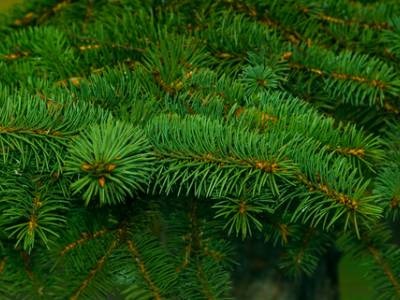
The needle-like leaves of pine trees are equipped with a waxy protective coating that serves as an efficient trap for airborne contaminants, and although these trees are known as “evergreens,” many still follow an annual cycle providing a useful timeline for environmental researchers to study these contaminants. Per- and polyfluoroalkyl substances (PFAS) are among the humanmade contaminants that can accumulate in the coating of pine needles, and researchers in North Carolina have identified these locally ubiquitous trees as a valuable window for observing the evolution of PFAS pollution over the history of the state. A team from North Carolina State University recently published the results of a study that used both recent and historical pine needle samples to trace the presence and concentrations of more than 70 PFAS in six counties over a 50-year period, leveraging chromatography and spectrometry techniques to conduct their analyses.
The research team obtained 15 historical pine needle samples from the NC State and Duke University herbaria dating from 1961 to the present, taken from sites in Durham, Wayne, Cumberland, Robeson, Onslow and Brunswick counties. The researchers also collected 60 new samples from the same sites as well as from sites three and 11 miles away for temporal and spatial comparisons, according to co-corresponding author Scott Belcher. The samples were analyzed using a nontargeted, multidimensional method based on liquid chromatography, ion mobility spectrometry and mass spectrometry (LC-IMS-MS), which allowed the researchers to accurately distinguish between different types of PFAS, including both traditionally monitored legacy perfluoroalkyl acids (PFAAs) and emerging substances such as chlorinated derivatives, ultrashort chain PFAAs and perfluoroalkyl ether acids like hexafluoropropylene oxide dimer acid (HFPO-DA), among others.
The analyses allowed the team to track the evolution of PFAS pollution over the course of 50 years, creating a chemical timeline showing when new, shorter-chain chemicals were first introduced and when older substances were phased out, explained lead author Kaylie Kirkwood. The samples, taken at varying distances from locations such as airports, firefighter training sites and chemical plants, also revealed where specific substances were being used, and allowed the researchers to observe exposure gradients from higher levels at the contamination source to lower concentrations at sites further from the source, Kirkwood said. This study was published in Environmental Science & Technology.
“This is way bigger than North Carolina–it’s applicable to sites all over the world,” said co-corresponding author Erin Baker. “Beyond N.C. and beyond pine needles, this shows the capabilities of plants with waxy coatings to serve as sentinels of environmental contamination.”
Pine needles and similar plant matter can serve as “passive samplers” for PFAS and other sources of environmental contamination, the researchers wrote. Baker noted that this natural resource reduction can reduce the need for more expensive sampling equipment, and the researchers hope their work can pave the way for other scientists to use passive sampling to monitor the spatial and temporal distribution of PFAS.