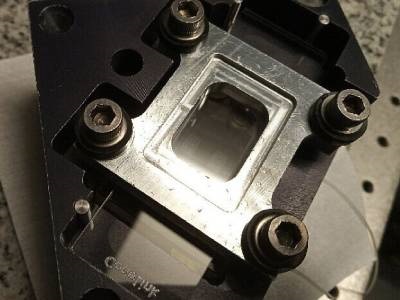
More than 300,000 different RNA molecules are bound in the center of this glass plate, here divided into four spatially separated sections. Credit: Erika Schaudy
DNA microarrays, also known as DNA chips, enable high-throughput genome analyses for diagnostics or research through the use of thousands of densely-packed, precisely located DNA probes. The simplicity, compact size and massively parallel nature of DNA microarrays can be beneficial for studying RNA as well, but RNA microarrays have proven much more difficult to fabricate due to challenges such as RNA’s poor stability and lower binding efficiency when building RNA strands. Researchers at the University of Vienna have now developed a method that overcomes some of the disadvantages of RNA chip fabrication, and allows commercial DNA microarrays to be converted to RNA microarrays using standard equipment and materials.
In order to understand some of the yet-unknown functions of RNA molecules in cells, microarrays with longer RNA strands than previously achievable using chemical synthesis methods will be necessary, said first author Erika Chaudy. The new method achieves this goal and allows available DNA microarrays of varying densities and complexities to be used as templates for their RNA counterparts through the targeted use of enzymes. The method involves three steps: 1) hybridization and crosslinking of the RNA primer, 2) extension of the primer according to the DNA template, and 3) degradation of the DNA template to produce the RNA microarray. Specifically, the microarrays are fabricated through T7 RNA polymerase-mediated extension of photocrosslinked methyl RNA primers, with DNA degradation performed using a commercially available DNase.
Polyacrylamide gel electrophoresis (PAGE) analysis showed that the T7 RNA polymerase was able to generate full-length RNA products through this synthesis process; this was further confirmed with additional on-array experiments using Cyanine 3-labeled uridine triphosphate (Cy3-UTP)-based detection. Thus, the team demonstrated the possibility to rewrite DNA microarrays into their complementary RNA counterparts in a length-independent manner, using an easy-to-follow method and commercially available materials without the need for specialized equipment, noted Schaudy. This research was published in Nature Communications.
“This now enables researchers from a wide range of disciplines to produce themselves RNA microarrays that are precisely tailored to their scientific questions,” Schaudy concluded.
RNA microarrays produced using this method could help advance diagnosis and treatment of certain diseases, such as cancer, by elucidating some of the unanswered questions about RNA binding interactions. The technology could also be expanded to other applications, said corresponding author Mark Somoza, such as investigating the influence of food compounds on cellular processes and human health.