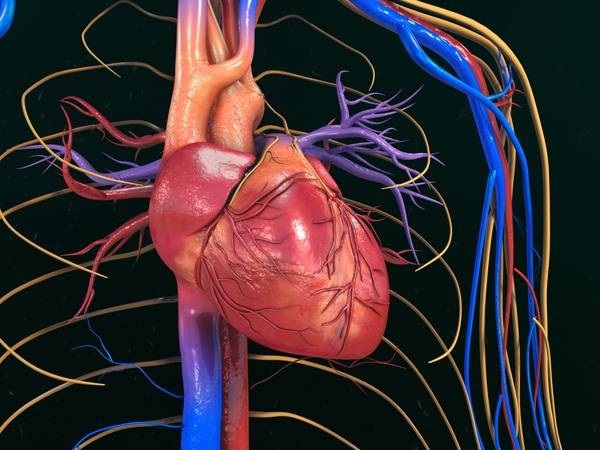
The left ventricle of the heart has a specialized role, providing the pumping force necessary to distribute oxygenated blood throughout the body. The left ventricle is also most often implicated in heart disease, heart attacks, and the cardiotoxic effects of some drugs, creating a need for robust in vitro models for specifically studying left ventricular cardiomyocytes. Researchers from The Francis Crick Institute, Imperial College London, King’s College London and AnaBios have discovered an improved method for developing left ventricular heart cells from stem cells, resulting in populations that are more homogenous and more functionally mature than current models.
The standard method for differentiating cardiomyocytes from human pluripotent stem cells (hPSCs) involves modulation of Wnt signaling pathways during the cells’ development, but current protocols frequently result in homogenous mixtures of ventricular, atrial and nodal cells. Additionally, cardiomyocytes developed from hPSCs often resemble immature, fetal-like cardiac cells with weakened properties compared to mature cells. The researchers sought to optimize the standard Wnt-on/Wnt-off protocol to improve cell maturity and favor differentiation into left ventricular cells. One of the key changes was the inhibition of the retinoic acid pathway, as RA is known to promote differentiation into atrial cardiomyocytes. Additionally, the team supplemented the growth medium with a low, constant level of activin A and varying levels of BMP4 over time to further promote the development of mature left ventricular cells.
The researchers found that their method resulted in nearly homogenous populations of left ventricular cardiomyocytes that more closely resembled adult cardiomyocytes in a number of ways. The differentiated cells showed better organization and produced a higher beating force than less mature cells. The cells were also electrophysiologically mature, beating slower than fetal-like cardioamyocytes. Three-dimensional engineered heart tissues created from the left ventricle heart cells also showed greater strength, organization and function than tissues created from cells that were produced using the standard method. This research was published in Cell Report Methods.
“In order to encourage cells to specialize, you have to understand the natural developmental processes. We set out to understand the different chambers of the heart–how they are formed, and what are the genes and pathways involved in their development,” said corresponding author Andreia Bernardo. “It’s only with this detailed understanding of early embryonic changes, that we could apply the knowledge in stem cell models, starting with forming the correct mesoderm lineage, the first phase in cell specialization. We also found that blocking the retinoic acid pathway acts like a fail stop, preventing different types of cardiomyocyte from forming.”
The team is seeking to make the new cells available to researchers through a partnership with life science supplies company Axol Bioscience. The cells could be used for drug discovery and development and research focused on diseases affecting the left ventricle, such as hypertrophic cardiomyopathy.