Credit: Motta et al.
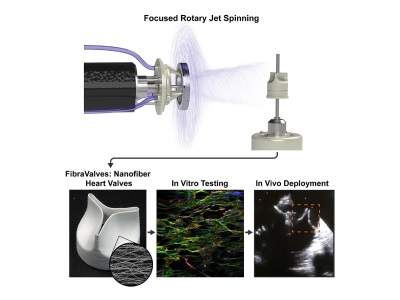
Researchers have developed a novel method called "Focused Rotary Jet Spinning" to produce functional heart valves quickly and inexpensively. The valves mimic the extracellular matrix that heart valve cells are accustomed to and can be created within minutes, unlike current technologies that take weeks or months.
The technique involves using air jets to direct liquid polymer onto a valve-shaped frame resulting in a meshwork of tiny fibers, creating a network of fibers intended to provide sites for cells to build upon and replace as the polymer frame degrades. The research, published in Matter, demonstrates the valve's ability to function properly in sheep for one hour. Sheep were used for the study for their similarities to human hearts, namely the physical forces and environmental conditions being similar to those of human hearts.
Initial results have shown positive outcomes, in a one-hour test, cells were already beginning to adhere to the new valve. A post-mortem analysis of the sheep also indicated no complications with the valve, no tearing or thrombosis was noted in the analysis.
The researchers plan to continue their research, expanding on their short-term testing to include chronic testing in sheep. “We want to see how well our valves function over the scale of weeks to months, and how effectively and quickly the sheep's cells and tissues are actually remodeling the scaffold,” says Michael Peters - Harvard University. The researchers believe that the Focused Rotary Jet Spinning valve could be a viable regenerative heart valve replacement method and could potentially be expanded to other uses.