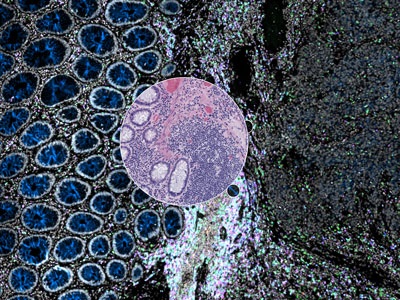
Credit: Santagata and Sorger labs - Harvard Medical School
A team of researchers at Harvard Medical School has created a new diagnostic tool for diagnosing cancer in patients. The tool, called Orion, combines histological and molecular information to provide detailed insights into tumors improving how pathologists diagnose and treat cancer.
The study, published in Nature Cancer, outlines the ways in which Orion can provide pathologists with more powerful cancer diagnostic information. By combining traditional histology methods with tumor molecular imagery data, the tool offers a deeper understanding of a tumor's type, behavior, and potential response to treatment. During testing researchers analyzed tumor samples from over 70 patients, Orion was successfully able to identify biomarkers that can be used to predict the severity of the disease in the patients.
“This platform gives you an ability to search across the biomarker space for a wide range of combinations of markers that could be useful and select the ones with the best performance for a particular measure,” said Sandro Santagata, Associate professor of pathology at Harvard Medical School. “We feel like we have a tool kit now that will allow us to find these in a relatively rapid manner across cancer types.”
The team of researchers plans to continue testing Orion on a larger number of patients, and then further the research to include different types of cancer. They hope to be able to achieve a level of scalability and affordability to allow Orion to be moved into use within clinics in the near future.