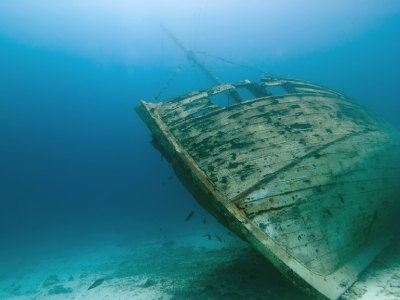
To better care for marine wooden artifacts a team of researchers has developed a novel hydrogel that stabilizes shipwreck artifacts by neutralizing the harmful acids that result from their seawater environments.
In the case of shipwreck artifacts, seawater creates an ideal environment for acid-producing bacteria and wood eating fungi to thrive which damages artifacts. To prevent this damage, conservators remove the water through various processes including freeze drying or replacing the water with highly pressurized carbon dioxide. While effective, these processes can increase the fragility of the artifacts and can take months to complete.
A newer alternative, involving plastering historic wood with gel to infuse it with acid neutralizing and antimicrobial compounds produces excellent results but can damage the surface of the artifact when removed. To remedy this, the duo of researchers set out to develop a hydrogel that disperses acid- and microbe-fighting compounds while gradually dissolving to avoid damaging an artifacts surface during removal.
The method, published in ACS Sustainable Chemistry & Engineering, relies on a mixture of polymers combined with potassium bicarbonate and silver nitrate to create an acid neutralizing antimicrobial gel. The team found that by adjusting the concentration of silver nitrate, the gels staying power could be adjusted and that gels with less of the compound would liquify after just a few days.
To test their method the team applied hydrogels with varying silver nitrate concentrations onto 800-year-old pieces the Nanhai One shipwreck. During their analysis they found that while each gel neutralized the acid up to 1 centimeter deep in only 10 days, the gels with lower silver nitrate concentration did so more quickly, some in as little as just over a day. Additionally, the wood treated with the lower concentration liquifying gels were less brittle and had less damage to their cellular structure.