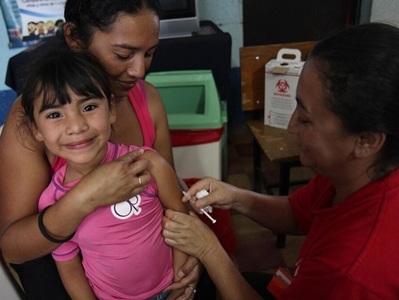
Children who were vaccinated against pneumonia were less likely to carry antibiotic-resistant bacteria. Credit: World Health Organization
In Guatemala, children who receive a common vaccine that helps prevent pneumonia are less likely to carry antibiotic-resistant bacteria. But that’s not because of the preventative medication in the vaccine—or at least not directly. Researchers found that vaccinated children made far fewer visits to health care facilities, resulting in less exposure to antibiotic-resistant bacteria.
The study is based on stool samples, vaccination records and health data from 406 children aged 0 to 14 living in Guatemala. Researchers at Washington State University examined the data to see whether the rotavirus (RV) and pneumococcal (PCV13) vaccines helped reduce gut colonization by harmful bacteria and/or encouraged resistance to antibiotics.
According to the study results, published in Vaccine, children under 5 who received the pneumococcal vaccine had significantly lower gut colonization rates. The rotavirus vaccine results were inconclusive.
The research team believes antibiotic-resistant bacteria were less common in pneumococcal vaccinated children largely because they made fewer visits to health care facilities—a factor previously linked to higher rates of antimicrobial-resistant bacteria. In fact, previous studies in Guatemala have shown that children who visit hospitals or clinics for illness are more than twice as likely to carry antibiotic-resistant bacteria, while antibiotic use itself was not found to be strongly associated with colonization.
“Most vaccine studies on antimicrobial resistance focus on infection and how vaccines prevent illness and reduce antibiotic use, thereby reducing selection processes of antibiotic-resistant bacteria,” said Brooke Ramay, lead author of the study and a researcher at Washington State University. “We took a different approach by looking at colonizing bacteria and we found vaccination reduced resistance through a completely different mechanism: [fewer] clinic visits resulted in a lower probability of colonization.”
Researchers were unable to conclusively determine the effects of the rotavirus vaccine because reports of diarrhea were scarce, likely due to recall bias. However, Ramay says this vaccine may provide the same indirect protective effects by preventing diarrhea and gastrointestinal inflammation.
The team was able to identify several additional factors that also influence colonization. For example, children who reported diarrhea in the previous month were significantly more likely to carry antibiotic-resistant bacteria. The team suspects this is due to inflammation in the gut, which creates conditions that favor the growth of bacteria like E. coli.
On the other hand, yogurt consumption appeared protective, suggesting beneficial bacteria from probiotic foods could help maintain a healthy gut environment and reduce colonization.
Environmental exposure also appears to play a role, as children from households that use land for agriculture had a higher risk of colonization, likely due to contact with soil and water contaminated by fecal matter. This lie of investigation is next for Ramay and her team, as they continue studies to better understand how agricultural land use and environmental exposure influence colonization with resistant-bacteria.