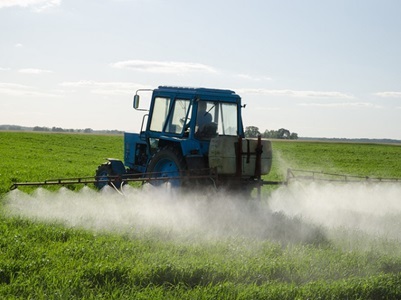
In a new paper designed to address nitrogen pollution in the agricultural industry, researchers at the University of Connecticut tested whether adding manganese to soil could help reduce nitrogen runoff.
Most agricultural fertilizers contain nitrogen as it’s an essential nutrient for plant health. The other side of the coin is that these fertilizers then produce nitrogen runoff, which occurs when excess nitrogen seeps into the surrounding environment, like waterways. This causes toxic algal blooms, which disrupt aquatic ecosystems and pollute drinking water. Further, nitrogen from agricultural processes can pollute the air in the form of nitrous oxide (N2O), a greenhouse gas 300 times more potent than carbon dioxide.
For the study, published in Applied Soil Ecology, researchers compared soil that had been treated with nitrogen fertilizer for the past 27 years and soil that had had no nitrogen input in that period. They tested three different levels of manganese: 0, 50, and 250 milligrams per kilogram of soil.
The results showed that adding manganese lowered plant-available nitrogen in the soil, specifically ammonium (NH₄⁺) and nitrate (NO₃⁻). With less of these readily usable nitrogen forms present, nitrous oxide (N₂O) emissions dropped significantly, and nitrate levels also declined, reducing the risk of nitrate leaching into waterways. Specifically, there was a 42% reduction in N2O emissions with 250 milligrams per kilogram of manganese, and 32% with 50 milligrams per kilogram of manganese after 51 days.
The researchers also found that the addition of manganese reduced the expression of the amoA gene, which converts ammonia to nitrate, by 2.5 times.
These early results are promising, say the scientists. Now, the University of Connecticut team is working with collaborators at the University of Tennessee on a field experiment to better understand how these findings can be applied in the real world.
Data from University of Connecticut