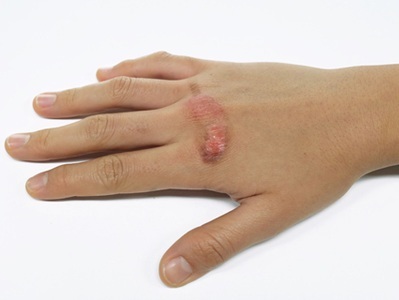
A new study suggests that increased exposure to burn injuries may have driven notable genetic adaptations that differentiated humans from other primates and mammals. This may also explain both beneficial and maladaptive responses to severe burn injury.
In the paper published in BioEssays, researchers from Imperial College London argue that natural selection would have favored traits that helped humans survive small to moderate burns. These may include faster inflammation, faster wound closure and stronger pain signals. However, while these traits are helpful for less severe injuries, they can become harmful for large burns—which may explain why modern humans can experience extreme inflammation, scarring and organ failure from major burns.
Using comparative genomic data across primates, the researchers found examples of genes associated with burn injury responses, which show signs of accelerated evolution in humans. These genes are involved in wound closure, inflammation and immune system response—likely helping to rapidly close wounds and fight infection, a major complication after a burn injury.
“Burns are a uniquely human injury. No other species lives longside high temperatures and the regular risk of burning in the way humans do,” said lead author Joshua Cuddihy, lecturer in Imperial’s Department of Surgery and Cancer. “As a result, unlike any other species, most humans will burn themselves repeatedly over their lifetime, a pattern that likely extends back over 1 million years to our earliest use of fire.”
The researchers’ findings could change how we study burn injuries, design treatments and interpret complications of burns. The findings may also explain why translating results on burn injuries from animal models to humans is often ineffective.
“The genetic basis for scarring variation in humans and response to tissue injury is still poorly understood, and this work will provide new angles for future research,” said Declan Collins, consultant in plastic and reconstructive surgery at Chelsea and Westminster Hospital NHS Foundation Trust.
Data from Imperial College London