Laboratory mills, used primarily for sample prep prior to analysis, use particle size reduction (comminution) to grind or homogenize wet, dry, hard, soft, elastic, brittle, and fibrous materials. Mills and grinders are used in labs in widely varying scientific areas, including chemistry, pharmaceuticals, food analysis, materials testing, and life science. Disk, hammer, mortar, planetary ball, rotor, and cutting mills are available to achieve coarse, mid-range, and fine results, all the way down to the nano range, <0.1 µm. Cryogenic mills, or freezer mills, are a type of unit that freezes a material prior to reducing its particle size.
What to consider when choosing a laboratory mill?
When purchasing a mill, power, speed, and cleanability are useful parameters; however, it is also important to keep in mind the instrument’s throughput, reproducibility, and yield, as well as the option of a cooling system, if necessary.
Compare and request a quote for laboratory mills from various manufacturers:
|  |  |  |  |
| Company | RETSCH | RETSCH | RETSCH | RETSCH |
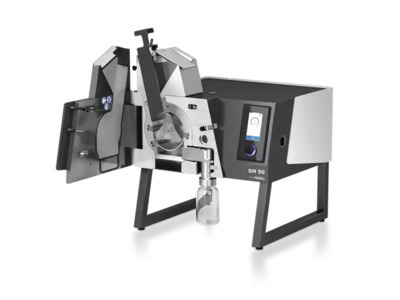
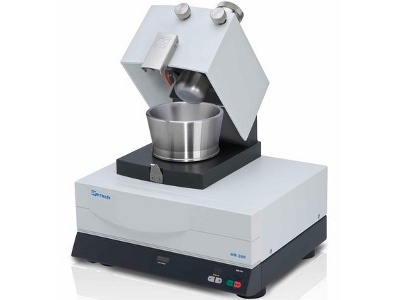
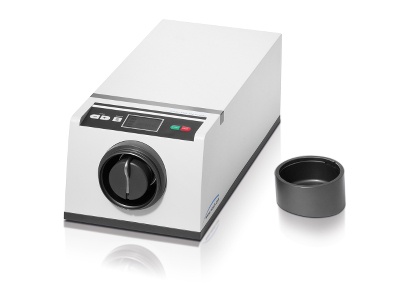
| Item | Planetary Ball Mill PM 100 | Cutting Mill SM 50 | Mortar Grinder RM 200 | XRD-Mill McCrone Laboratory Mill |
| Citations | | | | |
| Catalog Number | PM 100 | SM 50 | RM 200 | MCCrone |
| Price | | | | |
| Description | Planetary Ball Mills are used wherever the highest degree of fineness is required. Apart from the classical mixing and size reduction processes, the mills also meet all the technical requirements for colloidal grinding and have the energy input necessary for mechanical alloying processes. The Planetary Ball Mills are used wherever the highest degree of fineness is required. Apart from the classical mixing and size reduction processes, the mills also meet all the technical requirements for colloidal grinding and have the energy input necessary for mechanical alloying processes. The extremely high centrifugal forces of the Planetary Ball Mills result in very high pulverization energy and therefore short grinding times.
The PM 100 CM is a convenient benchtop model with 1 grinding station. It operates in centrifugal mode mode, which leads to a more gentle size reduction process with less abrasion.
Features - Powerful and quick grinding down to nano range
- Perfect stability on lab bench thanks to FFCS technology
- Innovative counter weight and imbalance sensor for unsupervised operation
- Gentle grinding in centrifugal mode
- Comfortable parameter setting via display and ergonomic 1-button operation
- Automatic grinding chamber ventilation
- 10 SOPs can be stored
- Programmable starting time
- Power failure backup ensures storage of remaining grinding time
- Reproducible results due to energy and speed control
- Suitable for long-term trials and continuous use
- 2 different grinding modes (dry and wet)
- Optional pressure and temperature measuring system PM GrindControl
- Measurement of energy input
- Wide range of materials for contamination free grinding
- Safety Slider for safe operation
... Read More | The SM 50 is the world's most powerful benchtop cutting mill with a standard one phase power plug. Its 1.5 kW motor drives a large rotor, delivering impressive high-speed cutting power. The max. speed is 4,000 rpm and can be adjusted to suit various applications. The EasyInspect hopper operates on aThe SM 50 is the world's most powerful benchtop cutting mill with a standard one phase power plug. Its 1.5 kW motor drives a large rotor, delivering impressive high-speed cutting power. The max. speed is 4,000 rpm and can be adjusted to suit various applications. The EasyInspect hopper operates on a batch-wise feeding system and can process large sample pieces up to 50 mm with ease. The compact powerhouse features an internal cyclone system, ensuring effortless and efficient processing of various materials. The push-fit grinding chamber is the first in the world which can be taken out for proper cleaning. With its innovative design featuring a removable milling chamber, the SM 50 simplifies cleaning, saving up to 30 % process time. At the same time, the unrivaled powerful benchtop cutting mill with a single phase power plug allows up to 100 % sample recovery and contamination-free sample preparation.
- pulverization of samples down to 250 micron
- integrated cyclone technology
- easy cleaning thanks to push fit accessories including the grinding chamber
- for samples up to 50 mm
- less surfaces-less dust
- Superior cutting speed of 27 m/s.
- 3 double acting cutting bars result in 18 cutting events per round and a specific cutting length of 864 mm per round for superior cutting efficiency.
- Comprehensive and convenient door opening mechanisms with a pivoting handle
- 9 different sieve sizes from 10 mm down to 0.25 mm for standard application or for grinding without heavy-metal contamination
two different rotor types
... Read More | The Mortar Grinder RM 200 can mix and homogenize powders, suspension and pastes even with high viscosity. The RM 200 is suitable for the proper and reproducible sample preparation to analytical fineness.
It substitutes cumbersome hand mortars by a high performance drive with electronic control. TheThe Mortar Grinder RM 200 can mix and homogenize powders, suspension and pastes even with high viscosity. The RM 200 is suitable for the proper and reproducible sample preparation to analytical fineness.
It substitutes cumbersome hand mortars by a high performance drive with electronic control. The grinding set can be cooled and heated and is very easy to clean. Grinding sets of various material qualities are available which can be exchanged easily for optimum adaptation to various grinding tasks.
Features - Dry, wet and cryogenic grinding
- Reproducible results due to adjustable pestle and scraper pressure
- Closed, dust tight grinding chamber with windows
- Easy exchange of mortar and pestle without tools
- Performance display for load cotrol
- Adjustable pestle and scraper pressure
- Wide range of materials for contamination free grinding
- 3 scraper materials (vulkollan, beech wood, PTFE)
... Read More | The XRD-Mill McCrone was specially developed for the preparation of samples for subsequent X-ray diffraction (XRD). The mill is used for applications in geology, chemistry, mineralogy and materials science, quality control as well as R&D. Because of its unique grinding motion, the XRD-Mill McCrone The XRD-Mill McCrone was specially developed for the preparation of samples for subsequent X-ray diffraction (XRD). The mill is used for applications in geology, chemistry, mineralogy and materials science, quality control as well as R&D. Because of its unique grinding motion, the XRD-Mill McCrone is particularly effective for this analytical method: The 48 cylindrical grinding elements grind the samples gently via friction. The result is a short grinding time with almost no sample loss and an exceptionally narrow particle size distribution. The crystal lattice is almost entirely preserved during grinding operation, a pre-requisite for meaningful X-ray diffraction results.
Features: - Crystal lattice preserved during grinding operation
- Very narrow and reproducible particle size distribution
- Minimal cross contamination
- Compact, bench-top sized model
- Suitable for dry and wet grinding
... Read More |
| Principle | Impact and Friction | Cutting and Shearing | Pressure and Friction | Friction |
| Sample Size | < 10 mm | < 50 mm | < 8 mm | <0.5 mm |
| Sample Type | Soft, Hard, Brittle or Fibrous - Dry or Wet | Soft, Medium-Hard, Fibrous | Soft, Hard, Brittle or Pasty | Medium-hard, Hard, Brittle, Fibrous |
| Applications | Pulverizing, Mixing, Homogenizing and Colloidal Milling: Agriculture, Biology, Chemistry / Plastics, Construction Materials, Engineering / Electronics, Environment / Recycling, Geology / Metallurgy, Glass / Ceramics, Medicine / Pharmaceuticals | agriculture, chemicals / plastics, construction materials, electronics, environmental / recyling, food / feed, pharma / biotech / medtech, power generation / energy | Grinding, Mixing and Triturating - Dry and Wet: Agriculture, Biology, Chemistry / Plastics, Construction Materials, Food, Geology / Metallurgy, Glass / Ceramics, Medicine / Pharmaceuticals | Grinding, Mixing and Triturating, Dry and Wet |
| Speed | 100 to 650 min-1 | 500 to 6,000 min-1 | 100 min-1 | 1000 to 1500 min-1 |
| Rotor Type | grinding jar and balls | parallel section rotor / 3-disc rotor, 0.25-10 mm sieves | mortar and pestle | <0.5 mm |
| Final Fineness | < 1 um or < 0.1 um for Colloidal Grinding | < 0.25 mm | < 10 um | <1 µm |
| Get Quote | | | | |