The greater an object’s surface area, the more capable it is of gas sorption. Surface area analyzers help researchers obtain the area or pore size of surfaces on samples as diverse as pharmaceuticals and activated carbon by measuring their gas sorption capabilities. Samples are placed in a sealed chamber and are cleaned through the application of heat, vacuum, and flowing inert gas. Once the surface is clean, adsorbate molecules are pumped into the chamber of the surface analyzer area and the degree to which the sample adsorbs the gas helps indicate the surface area. Pressures can reach 1000 torr, with temperatures exceeding 425 °C. Gases commonly used in surface area analyzers are argon, carbon dioxide, mixtures of helium and nitrogen, and krypton, among others. Good surface area analyzers incorporate the preparation stage into their capabilities, and temperature conductivity monitors to ensure even heating across the sample. The customer should seek surface area analyzers capable of testing for leaks, evacuating gas, and conducting analysis all at once.
| 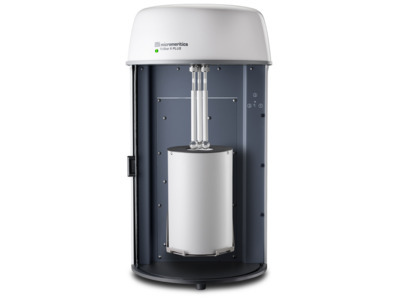 | 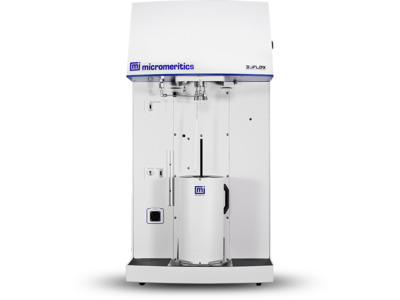 | 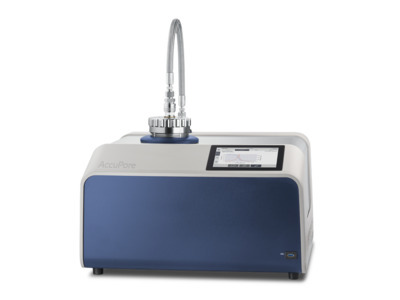 | 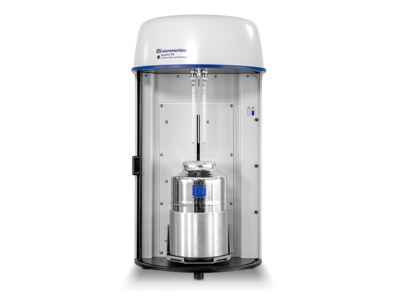 |
| Company | Malvern Panalytical | Malvern Panalytical | Malvern Panalytical | Malvern Panalytical |
| Item | Micromeritics TriStar II Plus | Micromeritics 3Flex | Micromeritics AccuPore | Micromeritics Gemini Surface Area Analyzer |
| Catalog Number | TriStar | 3Flex | AccuPore | Gemini VII 2390 Series |
| Price | | | | |
| Description | The Micromeritics TriStar II Plus is a fully automated surface area and porosity analyzer that combines high-throughput efficiency with research-grade precision. Its three analysis stations accelerate quality control, while versatile methods enable customized testing for diverse applications. | The 3Flex high-performance gas adsorption analyzer is the most advanced instrument for measuring surface area, pore size, and pore volume of powders and particulate materials.? The 3Flex is ideally suited for gas or vapor adsorption analysis of microporous (< 2 nm) and mesoporous (2 to 50 nm) The 3Flex high-performance gas adsorption analyzer is the most advanced instrument for measuring surface area, pore size, and pore volume of powders and particulate materials.? The 3Flex is ideally suited for gas or vapor adsorption analysis of microporous (< 2 nm) and mesoporous (2 to 50 nm) materials and delivers superior accuracy, resolution and data reduction. Standard methods or user-customized protocols can be used to characterize adsorbents, catalysts, zeolites, MOFs, APIs, excipients, and a wide variety of porous and non-porous materials.
Available chemisorption configurations extend the 3Flex to physical and chemical adsorption methods to characterize the texture and active surface of catalysts, catalyst supports, sensors and a variety of other materials.... Read More | Capillary Flow Porometry (CFP) — also known as Gas Liquid Porometry (GLP) — is a fast, reliable method to determine the size and relative abundance of throughpores in sheets and membranes. This pressure-based technique measures the minimum diameter of a pore, averaging over a significant test area, Capillary Flow Porometry (CFP) — also known as Gas Liquid Porometry (GLP) — is a fast, reliable method to determine the size and relative abundance of throughpores in sheets and membranes. This pressure-based technique measures the minimum diameter of a pore, averaging over a significant test area, without the need for model-fitting or image processing. Measurements are fast, sample preparation takes less than 30 seconds, and no mercury is involved.... Read More | Surface area and pore volume are important physical properties that influence the quality and utility of many materials and products. Therefore, it is critically important that these characteristics be accurately determined and controlled. Likewise, knowledge of surface area and pore volume, often Surface area and pore volume are important physical properties that influence the quality and utility of many materials and products. Therefore, it is critically important that these characteristics be accurately determined and controlled. Likewise, knowledge of surface area and pore volume, often is an important key in understanding the formation, structure, and potential application of many natural materials.
Micromeritics’ Gemini VII 2390 Series of surface area analyzers rapidly and reliably produces accurate and repeatable surface area and pore volume results. Their low cost, speed, simplicity of use, reliability, and ruggedness have earned the Gemini a place in laboratories worldwide as an essential tool in research and quality control environments.... Read More |
| Applications | Additive Manufacturing, Carbon Black, Adsorbents, Catalysts, Nanotubes, Activated Carbons, Ceramics, Paints and Coatings, Batteries and Fuel Cells, Geoscience, Pharmaceuticals | Metal Organic Frameworks (MOFs) and Porous Organic Polymers / Zeolite design / Carbon Adsorbents and Catalyst performance | Battery and Fuel Cell Separators and Membranes / Filtration / Non-Wovens | Inquire |
| Measures | Inquire | Pore size, Pore volume and Surface area | Inquire | Inquire |
| Temperature Control | Inquire | 45 °C, ± 0.05 °C with 3 strategically placed RTDs | Inquire | Inquire |
| Gases | Nitrogen Unit - Nitrogen; argon, carbon dioxide, or other non-corrosive gases; butane, methane, or other light hydrocarbon vapors. Oxygen can also be used only with an appropriate vacuum pump.
Krypton Unit - Same as nitrogen unit, plus the capability to perform krypton surface area analyses at lower pressures | Up to 3 gases concurrently, one probe gas on each port | Air or N2 | Inquire |
| Type | Surface area and porosity analyzer | Gas Adsorption Analyzer | Inquire | Inquire |
| Get Quote | | | | |