|  |  |  |
| Company | Waters | Wyatt Technology | Waters | Wyatt Technology | Waters | Wyatt Technology |
| Item | miniDAWN™ Multi-Angle Light Scattering (MALS) Detector for SEC-MALS | Aura GT System Particle Analyzers | DynaPro Plate Reader 4 Dynamic Light Scattering Instrument |
| Citations | | | |
| Catalog Number | miniDAWN | Aura GT | DynaPro Plate Reader 4 |
| Price | | | |
| Description | Couple the miniDAWN™ to your favorite HPLC or FPLC to determine the absolute molar masses and sizes of macromolecules and nanoparticles in solution from hundreds to millions of Daltons—without the need for column calibration standards. This sensitive unit requires as little as 25 ng injected Couple the miniDAWN™ to your favorite HPLC or FPLC to determine the absolute molar masses and sizes of macromolecules and nanoparticles in solution from hundreds to millions of Daltons—without the need for column calibration standards. This sensitive unit requires as little as 25 ng injected sample, 100 kDa polystyrene in THF (varies for other samples and solvents). The miniDAWN is engineered with self-contained modules that are easily replaced making it field serviceable. The system-ready monitors soise levels in real-time and an all-green status indicator lets you know when your system is ready for data collection. The optional DLS module uses the WyattQELS™ module, which fits inside the miniDAWN to providing on-line dynamic light scattering for determining radii down to 0.5 nm. All light scattering cells are subject to contamination by particles and to combat this issue the instrument has a self-cleaning, embedded COMET™ ultrasonic module. For maximum reliability and uptime, program the miniDAWN to automatically clean the cell after every run. The units may also be combined with a Calypso™ composition-gradient system to characterize biomolecular interactions.... Read More | Fast, decisive, low-volume AAV characterization for gene therapy development workflows
Adeno-associated viruses (AAVs) have revolutionized gene therapy product development. With limited material available, allocating valuable samples for aggregate testing may have seemed impractical—until now.
AuraFast, decisive, low-volume AAV characterization for gene therapy development workflows
Adeno-associated viruses (AAVs) have revolutionized gene therapy product development. With limited material available, allocating valuable samples for aggregate testing may have seemed impractical—until now.
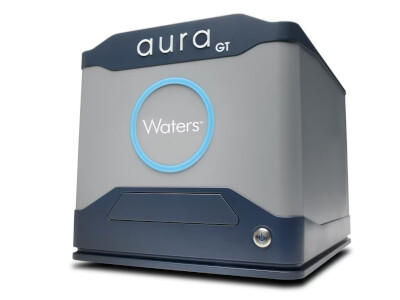
Aura GT System is the first and only system designed to detect, count, and characterize AAV particles with just 5 µL. Combining backgrounded membrane imaging (BMI) with fluorescence membrane microscopy (FMM) dual-channel technology, confident decisions can be made earlier—one step closer to success.
Analyze small volumes. Only 5 µL of sample is needed, allowing particle characterization in early phase development.
Characterize and identify viral vectors. Aura GT System distinguishes between capsid and non-capsid aggregates and enables you to confirm whether DNA leakage is the root cause of aggregation straight from the box.
Gain deeper gene therapy understanding. Gain insight with Aura GT System’s duo of BMI and FMM, which distinguish and characterize different serotypes for aggregation and product features for deeper understanding of gene therapy – without tedious, labor-intensive assays.
Features:- Characterize AAV, lentivirus, and other viral vectors across key applications like aggregation and stability.
-
Detect, count, and characterize AAV particles with just 5 µL of sample. Identify capsid and DNA aggregates in your gene therapy sample with confidence.
-
Make direct comparisons between different formulations, AAV serotypes, storage conditions, and lots.
-
Detect and count particles from 1 µm up to 5 mm.
-
Save time with measurements under one minute per sample.
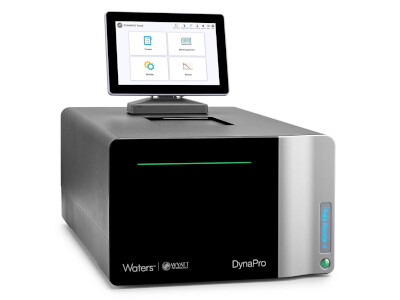
... Read More | The DynaPro Plate Reader 4 is a high-throughput DLS instrument that delivers rapid measurements of particle size, concentration, aggregation, and stability of many different macromolecular or nanoparticle samples. It enables fully-automated screening of processing or formulation conditions - simply The DynaPro Plate Reader 4 is a high-throughput DLS instrument that delivers rapid measurements of particle size, concentration, aggregation, and stability of many different macromolecular or nanoparticle samples. It enables fully-automated screening of processing or formulation conditions - simply load and walk away. Measurements are completed in standard 96, 384 or 1536 disposable well plates and the instrument can be integrated with plate and liquid-handling robots for additional time savings.... Read More |
| Type | MALS and optional DLS | Inquire | Dynamic Light Scattering / Static Light Scattering |
| Particle Size | Inquire | Range from >1 µm (ECD) to <5 mm (ECD) | 0.5 to 1000 nm |
| Detector(s) | High-gain, high-dynamic range photodiodes at 3 detection angles for MALS. Optional avalanche photodiode for simultaneous dynamic light scattering measurements. | Inquire | Linearized avalanche photodiode for dynamic and static light scattering |
| Measuring Time | Depedent on LC separation | 1 minute/sample (BMI read time). 3 FL channels, 30 seconds/sample (FMM read time) | Measurement Time: 5 to 60 seconds per well
830 nm |
| Light Source | 658 nm laser, programmable from 10% to 100% maximum power. | Inquire | 830 nm, fiber-coupled diode laser |
| Applications | With SEC/GPC: determination of distributions of absolute molar mass, size, conformation, conjugate ratio. With Calypso CG-MALS: characterization of biomolecular interactions. | Inquire | Develop stable biopharmaceuticals, assess viral vector titer and aggregation, optimize protein buffers for crystallization, SAXS or chromatography, formulate theranostic nanoparticles, discover small-molecule and peptide inhibitors of protein-protein interactions |
| Get Quote | | | |