|  |  |  |
| Company | Waters | Wyatt Technology | Waters | Wyatt Technology | Waters | Wyatt Technology |
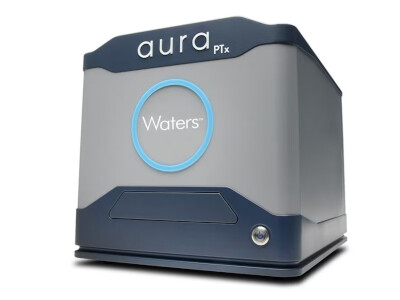
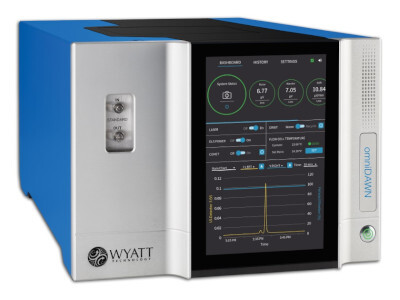
| Item | DAWN™ Multi-angle Light Scattering (MALS) Instrument | Aura PTx System Particle Analyzers | omniDAWN™ Multi-angle Light Scattering (MALS) Instrument |
| Reviews | | | |
| Catalog Number | DAWN | Aura PTx | omniDAWN |
| Price | | | |
| Description | The DAWN™ instrument is an advanced detector for precise characterization of proteins, polymers, and nanoparticles including viral vectors, lipid nanoparticles and vesicles. Using multi-angle static light scattering (MALS) and optional dynamic light scattering (DLS), DAWN analyzes molar massThe DAWN™ instrument is an advanced detector for precise characterization of proteins, polymers, and nanoparticles including viral vectors, lipid nanoparticles and vesicles. Using multi-angle static light scattering (MALS) and optional dynamic light scattering (DLS), DAWN analyzes molar mass, size, conformation, particle concentration, conjugation (e.g. glycoproteins) or encapsulation (e.g. AAV capsid content). It stands out with exceptional sensitivity and the widest range of molecular weight, size, and concentration of any MALS instrument, paired with a broad selection of configurations and optional modules for enhanced capabilities.
The DAWN is most often used in conjunction with gel permeation chromatography (GPC-MALS), size exclusion chromatography (SEC-MALS) or an EclipseTM, field-flow fractionation instrument (FFF-MALS) and may also be used with ion-exchange chromatography or reverse-phase chromatography. The instrument includes a high-resolution, touch-screen front panel to display data graphs, system health and instrument diagnostics and is accompanied by ASTRA™, the most versatile software package available for analysis of online multi-angle and dynamic light scattering.... Read More | Accelerate protein formulation development and screening for therapeutic drug development
Protein stability analysis and preventing aggregation are is crucial when developing therapies. That’s why it’s time to leave flow cell imaging behind.
Speed up protein formulation development and screening Accelerate protein formulation development and screening for therapeutic drug development
Protein stability analysis and preventing aggregation are is crucial when developing therapies. That’s why it’s time to leave flow cell imaging behind.
Speed up protein formulation development and screening with Aura PTx. With just 5 µL of a sample, discover a faster way to detect, count and characterize excipients and drug products at earlier stages of therapeutic development.
Now you can quickly identify and count aggregates that form due to degraded polysorbate in your formulation. And with two-channel fluorescence, determine if aggregation in your protein therapy is caused by proteins or polysorbates in your sample – at the same time.
Features:- Learn more with innovative technology. Aura PTx System combines backgrounded membrane imaging (BMI) with two channels of fluorescence membrane microscopy (FMM) to give you protein aggregate data without the need to clean between measurements.
-
ID protein aggregates. Accurately detect excipient degradation within your formulations and distinguish between protein and non-protein particles effortlessly.
-
Monitor polysorbate degradation. With fluorescence applications, you can track polysorbate degradation to confidently evaluate the stability of your product.
-
Analyze small volumes. You only need 5 µL of sample, allowing you to start characterizing protein aggregates earlier in development.
... Read More | Delivering up to 4× faster runs with half the sample, the omniDAWN™ multi-angle static light scattering (MALS) photometer is purpose-built for UPLC™ and UHPLC systems for non-destructive absolute molar mass and size characterization of macromolecules and nanoparticles in solution. It provides Delivering up to 4× faster runs with half the sample, the omniDAWN™ multi-angle static light scattering (MALS) photometer is purpose-built for UPLC™ and UHPLC systems for non-destructive absolute molar mass and size characterization of macromolecules and nanoparticles in solution. It provides exceptional sensitivity across a broad range of molecular weights, sizes, and concentrations, supported by advanced analysis modules, practical implementation guides, and intelligent system health monitoring to ensure reliable performance and streamlined workflows.... Read More |
| Type | MALS and optional DLS | Inquire | Multi-Angle Light Scattering (MALS) photometer |
| Particle Size | Inquire | >1 µm (ECD) to <5 mm (ECD) | Inquire |
| Detector(s) | High-gain, high-dynamic-range photodiodes at 18 angles for MALS; optional avalanche photodiode that may be placed at any of four angles for DLS.
Fluorescence-blocking filters available for use with analytes that fluoresce when illuminated at the MALS wavelength. | Inquire | Inquire |
| Measuring Time | Depedent on LC separation | 1 minute/sample (BMI read time). 3 FL channels, 30 seconds/sample (FMM read time) | Inquire |
| Light Source | 658 nm laser, programmable 10% - 100% of maximum power.
Optional: 785 nm for fluorescence suppression | Inquire | Inquire |
| Applications | With standard SEC/GPC or EclipseTM (FFF system): determination of distributions of molar mass, size, conformation, conjugation ratio and particle concentration.
With Calypso composition-gradient system: label-free characterization of biomolecular interactions including self- and hetero-association as well as non-specific interactions. | Inquire | With standard SEC/GPC or EclipseTM (FFF system): determination of distributions of molar mass, size, conformation, conjugation ratio, and particle concentration. With the Calypso composition-gradient system: label-free characterization of biomolecular interactions, including self- and hetero-association as well as non-specific interactions. |
| Get Quote | | | |