Digital refractometers measure the refractive index of a gel, liquid or solid sample to in order to determine the sample’s concentration. Since more concentrated samples bend light at a larger angle, digital refractometers operate by illuminating the sample against a prism and digitally measuring the angle of refracted light with photodiode detectors. Digital refractometers are used to measure a variety of substances, from the concentration of sugar in grape juice to the purity of solvents, and are widely employed in production and quality control applications in the food, chemicals and pharmaceutical industries. Digital refractometers may be designed for manual, semi-automatic or fully automatic sample reading. Compared to an analog instrument, a digital refractometer offers quick and extensive selection between measurement units and easily exports results. The upper and lower reading limits vary significantly between digital refractometer models. Temperature-controlled digital refractometers, for ranges up to 10 to 120°C, provide better accuracy by compensating for the changes in a sample’s refractive index caused by heat or cold. Handheld digital refractometers offer convenience but may be less accurate and require larger sample sizes compared to desktop instruments. Some digital refractometer models are designed for specific applications with more limited capabilities but optimized performance.
|  |  |  |  |  |
| Company | Rudolph Research Analytical | Rudolph Research Analytical | Rudolph Research Analytical | Rudolph Research Analytical | Rudolph Research Analytical |
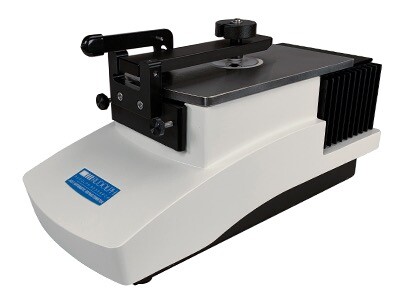
| Item | J157 PLUS Bench Automatic Refractometer | Contact Lens Refractometer J457CLR | J257 Wide Range Automatic Refractometer | J47 and J47 WR Refractometers | J57WR Bench Automatic Refractometer for Chemical QA |
| Reviews | | | | | |
| Catalog Number | Inquire | Refractometer J457CLR | Inquire | Inquire | Inquire |
| Price | | | | | |
| Description | The Rudolph J157 model of Refractometers offers high performance and a range of features to suit many demanding applications in laboratories and harsh industrial environments. Rudolph Research Analytical, working together with refractometer (Refraktometer) users from various countries and The Rudolph J157 model of Refractometers offers high performance and a range of features to suit many demanding applications in laboratories and harsh industrial environments. Rudolph Research Analytical, working together with refractometer (Refraktometer) users from various countries and disciplines, has developed the J157 series of Digital Refractometers. The Rudolph J157 bench-top line combines the features, measurement range, and accuracy that meet the most demanding applications both in and out of the laboratory and shares many features with the Rudolph Research Refractometer Product Line.... Read More | Rudolph's Contact Lens Refractometers are designed for measurement of contact lenses both hard and soft as well as accurately checking saline solutions. | Rudolph Research Analytical, working together with refractometer users from the polymer, petroleum, pharmaceutical and essential oil industries, has developed the J257 Wide Range Automatic Refractometer. The J257 Refractometer features include electronic cooling and heating with an extended Rudolph Research Analytical, working together with refractometer users from the polymer, petroleum, pharmaceutical and essential oil industries, has developed the J257 Wide Range Automatic Refractometer. The J257 Refractometer features include electronic cooling and heating with an extended refractive index range.
Application: The J257 is designed as a multi purpose refractometer for a broad range of refractive index applications. The wide refractive index range of 1.26-1.70 means that this instrument can measure many materials that a refractometer with a food refractive index range of 1.33-1.53 cannot.
Operation: Operating the J257 is as simple as placing a sample on the prism, closing the cover and reading the answer — all in just a few seconds. There are no shadow lines to match and there is no eyepiece requiring any kind of operator determination or manual adjustment. When the "measure when stable" mode is selected, the J257 automatically waits until the sample has been heated or cooled to a predefined temperature before initiating a measurement.
Interface: A large 7.5cm x 10cm cold cathode fluroescent back lit graphics LCD allows the scale, sample temperature, set temperature, air temperature, time, date, and temperature correction status to be easily viewed. All functions are activated through a touchscreen panel that will not wear out or get misplaced like traditional or detachable keyboards. The touchscreen is resistant to fingernails, sharp objects, chemicals, and acids.
Dual Temperature Control System: Unlike other temperature controlled refractometers, the J257 has temperature control from both above and below the sample. The sample cover is controlled to the same temperature as the prism and, when lowered, is designed to provide a temperature controlled micro environment that provides unrivaled temperature stability, fast measurement time and minimal evaporation. Depending on options, the sample cover can also be used to initiate measurement. This means that the operator doesn't even need to touch the refractometer screen on a day to day basis, simple lower the cover and measurement starts automatically.... Read More | The Rudolph J47 and J47 WR refractometer features a fully automatic measuring system designed to meet the unique needs of a food and beverage testing where the samples are mostly a mixture of sugar and water and the refractometer is viewed more as a tool than a laboratory instrument. The J47’s The Rudolph J47 and J47 WR refractometer features a fully automatic measuring system designed to meet the unique needs of a food and beverage testing where the samples are mostly a mixture of sugar and water and the refractometer is viewed more as a tool than a laboratory instrument. The J47’s single flat measurement surface, temperature correction and one button measurement capability make it perfect for heavy use applications.
Features: - Temperature Correction (ICUMSA or custom)
- High accuracy in appropriate circumstances
- High durability sapphire prism
- Lower cost of use
- 1 or 2 point user calibration
- Easy to clean measurement surface
... Read More | The J57WR Automatic Refractometer was designed to meet the unique needs of industrial environments in the chemical industry where the refractometer is viewed as a QC tool rather than a laboratory instrument. A single flat measurement surface, electronic temperature control and one button measurementThe J57WR Automatic Refractometer was designed to meet the unique needs of industrial environments in the chemical industry where the refractometer is viewed as a QC tool rather than a laboratory instrument. A single flat measurement surface, electronic temperature control and one button measurement capability make it perfect for heavy use applications.
Automatic Measuring System: The Rudolph J57WR features a fully automatic measuring system. The operator simply places the sample on the prism, presses a button and the result is displayed on a 7.5cm x 10cm back lit LCD. There are no shadow lines to match and there is no eyepiece requiring operator determination or manual adjustment.
Electronic Temperature Control: Refractive Index (BRIX) readings are very sensitive to temperature. When measuring sucrose users have the option of correcting for temperature variation but that option does not work for most chemical companies. Users not measuring sucrose or users looking for better accuracy than provided by temperature correction had to spend the extra money for a circulating water bath and then clean and maintain it. The J57WR’s built in electronic temperature control provides the best of both worlds, the absolute accuracy, regardless of sample type, of a temperature controlled instrument with the convenience of operating without a water bath.
Wide Measuring Range: The J57WR was designed for chemical measurement, not food. This means a very wide measurement range from 1.26 - 1.70 enabling the instrument to measure materials like fluorocarbons and aromatic chemicals that are beyond the range of most refractometers.... Read More |
| Refractive Index Range | 1.33 - 1.53 RI | 1.26 to 1.72 RI | 1.26 - 1.72 RI | 1.32 to 1.53 RI or 1.30 to 1.7 RI (model dependent) | 1.30 - 1.70 RI |
| Brix Range | 0 - 100 BRIX | 0 to 100 BRIX | 0 - 100 BRIX | 0 to 100 BRIX | 0 - 100 BRIX |
| Resolution | ±0.00001 RI (or ±0.01 BRIX) | ±0.00001 RI (or 0.001 BRIX) | ±0.0001 RI (or ±0.00001 RI Optional or ±0.01 BRIX) | ±0.00001 RI (or ±0.01 BRIX) or ±0.0001 RI (or ±0.1 BRIX) (model dependent) | ±0.0001 RI (or ±0.01 BRIX) |
| Temperature Range | 4°C to 95°C | 10°C to 110°C | 10°C to 100°C (±10°C Optional) | 4°C to 95°C | 10°C to 65°C |
| Optical Wavelength | 589.3 nm | 589.3 nm | 589.3 nm | 589.3 nm | 589.3 nm |
| Measuring Time | < 3 seconds (User configuarble) | < 30 seconds (User configurable) | 20 Seconds | < 5 seconds | < 5 seconds (User configuarble) |
| Get Quote | | | | | |