How Does a Scanning Electron Microscope Work?
A scanning electron microscope (also commonly abbreviated as SEM) uses beams of electrons to create magnified images of samples, as opposed to beams of light that a traditional microscope uses. SEMs use electrons that are bounced off near the surface region of a sample. Because the wavelength of electrons is notably smaller than that of light, the resolution of SEMs is greatly superior to that of a light microscope.
What Are Scanning Electron Microscopes Used For?
Because the SEM can magnify a sample up to 500,000 times its normal size and determine its chemical makeup, scanning electron microscopes have a wide range of applications. They are used for quality control in both the pharmaceutical and semiconductor industries, sample comparisons in forensics, diagnostics in medical labs, and in research labs to determine the composition of samples treated in different ways.
What Types of Scanning Electron Microscopes Are There?
Scanning electron microscopes have different kinds of signal detectors available that include back-scattered electrons (for imaging), characteristic X-rays (for determining types and amounts of elements present in the sample), transmitted electrons, and cathodoluminescence. Other variations in different scanning electron microscopes include availability of low or high vacuum mode and imaging options for bright field samples and/or dark field samples.

Check out this article "Integrated SEM Workflow Creates Powerful 'Nano-lab' " to see more ways in which SEM can be a valuable tool for your lab.
| 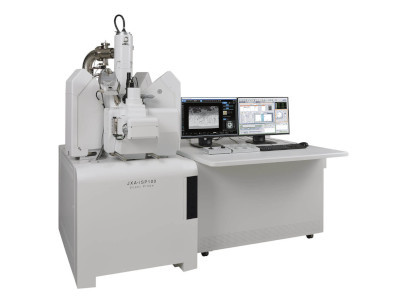 | 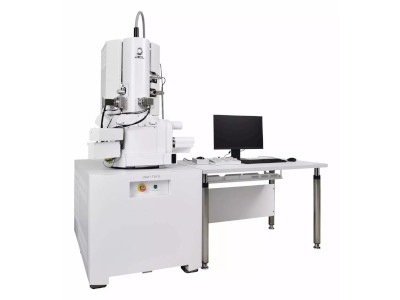 |
| Company | JEOL USA, Inc. | JEOL USA, Inc. |
| Item | JXA-iSP100 Electron Probe Micro-Analyzer | JSM-IT810 Ultrahigh Resolution Field Emission SEM Series |
| Catalog Number | JXA-iSP100 | JSM-IT810 Series |
| Price | | |
| Description | Research grade EPMA that provides both high imaging resolution and analytical resolution with a very high and stable probe current for optimum analytical performance. This new microprobe has a new SEM and EDS user interface (GUI) based on the FEG SEM's "SEM Center". It includes new algorithms for Research grade EPMA that provides both high imaging resolution and analytical resolution with a very high and stable probe current for optimum analytical performance. This new microprobe has a new SEM and EDS user interface (GUI) based on the FEG SEM's "SEM Center". It includes new algorithms for the auto functions of both the SEM column and the optical microscope. A new GUI provides a simplified work flow called "Easy EPMA" with built-in software and graphic-driven procedures for a broad range of user experience from the novice/occasional user to complete flexibility and capabilities for the very experienced EPMA scientist.
Key Features
- Customizable configuration of spectrometers and crystals optimized for the required application
- Performs both beam scanned line scans and maps as well as large area line scans and maps with stage scanning
- A 30mm2 integrated and embedded UTW-SDD-EDS system with high sensitivity including an in situ aperture wheel for ultrahigh beam current operation without compromising EDS spectrometer resolution and "Live" survey EDS acquisition to easily help find elements of interest
- Specimen chamber supports both a panchromatic high bandwidth imaging CL and a fully quantitative hyper-spectral CL (xCLent V System) with no loss of a WDS or any limitation on image collection
- Supports the installation of JEOL's Soft X-Ray Emission Spectrometers (SXES and SXES-ER) for ultralight elements and chemical state analysis
... Read More | The JEOL IT810 Ultrahigh Resolution Field Emission SEM is a revolutionary FE-SEM with the most advanced high-resolution analytical technology available today. Versatility and high spatial resolution meet automation and ease of use with the JSM-IT810 series FE SEM. The JEOL IT810 series offers the The JEOL IT810 Ultrahigh Resolution Field Emission SEM is a revolutionary FE-SEM with the most advanced high-resolution analytical technology available today. Versatility and high spatial resolution meet automation and ease of use with the JSM-IT810 series FE SEM. The JEOL IT810 series offers the next level of analytical intelligence for high spatial resolution imaging and analysis at the nanoscale.
- Smart - The IT810 series of Schottky Field Emission SEMs with embedded JEOL Energy Dispersive X-ray Spectrometers (EDS) streamlines operation and workflow efficiency. Elegant functionality, ultrahigh resolution, and powerful software with automation enable seamless acquisition of data from observation to elemental analysis and subsequent reporting.
The JEOL NEOENGINE® electron beam control system and advanced auto functions provide fast transitions between high resolution imaging and high current analyses, without sacrificing performance, resulting in unprecedented ease of use. Advanced algorithms optimize control of electron lenses in real time, correct electron trajectories and automatically align the beam, and correct the focus, brightness/contrast, and astigmatism. JEOL’s Live EDS analysis allows direct monitoring of specimen chemical composition during imaging.
The JEOL SEM seamlessly integrates optical imaging and navigation, SEM imaging, and EDS Live analysis and mapping with one-click operation.
- Flexible - The JSM-IT810 series is equipped with a large specimen chamber that accommodates a wide variety of detectors simultaneously, including: multiple EDS, WDS, EBSD, STEM, BSE, and CL. JEOL’s GatherX windowless EDS detector is ideal for higher sensitivity and spatial resolution with lower energy x-ray detection down to Li. JEOL’s unique Soft X-ray Emission Spectrometer (SXES) allows efficient and parallel collection of very low-energy X-rays while providing unprecedented chemical state analysis.
- Powerful - The IT810 is JEOL’s flagship FE SEM with up to 2,000,000X magnification and an accelerating voltage range of 0.01 to 30kV, making it possible to acquire stunning details of nanostructures and comprehensive analysis. This highly versatile, easy-to-use field emission SEM offers the next level of analytical intelligence in FE-SEM.
Innovative No-code Automation
The intuitive and customizable software interface makes it very easy to achieve high throughput in everyday observation and analysis, including new no code automated workflows which come standard with every IT810 series microscope.
NeoAction:
New no code automation workflows allow a novice user to set up a series of images and analyses to be completed without user intervention. Imaging and analysis can be completed with multiple beam and scan settings, stage coordinates, and detectors.
Montage:
Automated imaging and analysis of large areas including stitching together large canvases.
... Read More |
| Type | Inquire | Inquire |
| Resolution | 6 nm (5 nm with LaB6 emitter) | 1.6 nm at 1 kV, 1.2nm at 30kV |
| Probe Current | Inquire | Maximum probe current of 300 nA |
| Applications | High-resolution imaging, quantitative elemental analysis, and chemical state analysis | Inquire |
| Detector(s) | Inquire | Semiconductor type BSE detector |
| Get Quote | | |