In 2023, the demand and use of electric vehicles around the world was record-breaking. Global electric car sales soared from the previous year by 35% to almost 14 million.1 While demand remained largely concentrated in China, Europe and the United States, growth also accelerated in emerging markets.
Given this increase, 2024 had a lot to live up to—and it did. Experts calculated a growth rate of about 25% in the first quarter of 2024, and sales remained robust the rest of the year. Ultimately, the electric car industry reached approximately 17 million by the end of last year.1
This growing demand for electric vehicles has resulted in unprecedented growth for the lithium-ion battery (LiB) market, which in turn, led to a surge in demand for associated analytical services. For example, in 2020, the global LiB market was worth $44.2 billion. This year, the market is expected to hit $94.4 billion—more than double in just 5 years.2
Lithium-ion battery value chain
There are four main parts of the LiB value chain:
- Mining and raw mineral processing: finding and extracting high-quality raw material from rock ores
- Component manufacturing: the manufacture of high-specification cathodes, electrolyte, anodes, and separators
- Cell assembly and QA/QC testing: cell assembly, electrolyte filling, electrode degassing, testing of the anode/cathode/assembled battery, and battery housing leak testing
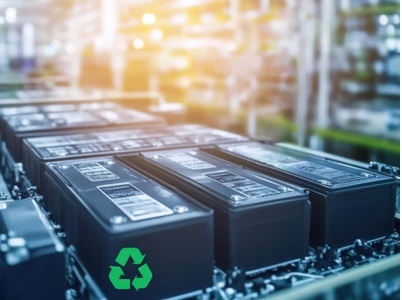
- Recycling: raw materials from spent batteries can be reintroduced into the production chain, encouraging a circular lifecycle
Mining for raw materials is an energy-intensive process that challenges the sustainability goals of electric vehicles. However, while gas-powered cars produce emissions continuously as they operate, EVs mainly generate emissions from mining and electricity use. Even when accounting for these factors, EVs remain a more sustainable option than internal combustion engine (ICE) vehicles.
This is where recycling plays a critical role in the overall LiB value chain, helping to create a truly circular lifecycle.
Recycling in a circular lifecycle
While a battery’s performance may degrade over time, the materials—lithium, nickel, cobalt, and even solvents—remain present and can be recycled in a continuous cycle. In fact, approximately 95 percent of lithium-ion battery components can be turned into new batteries or used in other industries when recycled. First, however, these recaptured materials must be put through extensive quality control tests to ensure their purity and safety.
“In terms of analytical testing, the process of recycling batteries requires similar tests to battery manufacturing. Testing for material identification, impurity analysis, and ensuring materials meet specifications is required,” said Ross Ashdown, AAS, MP-AES & ICP-OES Marketing Manager at Agilent Technologies. “There are limited industry-standard test methods for recycled materials, so it is common to adapt standard quality control analytical methods to test recovered materials.”
Companies recycling batteries typically need to 1) measure the elemental
content of black mass; 2) measure the elemental content of recycled battery materials; and 3) ensure correct environmental discharge and worker safety.
All elemental chemical analysis can use ICP-OES or ICP-MS instruments, while environmental discharge and worker safety monitoring additionally uses other techniques like chromatography.
“Modern atomic spectroscopy like ICP-OES and ICP-MS are robust and very selective for the analytes of interest,” said Ashdown. “They are also easy to use and generate precise and accurate data.”
Case study: quantifying metals in black mass
Special battery recycling plants dismantle, shred and process spent LIBs into a “black mass” powder. Black mass can be refined into commodity-grade graphite, cobalt hydroxide, and lithium carbonate for reuse.
Currently, no industry standard methods exist for the determination of elements in black mass samples. However, inductively coupled plasma optical emission spectroscopy (ICP-OES) is specified in a number of standard methods that relate to contaminant element control of chemicals used to make LIBs.
In a recent case study from Agilent Technologies3, the 5800 VDV ICP-OES was used to measure 18 elements in e-waste recycling materials generated from spent LIBs. The study was performed using four black mass samples. Sample throughput was maximized using Intelligent Rinse to optimize the rinse time between each sample.
First, the samples were quickly scanned using Agilent IntelliQuant Screening smart tool within the Agilent ICP Expert Pro software to identify and estimate the concentration of elements. The semiquantitative results were then used to establish the calibration range and selection of interference-free wavelengths for each target analyte.
The integrated Fitted Background Correction and Fast Automated Curve-fitting Technique features in the software successfully corrected for highly complex background structures and spectral interferences.
In the absence of suitable reference materials for black mass samples, the accuracy of the 5800 ICP-OES method was confirmed by spike recovery data in the samples of ±15%. The quantitative results for the four black mass samples reported Al, Co, Cu, and Li above 1%, and other elements at the low percentage level to the ppm level. The data demonstrated the method can also determine other valuable elements, including Mn as well as contaminant elements such as Fe, Cu and Zn.
A green future
The materials recovered from LiB battery recycling can account for more than half the cost of the battery. In many types of Li-ion batteries, the concentrations of precious metals exceed the concentrations in natural ores, making spent batteries akin to a highly enriched ore. If these metals can be recovered from used batteries on a large scale and more economically than from natural ore, the price of batteries could decrease.
Recycling also means less mining and less associated social and environmental harm. Ongoing research seeks to enhance lithium-ion battery recycling, with elemental analysis playing a crucial role in the development process. As battery chemistry grows and changes, the need to identify which elements are present and at what concentrations will become even more important—as will the recycling process, even if it becomes a little more complicated.
“Many innovative scientists have a strong focus and desire to improve recycling efficiency and minimize environmental harm.,” said Ashdown. “This has led to investigation of techniques like pyrometallurgy, biometallurgy and hydrometallurgy. Within the field of hydrometallurgy, both inorganic and organic acids have been investigated. The research around the use of organic acids shows promise in both efficiency and reduced environmental impact compared to use of inorganic acids.”
References
1. IEA (2024), Global EV Outlook 2024, IEA, Paris https://www.iea.org/reports/global-ev-outlook-2024, Licence: CC BY 4.0
2. Agilent Technologies (2023). Analytical Measurements and Vacuum Solutions for the Lithium-Ion Battery Industry. Retrieved from Agilent Technologies website: https://www.agilent.com/cs/library/primers/public/primer-LIB-agilent-solutions-5994-6848en-agilent.pdf
3. Li, S. (2023). Determination of Metals in Recycled Li-ion Battery Samples by ICP-OES. Retrieved from Agilent Technologies website: https://www.agilent.com/cs/library/applications/application-Li-ion-blackmass-5800-ICP-OES-5994-5561en-agilent.pdf