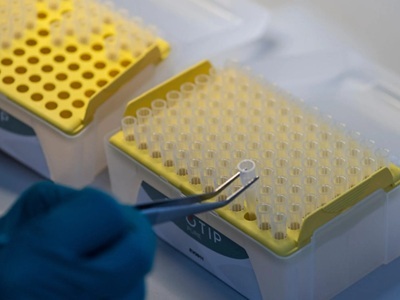
Credit: Evosep
ASMS 2026 highlighted a shift in analytical instrumentation from standalone performance improvements toward integrated, workflow-focused solutions designed to improve reproducibility, scalability and laboratory efficiency.
One of the strongest themes was workflow standardization. Manufacturers increasingly addressed variability across sample preparation, separations, mass spectrometry and data analysis. This trend was particularly evident in proteomics, which remained a major innovation driver, with advances in both bottom-up and top-down approaches. New systems emphasized deeper protein characterization, proteoform analysis, higher throughput and improved sensitivity. Several new product announcements reflected increasing interest in translating proteomics from specialized research applications to routine workflows capable of supporting clinical research and drug development.
A complementary trend was the product focus on sample preparation and productivity. Automated sample preparation systems, standardized consumables and integrated workflows were positioned as solutions to cost, staffing and reproducibility challenges. Manufacturers continually emphasized uptime, reduced maintenance requirements, lower operating costs and longer-lasting consumables as benefits of their new systems.
Overall, the conference suggested that future innovation will be driven not only by instrument performance, but by the ability to deliver reliable, scalable and operationally efficient analytical workflows.
UHPLC advancements
Shimadzu Scientific Instruments introduced the Nexera X4 Ultra High-Performance Liquid Chromatograph (UHPLC), a next-generation system that builds on the proven technology of Shimadzu’s Nexera series. With its industry-leading low-dispersion design, the Nexera X4 UHPLC delivers superior sensitivity, ultra-sharp peaks and outstanding separation performance. Advanced fluid control technology maintains exceptional flow stability during high-speed, ultra-high-pressure analyses for consistently reliable results. The system is ideal for research and development applications in pharmaceuticals, food, environmental science and chemistry.
With its new four-drive binary pump, independently activated plungers and pressure feedback control, the Nexera X4 UHPLC enables ultra-fast analysis through highly responsive solvent delivery. The instrument cuts analysis times by 92% versus typical HPLC systems and 78% versus other UHPLC-class systems, delivering up to 14 times greater laboratory productivity.
The Nexera X4 incorporates Shimadzu’s Nexflow technology to minimize system-derived peak broadening through low-dispersion flow paths that maintain the internal diameter of the flow lines. This feature increases sensitivity, enables full UHPLC column performance and delivers higher separation efficiency.
Used with narrow-bore columns, the Nexera X4 UHPLC significantly reduces solvent consumption, enabling more cost-efficient and environmentally conscious analysis. The Nexera X4 UHPLC supports analytical miniaturization through its precise micro-volume injection, accurate mobile phase delivery and low-dispersion flow paths that minimize band broadening, even with narrow-bore columns.
Additionally, Shimadzu announced it has acquired a 75% stake of the outstanding shares of German startup Plasmion GmbH (headquartered in Augsburg, Bavaria), making the company a subsidiary. This acquisition aims to obtain Plasmion’s mass spectrometer (MS) ion source technology SICRIT (Soft Ionization by Chemical Reaction In Transfer) and related technologies to strengthen Shimadzu’s MS business.
SICRIT is a groundbreaking technology that overcomes the limitations of the widely used APCI (atmospheric pressure chemical ionization) method in LC–MS and similar applications. Its chief feature is the ability to directly ionize analytes with high sensitivity without complex sample pretreatment, enabling high-sensitivity real-time analysis that was previously difficult. It is already being used in applications such as the search for disease markers in exhaled breath in the healthcare field, monitoring trace hazardous substances in the environment, and non-destructive analysis of aroma components in food and beverages.
AI-powered MS
At ASMS, mzio launched FAIR-MS, an initiative to develop AI-based software for the comparative analysis and reuse of historical mass spectrometry (MS) data.
FAIR-MS is an AI-powered technology that will revive historical MS data to enable automatic comparison against large archived datasets, regardless of instrument, laboratory, or measurement conditions, allowing organizations to unlock their research and analytical value. Designed to integrate into existing workflows, FAIR-MS will support LC-MS and GC-MS to accelerate compound identification, reduce manual curation, and improve the quality of chemical annotation.
In parallel, mzio is releasing major updates to its mzmine platform—mzio’s vendor-agnostic MS data solution that offers reproducible, fast data processing workflows and well-established algorithms to transform complex MS data into meaningful insights. These include expanded vendor formats, dedicated lipid and small molecule dashboards and a new impurity analysis workflow that correlates orthogonal detectors with MS data.
mzio is working closely with vendors including SCIEX, Waters, Agilent, Bruker and others on its industry-agnostic solutions.
“With FAIR-MS we are turning the FAIR data principles into practical reality,” said Ansgar Korf, CEO of mzio GmbH. “The ability to automatically search and match new measurements against large collections of historical MS data will fundamentally change how researchers and industrial users extract value from their data.”
Orbitrap MS platforms
Thermo Fisher Scientific announced new Orbitrap mass spectrometry platforms, AI-enabled software and end-to-end workflows for research, biopharma and applied market scientists.
The Thermo Scientific Orbitrap Tribrid Apex Mass Spectrometer (MS) gives researchers a more powerful way to study challenging samples on a single platform. As Thermo Fisher’s most versatile and highest-performing Orbitrap Tribrid, the Orbitrap Tribrid Apex MS brings multiple capabilities together in one system, including three mass analyzers, a new infrared laser option for alternative fragmentation and Thermo Scientific Direct Mass Technology Mode. Together, these features help researchers get clearer answers from complex biology earlier in the discovery process. Thermo Fisher also expanded its software capabilities across proteomics, spectral analysis and advanced protein characterization with two new proteome software solutions: Proteoform Studio Software and Proteome Discoverer 3.4 Software.
The new Thermo Scientific Orbitrap Excedion Mass Spectrometer is an Orbitrap platform designed to reduce performance tradeoffs in drug development. Built for applications ranging from drug metabolism studies to oligonucleotide and peptide analysis, the Orbitrap Excedion MS offers enhanced dynamic range (eDR) that detects 3 to 5 times more compounds in complex samples and delivers more reproducible results across larger studies. Thermo Fisher also introduced complementary innovations for biopharmaceutical development labs, including: SurePac RP MDi Columns, the SMART Digest OligoSelect Kit and BioPharma Finder 5.5 Software.
Lastly, the Orbitrap Exploris GC S Mass Spectrometer is a high-resolution gas chromatography-mass spectrometry platform designed to modernize dioxin and persistent organic pollutants (POPs) analysis for environmental and food safety laboratories. As regulations evolve and contaminant lists expand, the Orbitrap Exploris GC S MS delivers regulatory-ready, ultra-trace results with the sensitivity and resolving power needed for confident, reliable testing. The instrument can help laboratories identify emerging contaminants without additional instruments, saving time and reducing complexity in high-stakes public health or environmental testing.
LC-MS-based proteomics
Evosep launched Evosep Proteomics, an ecosystem designed to standardize and scale LC-MS–based proteomics for research and pharmaceutical drug development. Success is materialized through ease of use and simplicity of comprehensive, standardized workflow solutions meeting today’s analytical requirements. The introduction of Evokit sample preparation kits and the Evosep Lupo Sample Preparation System, together with Evosep Eno, establishes Evosep Proteomics: a unified sample-to-separation platform built for reproducibility, scalability, and AI-ready proteomic insights.
“To fully realize AI-driven drug development, LC-MS-based proteomics must become standardize,” said Morten Bern, CEO of Evosep. “Our users have been asking for scalable proteomics, not only as a reliable analytical tool, but as an AI-ready data foundation for the next generation of drug discovery and development.”
Evosep Proteomics addresses this need by delivering consistent proteomic output at scale, creating a robust data foundation that enables reliable AI deployment, faster insight generation, and more confident decision-making across pharmaceutical R&D such as:
- De-risk drug development pipelines: Standardized, low-variance proteomics data that is comparable across studies and sites, supporting faster target discovery, biomarker identification, and AI-driven decisions with greater confidence.
- Accelerate New Approach Methodologies (NAMs): Reproducible proteomics readouts that strengthen non-animal, mechanism-based safety and efficacy assessments, enabling earlier candidate de-risking and improved translational reliability.
- Enable Minimal Residual Disease (MRD) applications: Consistent sample-to-separation workflows that support detection of subtle protein signatures over time, improving longitudinal monitoring and treatment response assessment in translational and clinical studies.
At ASMS, Evosep also announced a strategic collaboration with Molecular You to advance standardized, high-throughput multi-omic testing for personalized biomarker profiling. The collaboration brings together Evosep’s liquid chromatography platform with Molecular You’s biomarker analysis and interpretation workflows to enable scalable, globally deployable solutions for early disease assessment and proactive health management.
At the core of the collaboration is the integration of the Evosep Eno system into MYCo’s proteomics workflow, supporting the transition toward highly reproducible, CLIA-grade multi-omic testing. The combined solution is designed to ensure consistent performance across MYCo’s international partner laboratory network and accelerate the adoption of standardized workflows at scale.
Deep proteome coverage
Bruker Corporation announced the launch of the unique timsMRMS system, bringing the power of trapped ion mobility separation to ultra-high-resolution magnetic resonance mass spectrometry (MRMS). The timsMRMS redefines extreme-resolution mass spectrometry of complex mixtures, delivering mass resolving power of 1M to 10M, down to ppb mass accuracy, and a four orders of magnitude single-acquisition dynamic range through a fundamental breakthrough of TIMS gas-phase separation from MRMS detection. The unique timsMRMS delivers enhanced performance for diverse applications, from molecular-level characterization in petroleomics to dissolved organic matter to biofuel fingerprinting and battery research in the energy industry.
Integrated Protein Technologies now interfaces their SampleStream directly with timsOmni under HyStar control, delivering automated, high-throughput buffer exchange via a molecular weight cutoff membrane that concentrates protein in a microfluidic flow cell while flushing buffers, salts, and adduct-forming excipients to waste, achieving MS-ready sample elution in under two minutes per sample with no carryover.
Bruker also focused on software, with releases of OmniScape 2027, ProteoScape 2027 and GlycoScape 2027 for confidence in top-down proteoform sequence and PTM analysis.
A novel addition to Omniscape 2027 is LYRA, a de novo algorithm that transforms high-quality sequence reads from complex top-down spectra into annotated protein sequences. LYRA features ultrafast PTM screening for proteoform ID across billions of possibilities and an advanced result combination module for higher sequence coverage and safer proteoform and PTM assessment.
New automated glycoproteomics workflows incorporate both trapped electron capture dissociation with low-energy electrons and complementary trapped electron ionization dissociation using higher-energy electrons, for dissociation reaction times as short as 10 ms.
Following its acquisition of TOFWERK in January 2026, Bruker is launching an Air Exposomics initiative that combines TOFWERK Vocus real-time VOC monitoring and mipTOF field-deployable trace-metal aerosol analyzer with 4D metabolomics and lipidomics. This portfolio can connect real-time environmental exposure measurements to respiratory illness, neurodegeneration and cancer.
High-res multi-omics platforms
As researchers pursue larger and more heterogeneous therapeutic targets, analytical workflows need higher sensitivity, higher structural resolution, and easier-to-adopt methods.
Waters Corporation launched the Waters Cyclic IMS P20 Mass Spectrometer, a high-resolution structural and spatial omics platform designed to help scientists see biology more clearly—and act on it faster. Combining multipass Cyclic Ion Mobility Spectrometry with an enhanced suite of fragmentation, probing and imaging capabilities, this powerful instrument delivers confident insights for the early detection of disease signals, from protein misfolding to post-translational modifications.
The Cyclic IMS P20 Mass Spectrometer features a more than 10-fold increase in MS/MS sensitivity compared to its predecessor, an upper mass range extended by more than 50% to over 100 kDa, and a set of complementary structural probing approaches, including tandem ion mobility spectrometry, electron-capture dissociation, surface-induced dissociation and collision-induced unfolding.
The Cyclic IMS P20 Mass Spectrometer also brings Matrix-Assisted Laser Desorption/Ionization (MALDI) and Desorption Electrospray Ionization (DESI) imaging sources together in one system, pioneering their combination with advanced multipass cyclic ion mobility and IMS separation to help researchers see more, with greater clarity, directly in their samples. This unique approach broadens coverage across small molecules, lipids, peptides, and proteins, while separating isobaric and stereoisomeric compounds.
Waters also introduced the Waters Xevo MRT P10 Mass Spectrometer, a high-resolution Quadrupole Time-of-Flight (QToF) System for high-throughput multiomics, bioanalysis and biopharmaceutical laboratories. It offers up to 20x greater MS/MS sensitivity, helping scientists detect low-abundance compounds in complex samples. The new system supports rapid throughput, alongside exceptional resolution and mass accuracy, delivering the highest data quality and confidence. When combined with the DESI XS ion source, rapid spatial analysis is unlocked down to the cellular level at up to 200 Hz, increasing throughput 6-fold while preserving image quality.
The Xevo MRT P10 MS is perfectly positioned to support long-term growth across multiomics, including proteomics, lipidomics, and metabolomics, as well as biopharmaceutical analysis and drug discovery.