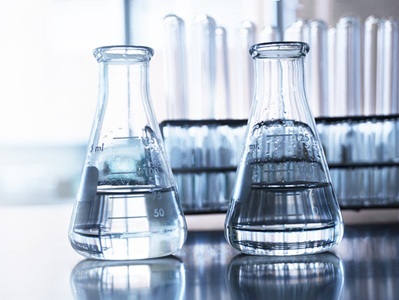
Water is arguably the most fundamental substance in the laboratory, but not all water is created equal. Type I (ultrapure) water has a resistivity of 18.2 MΩ·cm at 25 °C, TOC <10 ppb, and bacterial count <10 CFU/mL—suitable for HPLC, ICP-MS, PCR and cell culture. Type II is typically produced by reverse osmosis (RO) and used for general lab practices, microbiological analysis and buffer preparation. Type III is used for glassware rinsing, autoclave feed and as feedwater for higher-purity systems.
Beyond type, other key considerations when evaluating lab water purification systems include: total water volume needs, laboratory design and space constraints, certification and compliance needs, sustainability goals, and service and maintenance requirements among other aspects.
“Ultimately, the best water purification system is one that reliably delivers the required water quality at the point of use, supports laboratory compliance and productivity, and provides long-term value throughout its lifecycle,” said Joe Plurad, Head of Field Marketing, Lab Water Solutions at MilliporeSigma.
Don’t overlook consumables
Consumables play a critical role in maintaining water quality. Purification cartridges and components act as the final polishing and primary purification engines in lab water systems, relying on specific chemical and physical techniques to strip out any /remaining trace impurities.
For example, an RO membrane, which is commonly the first major purification stage, removes roughly 95% of dissolved salts, particles, microorganisms and organics.
Meanwhile, activated carbon cartridges adsorb chlorine, chloramines and organic compounds. They are particularly important as pretreatment before RO, as chlorine can damage some RO membranes.
With mixed-bed ion-exchange resin, cation and anion exchange resins are combined in one cartridge. The resins exchange unwanted ions for H⁺ and OH⁻, producing very low ionic contamination. This is often the key polishing technology for Type I/ultrapure water.
Ultrafiltration (UF) cartridges/modules use size-selective membranes to retain larger molecules, colloids, microorganisms and endotoxins while allowing smaller species, such as ions, to pass. This makes UF particularly useful for molecular biology and cell culture water.
Go green
Using the correct quality of water is not only imperative for experiments, but for sustainability goals as well. Producing ultrapure Type 1 water requires more energy than lower-grade water. Additionally, over-purification consumes excess ion-exchange cartridges, filters and other purification media.
Technologies such as reverse osmosis can reject a significant portion of feedwater. If a lab uses unnecessarily high-purity water throughout experiments, it can increase the volume of water that has to be processed and potentially discarded. Inappropriate quality water can also cause failed experiments and repeat testing; whereas appropriate water quality can reduce the need to compensate for contamination through additional cleaning, testing or chemical treatment.
Plurad says considering more compact lab water systems with reduced material use and less packaging is another way to encourage sustainable water usage in the lab.
“Look for suppliers whose products comply with environmental initiatives, such as RoHS and WEEE,” he says. “They can quantifiably demonstrate electricity and water savings, as well as CO2 impact.”
Avoid this common misconception
“A common misconception is that once water is purified, quality remains constant. In reality, continuous monitoring and proper system maintenance are essential to ensure consistent performance over time,” said Plurad.
Other common mistakes to avoid include:
- Using higher-purity water than necessary, increasing operating costs without improving results
- Overlooking peak-demand requirements when sizing a system
- Neglecting preventive maintenance and timely consumable replacement
- Focusing only on the initial purchase price rather than long-term performance, compliance and service support
- Underestimating the importance of traceability and documentation for regulated environments