Edinburgh Instruments, Photonics Division, Livingston, UK, 21 February 2013; Liquid nitrogen and liquid helium cryostats are available as part of the range of temperaturecontrolled accessories for the FLS980 and FLS920 series of photoluminescence spectrometers from Edinburgh Photonics. Fully field retrofittable, these cryostats allow fluorescence measurements and temperature maps to be made over the temperature ranges 77-300K and 4.2-325K respectively.
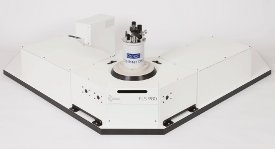
Versions with an upper temperature of 500K are also available. Low temperature operation allows researchers to benefit from enhanced fluorescence intensities. Temperature maps can be generated by acquiring a series of emission, excitation, synchronous and anisotropy scans over a predefined temperature range. The individual measurements are automatically started when the target temperatures are reached. All cryostats are supplied complete with controller and chamber adapter. The spectrometer software communicates with the cryostat controller to allow families of temperature dependent steady state and life- time data to be acquired under computer control.
Other Enquiries: Edinburgh Instruments,
Photonics Division, 2 Bain Square, Kirkton Campus,
Livingston, EH54 7DQ, UK,
Tel: + 44 1506 425 300
E-mail: [email protected]
Internet: www.edinburghphotonics.com