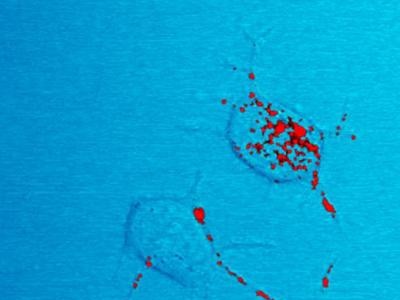
New research carried out by the Scuola Internazionale Superiore di Studi Avanzati (SISSA), Genos Glycoscience Research Laboratory and Elettra Sincrotrone Trieste, shed light on the differences in structures of prions. Prions are proteins that can produce infectious and fatal neurodegenerative disorders. A mainstream example of a dangerous prion-based disease is ‘mad cow’ disease. As of now, these proteins produce dangerous symptoms and remain incurable.
The prion protein is a glycoprotein and the sugar complex encompasses a large part of the protein structure. This research is the first one of its kind as it focuses on comparing glycan structures from different strains.
Professor Giuseppe Legname, co-author of the paper, is the Director of SISSA Prion Biology Laboratory and has been collaborating with Elettra Sincrotrone Trieste since 2006, said "Carbohydrate of the glycoproteins were sequenced for the first time thanks to the collaboration with Genos Glycoscience Research Laboratory, using a highly sensitive technique called Liquid Chromatography/Mass Spectrometry". He continued, "It has long been questioned whether the diversity in prion strains may depend on the glycans that compose them as well as on protein folding. Our results led us to an answer for the first time".
"In this study, glycans from two different sheep prion strains were compared", Natali Naki said. "After an extensive analysis, no major differences in glycan structures were found between the two strains, suggesting that glycans may not be responsible for the biochemical and neuropathological differences".
Image credit: Photo courtesy of National Institute of Allergy and Infectious Diseases (NIAID)