Technologies like liquid chromatography and mass spectrometry are frequently used to test foods and beverages for pesticides and other contaminants, requiring meticulous sample preparation and expensive laboratory equipment. Similar instruments may also be used to detect chemicals in blood or urine, although advancements in point-of-care diagnostics using specialized sensors can increase the speed and mobility of screening. Engineers at Washington State University (WSU) and DL ADV-Tech have now created a portable 3D-printed device that can quickly detect the herbicide glyphosate in beverages, which could be further developed to rapidly test clinical samples for herbicide exposure.
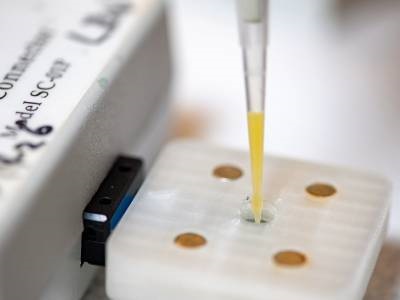
Like glucose tests that only require a drop of blood and provide immediate results, the new device only requires droplets of liquid to be deposited onto the sensor. The sensor is coated with polypyrrole nanotubes molecularly imprinted with glyphosate binding sites and assembled into a 3D-printed electrode holder. The nanotubes are highly selective and sensitive to glyphosate molecules and the 3D-printed holder enabled the engineers to make the device compact, lightweight and low-cost. The sensor works similarly to immunoassay that utilize antibodies, but the molecularly imprinted nanotubes do not require the same stringent storage conditions as their biological counterparts.
The researchers tested their device on orange juice and a rice drink spiked with specific concentrations of glyphosate, and found it to be both sensitive and specific in detecting the herbicide. Because of its small size and lack of biological components, the device can be used both in the lab and in the field. This research was published in Biosensors and Bioelectronics.
“For the next step, we want to use the sensor to detect glyphosate in some human samples such as blood, saliva or urine,” said first author Shichao Ding. “We will also continue to develop some new nanomaterials to enhance its sensing performance.”
Glyphosate has been approved for use by many regulatory agencies and is considered safe at recommended levels by the U.S. Environmental Protection Agency. However, some researchers and organizations have raised concerns about health and environmental risks, including the World Health Organization’s International Agency for Research on Cancer. The WSU researchers hope to use their technology for further monitoring of glyphosate in the environment, food, and human samples.
Photo: Engineers test the sensor device on a sample of orange juice spiked with glyphosate. Credit: Bob Hubner, Washington State University