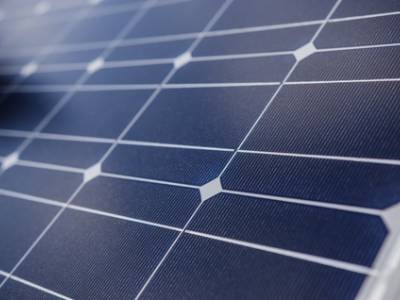
Self-healing materials could have countless benefits in applications including solar power and the manufacture of various electronic devices. Additionally, producing non-toxic and eco-friendly materials for these applications is a crucial step toward a more sustainable future for these important industries. Researchers at the Technion—Israel Institute of Technology have now shown how lead-free perovskites, an environmentally-friendly alternative for solar panel manufacturing, are able to repair themselves of voids in their crystal structure, paving the way for the development of new materials that are both more sustainable and more resilient.
The Technion researchers produced their own lead-free double perovskite nanocrystals and examined them using transmission electron microscopy (TEM), finding that the electron beam used in the technique produced holes in the crystals that seemed to move freely throughout the material. In order to understand the dynamics of how the voids migrated throughout the structure, the team recorded dozens of TEM videos of the crystals and developed a code to analyze the videos and track the motion of the voids.
The researchers found that the holes first formed on the nanocrystals’ surfaces before moving to energetically stable areas within the crystals and avoiding the edges. The team hypothesized that the voids moved inward due to organic molecules on the crystal surface, and found that when these molecules were removed, the voids were spontaneously ejected to the surface, returning the material to its original undamaged structure. This research was published in Advanced Functional Materials.
This discovery about the self-healing ability of the eco-friendly double perovskite materials could help engineers incorporate self-repairing properties into more sustainable solar panels and electronic devices in the future, the researchers said.