Tetrahydrocannabinol (THC), the psychoactive substance naturally produced by cannabis plants, is being intensely studied for its potential therapeutic effects, and is already being used to help treat pain, neurological disorders and more. Obtaining high amounts of THC for research can be a challenge due to the difficulty of isolating and purifying THC from the many other chemicals found in cannabis plants, as well as the limited ability for microorganisms like Escherichia coli and Saccharomyces cerevisiae to biosynthesize polyketides like THC or their precursors. In their search for an organism that could be used to more easily produce polyketides in the lab, researchers at the Leibniz Institute for Natural Product Research and Infection Biology—Hans Knöll Institute (Leibniz-HKI) turned to the amoeba Dictyostelium discoideum, and developed a new method that allows the THC precursor olivetolic acid to be produced with minimal additives compared to other methods.
The benefit of D. discoideum as a chassis organism for producing polyketides is that it possesses many biosynthetic genes that are similar to those found in plants that naturally produce these compounds. By contrast, the common model organisms E. coli and S. cerevisiae require extensive genetic modification in order to synthesize these chemicals, making for an expensive process that often results in low yield. The researchers were able to produce the food supplement resveratrol, another polyketide, using D. discoideum, and then incorporated the plant enzyme that produces olivetolic acid to successfully synthesize the THC precursor in the amoeba.
However, this process still required additional chemical precursors, so the team took a new approach to further streamline the process: they engineered a new inter-kingdom hybrid enzyme by combining the plant enzyme with an amoebic enzyme. Using this hybrid enzyme, olivetolic acid could be produced from primary metabolites in two enzymatic steps without the need for further additives. Overall, the team was able to demonstrate the value of D. discoideum as a chassis for producing polyketides and their precursors, including both resveratrol and olivetolic acid, as well as phlorocaprophenone and methyl-olivetol. This study was published in Nature Biotechnology.
“Through our research, we have shown that the amoeba Dictyostelium can be used as a biotechnological production platform for polyketide-based natural products,” stated first author Christin Reimer. “Our next goal is to insert the two enzymes that are still missing in order to be able to produce the final product THC in the amoebae.”
In addition to THC, there are many polyketides with a wide range of therapeutic applications that could potentially be synthesized more easily using insights from this research. The researchers have filed a patent for their process and plan to continue making improvements to the new synthesis method.
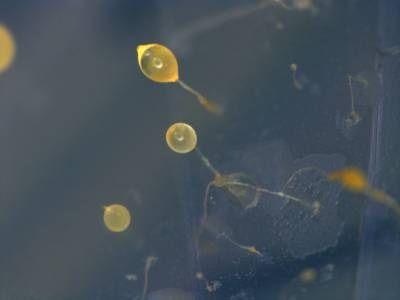
Photo: The unicellular amoeba Dictyostelium discoideum was used to produce the THC precursor olivetolic acid through the use of a new hybrid plant/amoeba enzyme developed by Leibniz-HKI researchers. Credit: Falk Hillmann/Leibniz-HKI