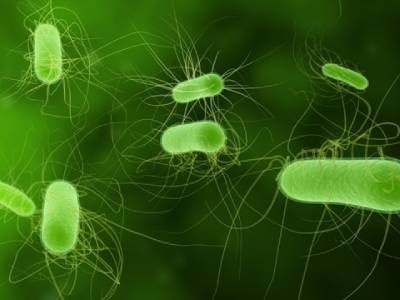
Bacteria such as Escherichia coli are used in laboratories as biological factories to produce useful compounds in a relatively inexpensive and sustainable manner. However, scaling up biosynthesis of therapeutic compounds for drug manufacturing is difficult and time-consuming due to a lack of methods to easily and quickly analyze different strains of engineered bacteria, which would allow scientists to identify those capable of producing the desired chemicals at commercial volumes. Now, researchers at the University of Texas at Austin have shown how to quickly develop biosensors that can accurately analyze thousands of engineered strains in just a day, rather than weeks or months, paving the way for faster scale up of drug biosynthesis.
The UT Austin researchers focused on developing a method that could produce biosensors for various drug components quickly and with the necessary sensitivity and selectivity to detect their target compounds. The team began by screening multidrug-resistance regulators in bacteria that have an affinity for benzylisoquinoline alkaloids, a group of compounds that are rich in therapeutic activity. Selecting RamR from Salmonella typhimurium as a template biosensor, the researchers established a directed evolution circuit architecture based on seamless enrichment of ligand-inducible sensors (SELIS), which enabled high-resolution and high-throughput filtering of large sensor libraries. This method enabled sensor libraries of over 105 members to be filtered down to a few high-performing variants in under a week, ultimately yielding five unique biosensors for five diverse alkaloids including glaucine, which is used as a cough suppressant, and papaverine, a vasodilator used to treat smooth muscle spasms.
To test the efficacy of the biosensors developed using the SELIS method, the researchers used a biosensor for tetrahydropapaverine (THP) to help engineer a THP-producing E. coli strain. THP is a precursor to several FDA-approved drugs, including papaverine and neuromuscular blocking agents used in anesthesia. By incorporating the highly-sensitive THP sensor, the researchers could quickly and easily monitor biosynthesis performance, accelerating the process of engineering improved biosynthesis pathways and ultimately improving THP yield. The opportunity to scale up THP biosynthesis demonstrates the potential practical applications of these new biosensors. This research was published in Nature Chemical Biology.
“There are currently no biosensors for most plant metabolites. With this technique, it should be possible to create biosensors for a wide range of medicines,” said first author Simon d’Oelsnitz. “While this is not the first biosensor, this technique allows them to be developed faster and more efficiently. In turn, that opens the door to more medicines being produced using biosynthesis.”
The manufacture of drug compounds typically relies on extracting the compounds from plants, which is resource intensive and susceptible to disruptions such as crop damage from floods, fires and drought, and synthetic chemistry, which is expensive and involves the use of petroleum products, raising concerns about waste and environmental impact. Engineering bacteria to produce these same compounds would offer an inexpensive, efficient and sustainable alternative.