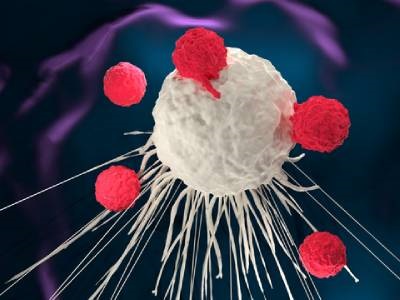
Chimeric antigen T-cells (CAR-T cells) are genetically engineered immune cells designed to recognize and target specific antigens, such as tumor cells. CAR-T cells are a promising approach to cancer therapy, with the first-ever FDA-approved CAR-T-based therapy being developed at the University of Pennsylvania. Now, the University of Pennsylvania has teamed up with ONI, a spin-out from Oxford University, to leverage ONI’s super-resolution microscopy technology for the monitoring and improvement of CAR-T therapy efficacy.
ONI’s flagship product, the Nanoimager, will enable researchers from the University of Pennsylvania’s Center for Cellular Immunotherapies and Abramson Cancer Center (ACC) to identify predictive biomarkers and characteristics related to CAR-T treatment efficacy and safety. With a resolution down to 20 nm, the Nanoimager will enable the team to both visualize living cells and track how single molecules interact, allowing the presence and distribution of biomarkers on CAR-T and tumor cells from patient samples to be quantified.
At ACC, Marco Ruella, MD, leads a team that focuses on the study of the mechanisms of resistance to CAR-T therapy, which can lead to the development of more effective next-generation CAR-T treatments.
“Despite great progress, following CAR-T treatment, a subset of patients do not respond or eventually suffer relapses. Subsequently, there is significant interest in further understanding the key factors associated with outcome and toxicity after CAR-T therapy and how these observations could help guide next-generation CAR-T therapies,” said Ruella. “The use of next-generation imaging technologies that can visualize the interaction between CAR-T and tumor cells could provide insights into mechanisms of action not available with other technologies.”
“This important collaboration with the University of Pennsylvania and Dr. Ruella using our Nanoimager technology will leverage super-resolution imaging to help guide development of better CAR-T therapies and hopefully positively impact patients’ lives in the future,” said Bo Jing, CEO of ONI. “The precise data obtained from viewing living cells as they interact and the light it sheds on disease mechanisms allow enormous strides to be made in the design of novel therapeutics and diagnostics.”