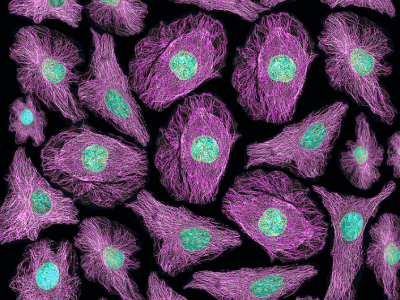
Researchers from the University of Geneva have discovered the mechanisms responsible for the growth and development of microtubules. The discovery will lead to advances in treatment development that can operate at the heart of cells.
Microtubules play a critical role in the communication pathways of cancers and other degenerative diseases and until now, their mechanisms were not well understood by medical professionals. Microtubules are long protein filaments that provide pathways for cells to grow and divide, however, disruption in these pathways can lead to diseases such as cancer or other neurodegenerative disorders.
The study, published in the Proceedings of the National Academy of Sciences, highlights two key proteins that are responsible for microtubule development. CLIP-170 and EB3, undergo a liquid-liquid phase separation where they separate from the cellular liquid medium to form a second liquid phase at the tip of microtubules. ‘‘This phenomenon of phase separation, at the level of the microtubule, increases the concentration of proteins, including tubulin, and significantly stimulates the growth rate of microtubules while reducing depolymerisation events, i.e. microtubule decay events,’’ said Charlotte Aumeier, one of the studies authors.
Utilizing total internal reflection fluorescence microscopy and high-throughput confocal microscopy, the researchers were able to observe the two proteins in vitro. The findings will open the door for the discovery of new cancer therapeutics by allowing us to operate at the heart of cellular processes.