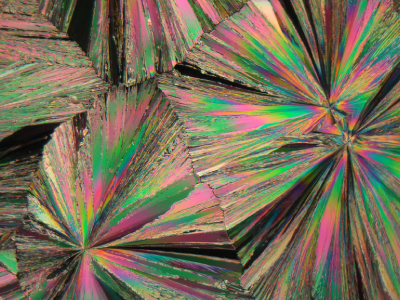
A team of researchers led by the University of Barcelona faculty has designed a novel compound that is capable of generating a magnetocaloric effect. The gadolinium (Gd) based compound is of particular interest to researchers in the field of molecular magnetism and could have widespread applications in next-generation tech at the nanoscale level.
In the study, published in the Journal of Materials Chemistry A, the team designed a 2D(III) composite containing metal cations and organic ligands in the shape of a lattice-type material that is particularly active at extremely low temperatures.
“This MOF is special because it is two-dimensional. The 2D MOFs are metal-organic equivalents to graphene and, like this compound, can be exfoliated in monolayers or in aggregates of a few monolayers at the nanometer scale”, said Carolina Sañudo, professor at the UB’s Department of Inorganic and Organic Chemistry.
In the compound created by the team, each Gd(III) ion behaves like a single molecule magnet (SMM). Additionally, the compound has high magnetic entropy and a magnetocaloric effect (MCE) thanks to the presence of the Gd(III).
“The study of these multifunctional magnetic materials involves a multidisciplinary task where the characterization of the materials by various techniques, such as dc/ac magnetometry, calorimetry, luminescence and X-ray magnetic circular dichroism, is crucial”, said Elena Bartolomé, a researcher at ICMAB-CSIC.
During their research, the team successfully grew nanocrystals of the compound on a semiconducting silicon surface, a step towards developing it for tech applications at the nanoscale. “Not only have we been able to nanostructure the material on a semiconductor, but we have shown that the magnetocaloric effect is maintained at the nanoscale, and the new compound can function as a magnetic surface coolant”, said Carolina Sañudo.
The team intends to continue their research to optimize the compound as well as uncover potential uses for it.